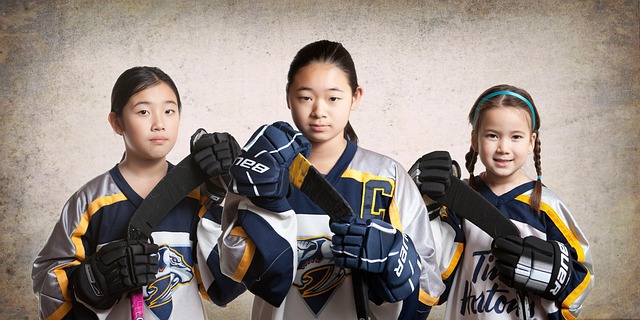
Women’s hockey is not one single sport with one single history. Around the world, the phrase can mean women’s ice hockey, women’s field hockey, or both. In Canada, the United States, Finland, Sweden, Czechia, and Japan, women’s hockey often means ice hockey: skates, rinks, boards, goalies in large pads, and national teams competing through the IIHF system. In the Netherlands, Argentina, Australia, India, Germany, Great Britain, Belgium, China, and South Africa, women’s hockey often means field hockey: turf, sticks, penalty corners, Olympic tournaments, and powerful club or school traditions.
Together, these two forms show how large women’s hockey really is. Women’s ice hockey has grown through colleges, national teams, Olympic visibility, and the recent rise of professional leagues. Women’s field hockey has a longer Olympic history and a wider global base in many countries where ice hockey is limited by climate, cost, or rink access. Both versions of the game have been shaped by the same larger questions: access, investment, visibility, coaching, media coverage, and whether girls can see a real pathway from youth sport to elite competition.
The story of women’s hockey is not simply that more women are playing. It is that women’s hockey has built serious competitive structures. It has Olympic tournaments, world championships, college programs, professional leagues, national development systems, and star players with international recognition.
Women’s Ice Hockey and the International Breakthrough
Women’s ice hockey developed for decades before it received the global stage it deserved. Women played organized ice hockey in Canada and the United States long before the sport had regular international attention. But the modern elite structure began to take clearer shape in the late 20th century.
The first official IIHF-sanctioned Women’s World Championship was held in Ottawa in 1990, with Canada, the United States, Finland, Japan, Norway, Sweden, Switzerland, and West Germany participating. Canada won the tournament, and the event became a foundation for the modern women’s international game.
Women’s ice hockey became an Olympic medal sport at the 1998 Winter Olympics in Nagano. That tournament gave the sport a new level of visibility. The United States won the first Olympic gold medal in women’s ice hockey, defeating Canada in the final. Since then, the Canada–United States rivalry has defined much of the sport’s public identity. The two countries have met in many of the most important Olympic and world championship games, and their rivalry has helped create some of the best-known moments in women’s hockey history.
Canada and the United States have dominated the top level of the IIHF Women’s World Championship for most of the tournament’s history. Canada won the early run of world titles, while the United States became increasingly dominant in later years. That two-country rivalry has created high standards for speed, skill, physical play, goaltending, and tactical detail.
But women’s ice hockey is not only a North American story. Finland has been one of the most important countries in the sport, regularly competing for medals and producing elite players. Sweden helped shape early European women’s ice hockey and has a strong Olympic history. Switzerland, Czechia, Japan, Germany, and others have all become important parts of the international field. Czechia’s rise has been especially notable in recent years, with stronger world championship performances and a growing reputation for developing high-level players.
The 2025 IIHF Women’s World Championship in Czechia showed the sport’s continuing growth. The United States won gold in an overtime final against Canada, while the tournament also produced a world record attendance mark for the women’s world championship. That matters because women’s ice hockey has often had elite play before it had elite visibility. Events like that show the gap between quality and attention is beginning to close.
The North American Core of Women’s Ice Hockey
Canada and the United States remain the center of women’s ice hockey. Their strength comes from several overlapping systems: youth hockey, national teams, college hockey, Olympic investment, and now professional hockey.
In the United States, college hockey has been one of the most important development systems. NCAA women’s ice hockey gives elite players a place to train, compete, study, and stay in the game at a high level. Division I women’s programs are organized across conferences such as Atlantic Hockey America, ECAC Hockey, Hockey East, the WCHA, and others. Schools such as Wisconsin, Minnesota, Ohio State, Clarkson, Cornell, Boston College, Boston University, Northeastern, Colgate, Quinnipiac, Penn State, and many more have helped build the college game into a major talent pathway.
Canada also has deep youth and club structures, along with university competition and strong provincial hockey cultures. Many Canadian stars have also played in the NCAA, which means the American college system has served both countries. That cross-border pipeline is one of the reasons the Canada–United States rivalry is so strong. Players compete against one another in college, then face each other again in national-team tournaments.
For years, one of the biggest weaknesses in women’s ice hockey was the lack of a stable professional league. Elite players had college hockey and national teams, but the club structure after college was fragmented. That has started to change with the Professional Women’s Hockey League.
The PWHL launched in 2024 with teams in Boston, Minnesota, Montréal, New York, Ottawa, and Toronto. It later expanded to Seattle and Vancouver for the 2025–26 season, giving the league a stronger presence in western North America. For 2026–27, the league announced expansion to Las Vegas and Hamilton, with Las Vegas set to play at T-Mobile Arena and Hamilton at TD Coliseum. The league also said Detroit would join ahead of the 2026–27 season, making the PWHL an increasingly broad North American professional structure.
That professional growth is one of the most important developments in women’s ice hockey history. It gives elite players regular jobs in the sport. It gives young girls teams to follow. It gives national-team players a high-level competitive environment outside short international windows. It also gives cities a chance to build local women’s hockey identities, not just watch the sport during the Olympics.
Europe’s Role in Women’s Ice Hockey
Europe is central to the future of women’s ice hockey. Finland, Sweden, Czechia, Switzerland, Germany, and other countries have produced strong national teams and serious club systems. The gap between the North American powers and the rest of the world has been one of the sport’s central challenges, but that gap is not fixed.
Finland has long been the leading European women’s ice hockey country. Finnish teams are known for structure, goaltending, discipline, and strong tactical play. Finnish players have also become important in North American college hockey and professional leagues. Sweden has a longer historical profile and has produced major players, though its women’s program has gone through stronger and weaker periods. Czechia has become one of the most important rising nations, with improved world championship results and more players gaining visibility abroad.
Switzerland has also been a serious women’s hockey country, helped by its national league structure and international competition. Japan has become an important non-European, non-North American program, known for speed, organization, and technical play. Germany, Denmark, Hungary, Slovakia, Austria, and others continue to build through IIHF competition, domestic leagues, and youth development.
Europe’s challenge is depth. Many countries can produce a strong top line, a quality goalie, or a competitive national team, but the best programs need larger player pools, more girls’ teams, better coaching, more ice time, and stronger domestic competition. Women’s ice hockey is growing, but it remains uneven. Countries with strong men’s ice hockey cultures do not automatically have equally strong women’s systems. The women’s game needs its own investment.
Women’s Field Hockey and Its Olympic Foundation
Women’s field hockey has a different history from women’s ice hockey. It has a broader global base and a longer Olympic connection. While men’s field hockey entered the Olympics much earlier, women’s field hockey became an Olympic sport in 1980. Since then, the women’s Olympic tournament has become one of the most important events in the sport. The International Hockey Federation describes the Olympic Games as the most prestigious tournament in hockey, with men’s and women’s teams competing for gold.
The leading countries in women’s field hockey have changed over time, but the Netherlands stands above every other program. Dutch women’s hockey has been one of the most successful systems in world sport, built on strong clubs, elite coaching, technical skill, and a deep national competition structure. The Netherlands has won the Women’s FIH Hockey World Cup more than any other country, with Argentina, Germany, and Australia also among the most successful teams in the tournament’s history.
Argentina is another giant of women’s field hockey. The national team, known as Las Leonas, became one of Argentina’s most important women’s sports teams. Argentina’s rise helped show how women’s field hockey could become a national sporting identity, not just a school or club sport. Players such as Luciana Aymar gave the sport star power and helped make Argentina a global force.
Australia has also been one of the sport’s leading women’s programs. The Hockeyroos became one of the most successful national teams in the world, especially during their strongest Olympic and World Cup periods. Germany, Great Britain, China, India, New Zealand, Belgium, Spain, and other countries have also played important roles in the elite women’s field hockey landscape.
Women’s field hockey has an advantage over women’s ice hockey in one major area: it does not require ice. That makes it easier to play in warm-weather countries and gives the sport a wider geographic reach. But field hockey still has infrastructure challenges. Elite modern field hockey depends heavily on artificial turf, quality coaching, club systems, and regular competition. In many countries, the sport exists but does not yet have the facilities or funding needed to compete with the global powers.
South Asia, Europe, and the Global Field Hockey Map
Women’s field hockey has deep roots in many parts of the world. In South Asia, field hockey has a long cultural history, especially in India and Pakistan. Men’s hockey historically received more attention in those countries, but women’s hockey has grown in importance. India’s women’s national team has become more visible through Olympic competition, Asian tournaments, and improved international results. The team’s fourth-place finish at the Tokyo 2020 Olympic tournament was a major moment for the sport in India, even though the official medal places went to the Netherlands, Argentina, and Great Britain.
Europe remains one of the strongest regions in women’s field hockey. The Netherlands, Germany, Belgium, Great Britain, Spain, and Ireland all have serious programs. The Dutch system is especially deep because club hockey is strong, youth development is structured, and the national team has a long record of success. Belgium’s rise in men’s hockey has also been matched by stronger investment across the sport, while Great Britain’s Olympic identity connects players from England, Scotland, and Wales under one Olympic team.
Oceania has also played a major role. Australia and New Zealand have both been competitive at high levels, with Australia especially important in women’s field hockey history. In Latin America, Argentina is the clear anchor, but Chile and Uruguay have also built meaningful programs. In Africa, South Africa is usually the leading women’s field hockey nation, with other countries competing through continental tournaments and school-based systems.
This global spread is one reason women’s field hockey is so important to a website about hockey across the world. It reaches countries where ice hockey has little infrastructure. It also gives women’s hockey a global identity that is not limited to rinks, winter climates, or North American media markets.
College, Schools, and Development Pathways
Women’s hockey often grows through education systems. In women’s ice hockey, NCAA programs have been essential to elite development. In women’s field hockey, schools and colleges are even more central in many countries.
In the United States, field hockey is strongly tied to girls’ and women’s school sports. It is especially important in the Northeast and Mid-Atlantic, including states such as Pennsylvania, New Jersey, Maryland, Virginia, Massachusetts, Connecticut, and North Carolina. The NCAA field hockey structure gives players a serious competitive pathway, even though the sport does not have the same professional visibility as basketball, soccer, or ice hockey.
In many Commonwealth countries, field hockey has long been tied to schools, universities, clubs, and national competitions. That has helped women’s field hockey develop in places such as Australia, New Zealand, India, South Africa, England, Scotland, Wales, and Ireland. In continental Europe, club systems are often more important, especially in the Netherlands, Germany, Belgium, and Spain.
The education pathway matters because it creates regular participation. A sport can have a national team, but it needs schools and clubs to create players. Girls need places to start, coaches who understand the game, teams at different ages, and competitions that make improvement possible. In both ice hockey and field hockey, the countries with the strongest women’s programs usually have a ladder: youth teams, clubs or schools, regional teams, national youth teams, senior teams, and elite leagues.
Professionalism and the Visibility Problem
Women’s hockey has always had a visibility problem. The quality of the play has often been higher than the size of the audience. That is true in both ice hockey and field hockey.
Women’s ice hockey received major attention during the Olympics, especially when Canada and the United States played for gold. But Olympic visibility came in short cycles. Players were famous for a few weeks, then returned to club systems that often lacked strong media coverage or stable salaries. The PWHL is important because it gives women’s ice hockey a regular professional calendar. That helps fans follow teams, not just national flags.
Women’s field hockey has a different visibility structure. Its biggest events include the Olympics, the FIH Hockey World Cup, continental championships, and the FIH Pro League. The sport is highly respected in countries such as the Netherlands and Argentina, but in other places it struggles for mainstream attention. In the United States, for example, field hockey has thousands of college athletes but limited professional media coverage.
Visibility affects everything. It affects sponsorship, youth interest, facility investment, coaching careers, and whether families see the sport as a serious pathway. Girls are more likely to stay in a sport when they can see older players competing at a high level. Professional leagues, Olympic coverage, streaming, college broadcasts, and social media all matter because they make the pathway visible.
The Central Challenge: Access
The biggest issue in women’s hockey is not talent. It is access.
In women’s ice hockey, access usually means ice time, equipment, coaching, travel, and cost. Rink time is expensive. Gear is expensive. Elite tournaments require travel. In many communities, girls’ teams are limited or combined across wide areas. Some girls play on boys’ teams because there are not enough girls’ programs nearby. That can help some players develop, but it also shows that the girls’ structure is still incomplete in many places.
In women’s field hockey, access means something different. The sport does not require ice, but it often requires turf fields, school programs, sticks, coaching, and club competition. In some countries, field hockey is available mainly through private schools or specific regions. In others, national teams exist without a deep enough grassroots base. Strong women’s field hockey countries usually have both participation and structure.
Access also includes cultural permission. Girls need families, schools, clubs, and communities that treat their participation as normal. They need safe facilities, female coaches, role models, and national federations that invest in women’s programs. Without those pieces, talent is lost before it is ever seen.
Why Women’s Hockey Matters Globally
Women’s hockey matters because it expands the meaning of the sport. It shows that hockey is not only the NHL, men’s Olympic ice hockey, or historic men’s field hockey rivalries. It is also Marie-Philip Poulin scoring in huge Olympic moments. It is Hilary Knight becoming one of the faces of American hockey. It is Finland pushing the North American powers in women’s ice hockey. It is Czechia rising in the IIHF system. It is the Netherlands building one of the greatest women’s field hockey programs in history. It is Argentina turning Las Leonas into a national symbol. It is India’s women’s field hockey team inspiring new attention after its Olympic run. It is girls in schools, clubs, colleges, rinks, and turf fields seeing a future in the game.
Women’s hockey also matters because it is one of the best ways to grow hockey globally. In countries where men’s ice hockey is too expensive or too small, women’s field hockey may already have a base. In countries with strong ice hockey traditions, women’s ice hockey can bring new players, new fans, and new markets into the sport. In both cases, women’s hockey is not an accessory to the men’s game. It is a central part of hockey’s global future.
The Future of Women’s Hockey
The future of women’s hockey will be shaped by three forces: professionalization, international depth, and grassroots access.
Professionalization is most visible in women’s ice hockey. The PWHL gives the sport a stronger foundation in North America, and its expansion shows that professional women’s hockey can move beyond a small experimental model. If the league stays stable, it can change the entire talent pathway for girls in Canada, the United States, and beyond.
International depth is the next challenge. Women’s ice hockey needs more countries that can seriously challenge Canada and the United States. Finland, Czechia, Sweden, Switzerland, Japan, and others are important, but the sport becomes stronger when more national teams can compete for medals. Women’s field hockey already has a wider global field, but it still depends on whether countries outside the top tier can build deeper club systems and better facilities.
Grassroots access is the foundation for both sports. Women’s hockey grows when girls can start early, play often, receive good coaching, and see a future. That means more rinks and girls’ teams for ice hockey. It means more turf fields, school programs, and clubs for field hockey. It means national federations treating women’s development as a core responsibility.
Women’s hockey has already moved from the margins to the center of the sport’s global story. It has Olympic history, world championships, professional leagues, college pathways, and powerful national-team identities. Its next stage will depend on whether that elite success becomes wider access for the next generation.