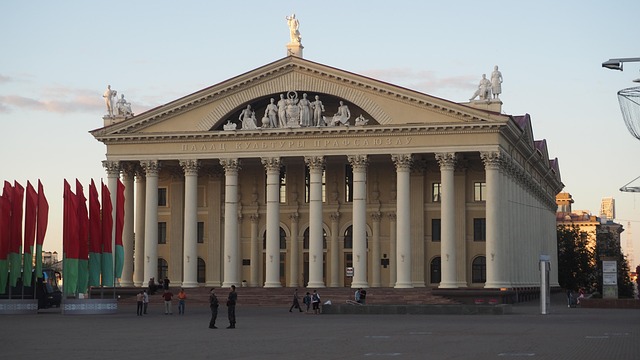
Women’s hockey in Belarus is a developing part of a larger national ice hockey culture. Belarus has long had a stronger men’s hockey identity, supported by professional clubs, state-backed infrastructure, and a visible men’s national team tradition. The women’s game is much newer and less established, but it now has a clearer base than it did in the past. Belarus has a full IIHF membership, a national federation, 45 indoor IIHF-size rinks, and reported senior female player participation, giving women’s hockey some structural ingredients for growth.
The Belarus women’s hockey story is not yet a story of Olympic appearances, World Championship medals, or a deep international record. It is a story of a country with hockey infrastructure trying to create a women’s pathway inside a system that has historically been much more focused on men’s hockey.
The Place of Women’s Hockey in Belarus
Women’s hockey in Belarus sits in the shadow of the men’s game. Ice hockey is one of the country’s most visible sports, but that visibility has not automatically translated into a mature women’s hockey system. The men’s side has had stronger clubs, stronger national-team attention, and a clearer development pipeline. Women’s hockey has had to build from a smaller base.
That makes Belarus different from countries such as Canada, the United States, Finland, Sweden, Czechia, Switzerland, and Japan, where women’s hockey has a long-standing international profile. Belarus has the rinks and hockey culture to support more women’s participation, but the women’s side still needs deeper youth recruitment, more girls’ teams, more coaches, and more regular competition.
The most important advantage is infrastructure. A country with dozens of indoor rinks has more opportunity to grow women’s hockey than a country where ice access is almost nonexistent. The challenge is turning that rink base into a real girls’ and women’s hockey system.
The History of Women’s Hockey in Belarus
Women’s hockey in Belarus does not have the long international history of the country’s men’s program. The Belarusian women’s national ice hockey team is controlled by the Belarusian Ice Hockey Association, but it has not built a major IIHF Women’s World Championship record. Public summaries of the team describe its first unofficial game as taking place in January 2023, followed by another game in May 2023, which shows how recent the national-team project is compared with more established European programs.
The creation of a Belarus women’s hockey league in 2023 was an important domestic step. A national team cannot develop without players competing regularly, and women’s hockey needs more than occasional camps or symbolic roster announcements. It needs clubs, schedules, coaches, goalies, defenders, forwards, and youth players who can move from early participation into senior competition.
Belarus’s women’s hockey history is therefore best understood as early-stage institution building. The country has hockey facilities and a broader ice hockey identity, but the women’s game is still creating its own tradition.
National Team and International Competition
The Belarus women’s national team has not yet become a major factor in international women’s ice hockey. Unlike neighboring or regional programs such as Czechia, Slovakia, Poland, Latvia, Kazakhstan, and Ukraine, Belarus does not currently have a long visible record in the IIHF women’s divisions. That limits the program’s international profile and makes it difficult to compare the team competitively against established European women’s programs.
The broader international situation also matters. Russian and Belarusian teams have remained outside IIHF competition following the international suspensions imposed after Russia’s 2022 invasion of Ukraine, with Belarus affected because of its role in the conflict. Recent reporting has noted that the IIHF has maintained restrictions on Belarusian and Russian teams, even as some other sports bodies have changed their approach toward Belarusian athletes.
For Belarusian women’s hockey, that isolation is especially damaging because newer programs need international games. Lower-division IIHF tournaments can be critical for development. They give teams measurable goals, expose players to different styles, and help federations understand the gap between domestic play and international standards. Without that competition, Belarusian women’s hockey has fewer external benchmarks.
Clubs, Leagues, and Player Pathways
The most important question for women’s hockey in Belarus is whether the country can turn facilities into pathways. Rinks alone do not create a women’s program. Players need beginner opportunities, girls’ teams, mixed youth options, women’s clubs, qualified coaches, trained officials, and consistent games.
Belarus has enough hockey infrastructure to make women’s hockey plausible. The IIHF lists 45 indoor IIHF-size rinks in the country, which is significant compared with many smaller hockey nations. It also lists senior female players in Belarus, showing that the women’s side has a participation base to build from.
The problem is depth. A sustainable women’s hockey pathway needs players at multiple ages, not just a senior team. It also needs goaltending development, strength and conditioning, equipment access, travel support, and domestic competition that is strong enough to prepare athletes for international hockey.
The Belarus women’s hockey league is therefore important even if the overall standard is still developing. A league gives the sport structure. It creates teams, standings, games, rivalries, and roles for coaches and officials. Over time, that kind of domestic foundation can help Belarus move from having women who play hockey to having a women’s hockey system.
Important Players and Program Identity
Belarus women’s hockey is still too young to have the same kind of internationally recognized player identity found in major women’s hockey countries. Canada has Marie-Philip Poulin and a long list of Olympic stars. The United States has Hilary Knight, Kendall Coyne Schofield, Cammi Granato, and many others. Finland, Sweden, Switzerland, Czechia, and Japan all have players who have shaped the international women’s game.
Belarus does not yet have that kind of global women’s hockey profile. Its program identity is instead tied to development, structure, and the attempt to build a new women’s pathway inside a country where hockey already matters. That can be a useful foundation. If a country already understands the sport, already has rinks, and already has hockey institutions, then women’s hockey does not have to start from zero.
The next symbolic figures in Belarusian women’s hockey may not only be players. Coaches, organizers, club leaders, and early national-team members may be just as important. In a developing women’s program, the first generation often has to build the system while also playing in it.
The Future of Women’s Hockey in Belarus
The future of women’s hockey in Belarus depends on domestic structure and international reintegration. The country has enough hockey infrastructure to support more girls’ and women’s participation, but it needs sustained recruitment, stable clubs, youth teams, coaching education, and regular competition.
The international question is just as important. If Belarus remains outside IIHF women’s competition, the women’s program will have fewer chances to measure itself, develop, and gain visibility. If it returns, lower-division international tournaments could become a major development tool.
Belarus women’s hockey should be treated as a developing program with real structural potential, not as a proven international power. Its next step is building depth.
Interested in Sports in Belarus?
American Football in Belarus | Baseball in Belarus | Basketball in Belarus | Cricket in Belarus | Football (Soccer) in Belarus | Rugby in Belarus