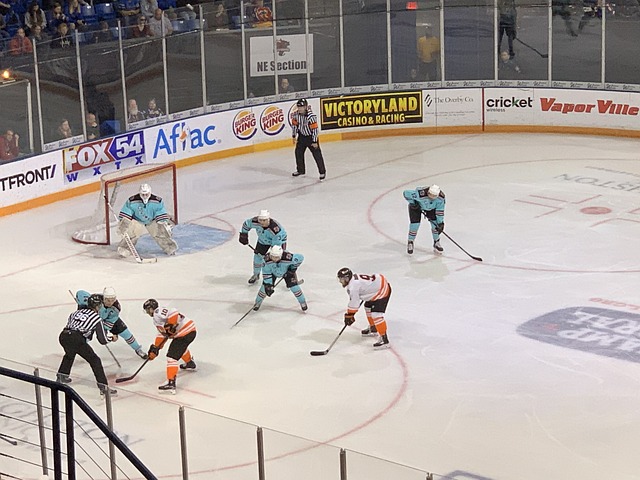
The Western Hockey League is one of the most important junior ice hockey leagues in the world. It is not a minor professional league, and it is not college hockey. It is a major junior league for elite teenage players, mostly between 16 and 20 years old, who are developing toward the NHL, professional hockey, college opportunities, or high-level senior hockey. The WHL is one of the three leagues that make up the Canadian Hockey League, alongside the Ontario Hockey League and the Quebec Maritimes Junior Hockey League. Together, these leagues form the top level of major junior hockey in Canada.
The WHL’s identity is built around geography. It is the major junior league of Western Canada and the Pacific Northwest. Its teams are spread across British Columbia, Alberta, Saskatchewan, Manitoba, Washington, and Oregon. That gives the league a different feel from the OHL and QMJHL. The WHL is shaped by long travel, prairie cities, mountain markets, coastal markets, and American teams that connect junior hockey to the northwestern United States.
For players, the WHL is a development league. For NHL scouts, it is a major talent source. For many cities, it is the highest-level hockey team in town. For Canadian junior hockey, it is one of the central routes to the Memorial Cup. The league champion wins the Ed Chynoweth Cup and advances to the Memorial Cup tournament against the champions of the OHL and QMJHL, plus the host team. The CHL describes the Memorial Cup as the national championship for Canadian major junior hockey, contested by the three CHL league champions and the host club.
The WHL matters because it sits between local hockey and the professional game. It develops NHL stars, supports smaller markets, carries western Canadian identity, and gives young players a demanding schedule before they reach the next level.
A League Born from Western Ambition
The WHL began in 1966, first as the Canadian Major Junior Hockey League. Its early purpose was practical and ambitious: western teams wanted stronger competition and a better way to challenge the major junior powers in Ontario and Quebec. The original league grew out of Saskatchewan and Alberta, with teams such as the Edmonton Oil Kings, Estevan Bruins, Regina Pats, Moose Jaw Canucks, Saskatoon Blades, Weyburn Red Wings, and Calgary Buffaloes. A 2004 history in The Daily Herald described the original circuit as a seven-team league covering Saskatchewan and Alberta with a 56-game schedule.
That origin explains the league’s personality. The WHL was created because western hockey people believed their region needed a stronger structure. It was not enough for good players to be scattered across smaller leagues. Western Canada needed a major junior league that could compete nationally, develop players, and win the Memorial Cup.
The league’s name changed more than once. It became the Western Canada Junior Hockey League, then the Western Canada Hockey League, and finally the Western Hockey League. The modern name reflected the league’s broader footprint, especially after teams entered from the United States. The Portland Winterhawks trace their WHL history to the relocation of the Edmonton Oil Kings franchise to Oregon in 1976, an important step in making the league more than a strictly Canadian western circuit.
The WHL’s early decades included expansion, relocation, and experimentation. That is common in junior hockey, where markets, arenas, ownership, and regional economics can change quickly. But the league’s basic logic held: create high-level junior hockey in the West, build strong competition, and send players toward the NHL and the Memorial Cup.
The Geography of the WHL
The WHL’s geography is one of its defining features. As of the 2025–26 season, the league has 23 teams, with the Penticton Vees joining as the newest franchise. The WHL is the largest of the three CHL leagues by number of teams, with clubs spread across four Canadian provinces and two American states.
That footprint gives the WHL a unique rhythm. A team in Brandon, Manitoba, lives in a different hockey environment from a team in Victoria, British Columbia. A team in Saskatoon has a different local identity from a team in Portland or Seattle. Alberta markets such as Calgary, Edmonton, Red Deer, Medicine Hat, and Lethbridge connect the league to one of Canada’s strongest hockey provinces. Saskatchewan markets such as Regina, Saskatoon, Moose Jaw, Prince Albert, and Swift Current connect the league to prairie hockey culture. British Columbia clubs connect the league to the coast, the interior, and the province’s deep junior hockey landscape. Washington and Oregon clubs give the league a cross-border identity.
The current team list includes long-established names and newer-market stories: Brandon Wheat Kings, Calgary Hitmen, Edmonton Oil Kings, Everett Silvertips, Kelowna Rockets, Kamloops Blazers, Lethbridge Hurricanes, Medicine Hat Tigers, Moose Jaw Warriors, Portland Winterhawks, Prince Albert Raiders, Prince George Cougars, Red Deer Rebels, Regina Pats, Saskatoon Blades, Seattle Thunderbirds, Spokane Chiefs, Swift Current Broncos, Tri-City Americans, Vancouver Giants, Victoria Royals, Wenatchee Wild, and Penticton Vees. The official WHL team directory lists these franchises across the league’s current structure.
This geography is not just a map. It shapes the league’s culture. WHL travel can be long. Road trips may cross provincial borders, mountain routes, prairie highways, and the Canada-U.S. border. That travel is part of the development experience. Players learn to manage fatigue, routine, schoolwork, practice, games, and pressure while playing in a league that feels closer to professional hockey than a short local schedule.
The WHL as a Player Development League
The WHL’s biggest hockey function is development. It prepares players for the NHL, AHL, ECHL, European leagues, university hockey, and other levels of the sport. For top prospects, the WHL is a major route to the NHL Draft. For older players, it can be a final junior stage before professional contracts or Canadian university hockey. For many others, it is the highest level they will play, but still a formative experience.
The league is known for a demanding style. WHL hockey has often carried a reputation for size, skating, physical play, and two-way development. That reputation has evolved over time. Modern WHL teams still value strength and competitiveness, but the league has also become faster and more skilled. Defensemen must move the puck. Forwards must play with pace. Goalies face high-end shooters and structured offensive systems. NHL teams now expect WHL prospects to bring more than toughness. They must process the game, handle pressure, and fit modern hockey’s speed.
The league’s NHL production remains one of its strongest claims. The WHL announced that 145 WHL alumni and players were named to NHL opening-day rosters for the 2025–26 season, representing 17.3 percent of the 837 players on NHL opening-day rosters. The same report said CHL players collectively represented 48.0 percent of NHL opening-day rosters.
That number explains the WHL’s importance in the player pipeline. Even in an era when NCAA hockey, European leagues, and the U.S. National Team Development Program have become more important, the WHL remains a major source of NHL players. It is not a historical relic. It is still a central part of how elite hockey talent moves from youth competition to the professional game.
Famous WHL Alumni and the League’s Reputation
The WHL has produced many of the most important players in hockey history. Its alumni list includes scorers, defensemen, goaltenders, captains, and franchise players. The league’s own coverage of the CHL’s Top 50 Players of the Last 50 Years identified Connor Bedard, Mike Modano, Grant Fuhr, and Carey Price among WHL alumni ranked from 30 through 21 on that list.
Those names show the range of WHL development. Mike Modano became one of the greatest American-born players in NHL history after playing for the Prince Albert Raiders. Grant Fuhr became a Hall of Fame goaltender and a central part of the Edmonton Oilers dynasty after playing in the WHL with Victoria. Carey Price became one of the best goaltenders of his generation after playing for the Tri-City Americans. Connor Bedard became one of the most famous modern junior players through his time with the Regina Pats.
The WHL has also developed players such as Bobby Clarke, Reggie Leach, Joe Sakic, Scott Niedermayer, Jarome Iginla, Ryan Getzlaf, Shea Weber, Duncan Keith, Leon Draisaitl, Brayden Point, Mathew Barzal, and many others. Not every player follows the same path. Some become stars quickly. Some develop later. Some use the WHL as a platform for the NHL Draft. Others use it as a bridge to professional depth roles, European careers, or Canadian university hockey.
The common theme is that the WHL gives players a serious test. A player must handle travel, physical maturity, pressure, media attention, and the expectation that every game is being watched by scouts. The league can be difficult, but that difficulty is part of its value.
The Memorial Cup Pathway
The WHL season is not only about league standings. It is also about the path to the Memorial Cup. The WHL champion wins the Ed Chynoweth Cup, named for a major figure in Canadian junior hockey administration, and then represents the league at the Memorial Cup.
The Memorial Cup is one of the most important trophies in Canadian hockey. It brings together the champions of the WHL, OHL, and QMJHL, plus the host team. That format makes it different from a normal playoff bracket. A team has to survive its league playoffs, then reset for a short tournament against other elite junior clubs.
WHL teams have built a strong Memorial Cup history. The league’s own historical summaries and outside records credit WHL teams with 19 Memorial Cup championships, showing that the league has consistently been able to compete against the best from Ontario and Quebec.
The Memorial Cup also matters because it gives WHL markets national attention. A team from Kelowna, Kamloops, Medicine Hat, Spokane, Portland, Seattle, or Swift Current can become the center of the Canadian junior hockey world for a tournament run. For players, it is a high-pressure stage before they reach the NHL or professional hockey. For fans, it is a chance to see their city attached to one of hockey’s oldest and most meaningful competitions.
In 2026, the Memorial Cup is scheduled for Kelowna, British Columbia, with events tied to Prospera Place and the surrounding city. The CHL’s Memorial Cup event details identify the 2026 event window as May 22 through May 31 in Kelowna. That setting fits the WHL’s identity: a western market hosting Canadian major junior hockey’s national championship.
WHL Cities and Community Identity
One of the WHL’s greatest strengths is its relationship with communities. Many WHL cities do not have NHL teams. Some do not have any major professional sports franchise. That gives WHL clubs a special place in local life.
In Regina, the Pats carry one of the oldest names in Canadian junior hockey. In Saskatoon, the Blades are part of the city’s sports identity. In Moose Jaw, Swift Current, Prince Albert, Brandon, and Medicine Hat, junior hockey can feel like a civic institution. In Kelowna and Kamloops, WHL teams connect local pride to major junior success. In Portland, Spokane, Everett, Seattle, Tri-City, and Wenatchee, the WHL gives American markets a Canadian-style major junior experience.
This local role matters because junior hockey is more intimate than the NHL. Fans may see players at schools, restaurants, charity events, and local rinks. Players live with billet families. They are teenagers growing up inside the community while trying to chase a professional future. That makes the relationship different from professional sports, where athletes may feel more distant.
The WHL also gives smaller cities national relevance. A strong WHL team can put a market on television, send players to the NHL Draft, host playoff series, and compete for the Memorial Cup. That can mean a great deal in places where hockey is part of the local identity.
The U.S. Division and the Cross-Border WHL
The WHL’s American teams are one of the league’s most interesting features. Portland became the league’s first American-based club in the 1970s, and the U.S. footprint later grew through Spokane, Tri-City, Seattle, Everett, and other markets. Today, the league’s American side is central to its identity, not a novelty.
This cross-border structure gives the WHL reach beyond Canada. It connects junior hockey to the Pacific Northwest, a region with its own hockey growth story. Seattle now has an NHL team in the Kraken, but the Seattle Thunderbirds were already part of the WHL long before the NHL arrived. Portland has one of the strongest U.S.-based junior hockey traditions. Spokane, Everett, Tri-City, and Wenatchee give the league additional American markets with their own fan bases.
The U.S. teams also help expose American players and fans to the CHL system. Many American prospects still choose the NCAA route, but the WHL gives some players a different development path. It also helps create hockey culture in markets that may not have the same historical depth as Canadian junior towns.
Cross-border junior hockey has practical challenges. Teams deal with travel, border movement, player recruitment, and different sports cultures. But it also gives the WHL a wider identity than a purely Canadian league. The WHL is western Canadian at its core, but it is also a Pacific Northwest league.
The WHL and the NCAA Question
One of the biggest modern issues around major junior hockey has been the relationship between the CHL and NCAA eligibility. For many years, players who played in the WHL, OHL, or QMJHL could not play NCAA hockey because the NCAA treated CHL players as professionals under amateurism rules. That created a major choice for elite teenage players, especially in Canada and the United States: play major junior or preserve NCAA eligibility.
Recent changes have altered that landscape. NCAA Division I hockey has opened the door for former CHL players to compete in college hockey, changing one of the sport’s most important development boundaries. For the WHL, that shift could be significant. It may give players more flexibility after their major junior careers. It may also change recruiting, roster management, and how families evaluate the WHL path.
The older model forced a hard choice. A player who joined the WHL was choosing a major junior route and giving up NCAA hockey. The newer model makes the ecosystem more fluid. A player may develop in the WHL and later move to college hockey, especially if they need more time before turning professional.
This could make the WHL more attractive to some players and families because it reduces the risk of choosing major junior. It could also make college hockey older and deeper if more CHL players enter NCAA programs after junior. The long-term effects are still developing, but the change is one of the biggest structural shifts in modern North American hockey.
The WHL Style of Play
The WHL has long been associated with a hard, competitive style of hockey. That reputation comes from its geography, history, and player pool. Western Canadian hockey has often valued toughness, board battles, checking, defensive responsibility, and physical maturity. The WHL has produced many players who fit that profile.
But the modern WHL is not only a physical league. Like the rest of hockey, it has become faster and more skilled. Teams need mobile defensemen. Forwards must create offense with speed. Goaltenders must handle lateral movement and traffic. Power plays use structured puck movement. Penalty kills rely on pressure, positioning, and shot blocking. Coaches teach transition hockey, controlled entries, and quick puck support.
The league’s best players often dominate because they can combine skill with the WHL’s demanding environment. A player who scores in the WHL must do it while facing travel, physical opponents, NHL scouts, and a long schedule. A defenseman must break pucks out under forecheck pressure. A goalie must handle screens, rebounds, and quick east-west chances.
This makes the WHL valuable for NHL teams. It shows how prospects handle pressure. It also shows whether skill can survive contact. In modern hockey, that question matters. Talent is not enough if a player cannot make plays at high speed while being pressured.
Education, Billets, and the Junior Hockey Life
The WHL is also a life structure for teenage players. Many players leave home to join teams. They live with billet families, attend school, train, travel, and play a heavy schedule. That experience can be both exciting and demanding.
Billet families are one of junior hockey’s most important traditions. They provide homes for players who move away from their families to play in the league. This helps connect players to their local communities. A player is not just staying in a hotel or dorm. He is living with a family that often becomes part of his support system.
The WHL also provides education support, including scholarship opportunities for players after their junior careers. This matters because most WHL players will not become long-term NHL players. Some will play professionally elsewhere. Some will move into university hockey. Some will leave high-level hockey entirely. A responsible junior league has to support development beyond the rink.
That is part of what makes the WHL different from a purely professional league. The competition is serious, the scouting is intense, and the business side is real. But the players are still young. Their experience involves hockey, education, maturity, travel, and personal growth.
Challenges Facing the WHL
The WHL remains strong, but it faces real challenges. The first is competition for players. Elite prospects now have more options than ever: WHL, OHL, QMJHL, NCAA, USHL, U.S. National Team Development Program, European leagues, prep schools, academies, and other routes. The WHL must continue to prove that its development model is valuable.
The second challenge is cost and market stability. Junior hockey teams depend on attendance, sponsorship, ownership strength, arena quality, and community support. Smaller markets can be passionate, but they can also be vulnerable to economic pressure.
The third challenge is player welfare. Modern hockey has become more serious about mental health, education, travel demands, injury management, concussions, and the pressure placed on teenage athletes. The WHL’s future will depend partly on how well it balances elite development with player support.
The fourth challenge is visibility. The NHL dominates hockey attention. College hockey has grown. International prospects are easier to follow online. The WHL must continue to make its players, teams, and storylines visible to fans, scouts, and media.
Expansion also creates questions. The Penticton Vees joined the WHL for 2025–26 as the league’s 23rd team, and Chilliwack has been reported as a future expansion market targeted for 2027–28. Expansion can strengthen the league, but it also requires careful management of competitive balance, travel, and market fit.
Why the WHL Matters
The Western Hockey League matters because it represents a specific and powerful version of hockey. It is western, junior, developmental, local, and national all at once. It belongs to prairie cities, mountain towns, coastal markets, and American Pacific Northwest communities. It sends players to the NHL, competes for the Memorial Cup, and gives smaller markets a high-level team to support.
The WHL is not only a league for future stars. It is a league where communities see young players grow. It is where NHL prospects face pressure before becoming professionals. It is where hockey towns build identity. It is where the western Canadian development system connects to the wider hockey world.
Its future will be shaped by the same forces changing all of hockey: faster play, more skilled players, new development options, NCAA eligibility changes, international scouting, player welfare, and the economics of local sports. But the WHL’s core role remains clear. It is one of the most important junior hockey leagues in the world because it turns regional hockey culture into elite competition.
For players, the WHL is a test. For fans, it is a local team with national meaning. For NHL scouts, it is a major development pipeline. For Canadian junior hockey, it is one of the pillars of the Memorial Cup system. That combination is why the Western Hockey League remains essential to the structure of hockey in North America.