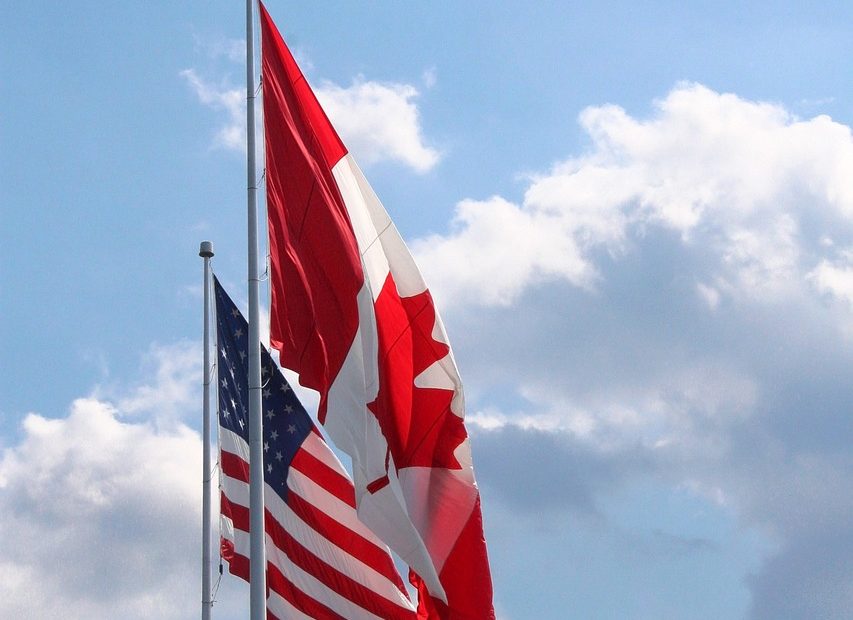
Women’s ice hockey between the USA and Canada is one of international sport’s cleanest rivalries because the stakes are almost always immediate. This is not a matchup built around occasional tension or manufactured tournament drama. It is the central axis of the sport. Since women’s ice hockey entered the Olympic program in 1998, the two countries have repeatedly met in the games that decide gold, and the same pattern has shaped the Women’s World Championship. Canada and the United States have combined excellence, resentment, pressure, and familiarity into a rivalry where every mistake feels historic and every victory feels like proof of a national hockey system.
How USA vs Canada Became the Center of Women’s Ice Hockey
The rivalry grew because the two countries developed the strongest women’s hockey systems before most of the world could catch up. Canada brought the weight of a national hockey culture where the sport already carried deep public meaning. The United States brought college development, regional hockey growth, and a player pool strong enough to challenge Canada directly rather than admire it from a distance.
That made the rivalry different from the start. It was not one country chasing a dynasty from far behind. It was two neighboring hockey powers building elite women’s programs at the same time, then running into each other at every major checkpoint. The first Olympic women’s hockey tournament in Nagano in 1998 gave the rivalry its first global platform, and the United States won the first Olympic gold medal in the event. Canada responded by winning Olympic gold in 2002, 2006, 2010, and 2014, creating the central tension that still defines the matchup: the United States can beat Canada, but Canada has repeatedly turned the biggest stages into national vindication.
The World Championship added even more pressure. Canada dominated the earliest years of the tournament, while the United States later became a world championship machine, especially from the mid-2000s through the late 2010s. The result was a rivalry that never had much room for symbolic victories. A USA-Canada game was usually not a stepping stone. It was the tournament.
The Olympic Finals That Made the Rivalry Unavoidable
The Olympic history gives USA vs Canada women’s ice hockey its sharpest edge. The teams have met in most Olympic gold medal games since the sport joined the Winter Games, and those finals created the rivalry’s emotional vocabulary: Canadian control, American resistance, late-game drama, overtime pressure, shootouts, and the sense that neither team can ever fully own the story.
The 2002 final in Salt Lake City gave Canada a powerful answer to 1998. The United States entered as defending Olympic champion and had home-ice conditions, but Canada won gold. That result mattered because it restored Canadian authority at the exact moment when the sport was trying to define its Olympic hierarchy.
The 2010 final in Vancouver carried a different kind of pressure. Canada won gold at home, giving the country one of the cleanest expressions of hockey identity possible: Canadian players beating the United States for Olympic gold on Canadian ice. Four years later in Sochi, the rivalry produced one of its most dramatic games. The United States led late, Canada tied it, and Canada won in overtime. That game became part of the rivalry’s mythology because it reinforced the feeling that Canada could survive almost anything in an Olympic final.
Then 2018 changed the balance. The United States beat Canada in a shootout in PyeongChang to win its first Olympic gold in women’s hockey since 1998. That victory mattered because it interrupted Canada’s Olympic run and gave a generation of American stars its defining Olympic moment. Canada answered again in 2022, beating the United States for gold in Beijing. The rivalry kept doing what it does best: refusing to settle.
The World Championship has kept that tension alive between Olympics. In 2025, the United States beat Canada 4–3 in overtime to win the Women’s World Championship, with Tessa Janecke scoring the winner. That final was another reminder that the rivalry does not need Olympic branding to feel enormous. When these teams meet for a title, the game already carries its own weight.
Why USA vs Canada Still Defines the Sport
The rivalry still matters because it sets the standard for women’s ice hockey. Other countries have grown stronger, and that growth is essential for the sport’s long-term health. Finland, Czechia, Switzerland, Sweden, and others have produced major performances and elite players. But USA vs Canada remains the measuring stick because the two teams have created the highest-pressure environment in the women’s game.
The bitterness is part of the quality. These players know each other too well for the rivalry to feel ceremonial. Many have crossed paths in college hockey, professional leagues, international tournaments, and years of national team camps. Familiarity does not soften the matchup. It makes the margins smaller. Every board battle, crease collision, power play, and line change comes with the memory of previous finals.
The rivalry also carries institutional meaning. It reflects two national systems fighting for the same summit: Canada’s deep hockey identity against the United States’ expanding development pipeline. When Canada wins, it reinforces the idea that hockey remains central to the country’s sporting self-image. When the United States wins, it shows how far American women’s hockey has grown through college programs, regional development, and professional ambition.
That is why the rivalry works so well. It is not just close. It is consequential. USA vs Canada women’s ice hockey has become the sport’s main stage, its recurring argument, and its clearest standard of excellence.
USA vs Canada endures because the rivalry keeps producing games that feel bigger than one tournament. It has Olympic history, world championship pressure, elite skill, and enough competitive memory to make every meeting feel unfinished. In women’s ice hockey, this is still the matchup that tells the rest of the sport where the bar is.