Synthetic Turf and Inequality is one of field hockey’s most important structural stories because the surface did more than make the game faster. It changed who could realistically train for the modern version of the sport. Once elite hockey moved from grass to synthetic turf, speed, passing, first touch, penalty corners, and defensive movement all evolved around a flatter, quicker, more predictable surface. That created a new competitive divide. Programs with access to proper turf could prepare for international hockey as it was actually played. Programs without it were often left training for a version of the game that no longer existed at the top level. The shift was tactical, but its deepest impact was economic.
How Synthetic Turf Rebuilt the Game
Field hockey’s modern turf era is usually traced to the 1976 Montreal Olympics, when Olympic hockey was played on artificial turf rather than natural grass. The change was not cosmetic. A flat synthetic surface made the ball move faster and more consistently, which rewarded quick passing, sharper positioning, cleaner trapping, and more rehearsed set pieces. The sport became less dependent on uneven bounces and more dependent on speed, precision, and repeatable technique.
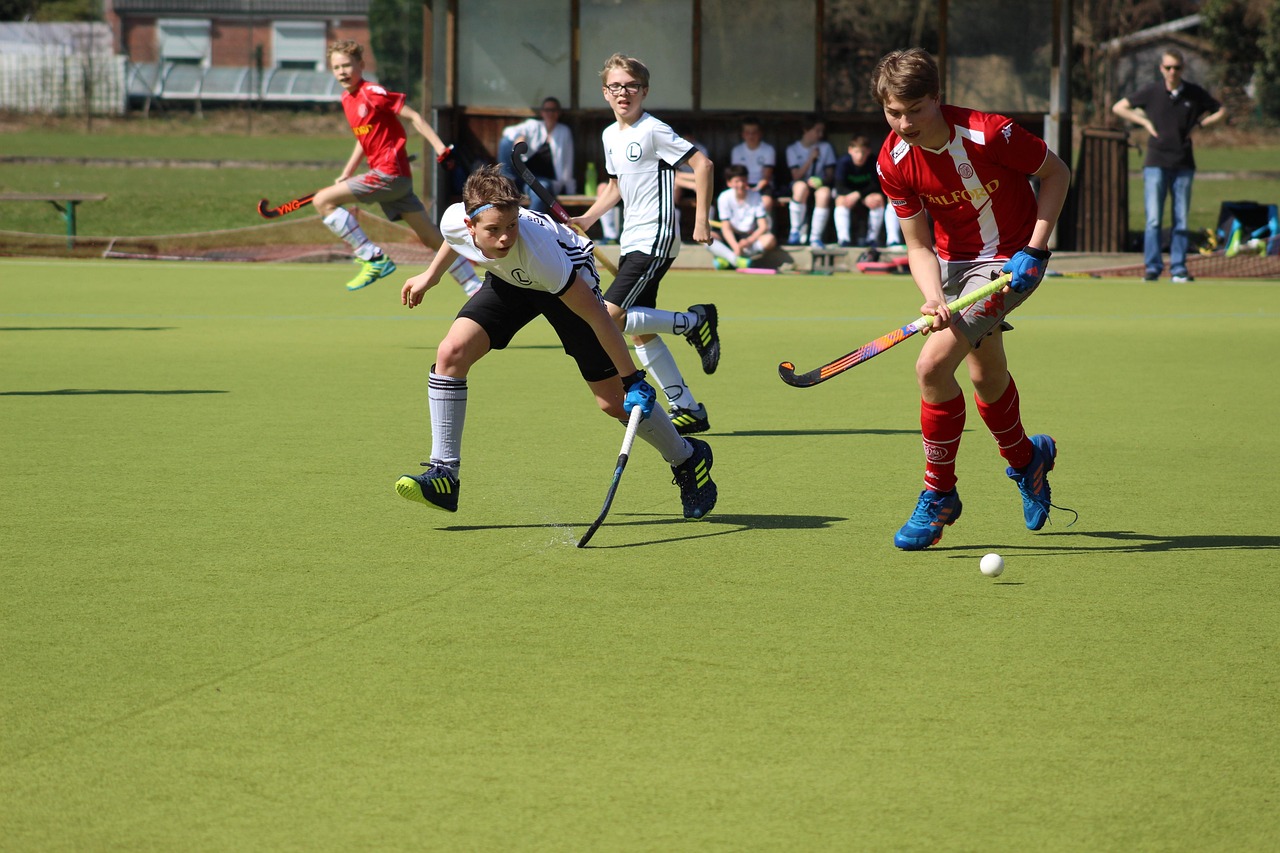
That helped create the field hockey most fans recognize today. Elite teams could press higher, circulate the ball faster, and build attacks through speed and structure. Penalty corners became more specialized. Goalkeepers faced quicker shots. Defenders had less time to recover. Midfielders needed cleaner receiving skills under pressure. The surface did not invent modern hockey by itself, but it gave coaches and players a new technical foundation.
The problem was that this new foundation was expensive. Grass fields were imperfect, but they were widely available. Synthetic turf required installation, maintenance, watering systems for elite wet pitches, replacement cycles, and institutional investment. That meant the sport’s technical future became tied to infrastructure. Countries, clubs, schools, and regions that could afford proper turf had a pathway into the new game. Those that could not were pushed to the edge of elite development.
Synthetic Turf and Inequality in Player Development
The biggest impact of synthetic turf was not just what happened during international matches. It was what happened before players ever reached that level.
A player who trains every day on proper turf learns the timing of modern hockey naturally. The ball arrives at the expected pace. A pass across the pitch behaves consistently. A first touch can be practiced at game speed. Defensive footwork can be drilled under realistic pressure. Penalty corners can be rehearsed with the same rhythm used in major tournaments.
A player raised mostly on grass faces a different developmental problem. The skill base may be strong, and the creativity may be real, but the training environment does not fully match the elite game. The ball may bobble. Passes slow down. Touches require different adjustments. A player can develop excellent grass hockey habits and still need to relearn timing on turf. At the highest level, that gap matters.
This is where the inequality becomes structural. Wealthier programs do not simply buy nicer facilities. They buy repetition. They buy familiarity. They buy thousands of touches on the same kind of surface used in elite competition. They buy the chance for young players to treat turf hockey as normal rather than special.
The divide also affected historic hockey powers in different ways. Some European and wealthy Commonwealth systems adapted quickly because they had the capital, club structures, and institutional support to build turf access. Other hockey cultures, including places with deep grass traditions, faced a harder transition. The shift favored programs that could modernize facilities at scale, while making it harder for less-resourced systems to keep pace even when their player base and hockey culture remained strong.
The result was a sport where talent alone was not enough. Coaching, culture, and commitment still mattered, but they increasingly had to operate through the filter of surface access. A federation without enough turf fields could produce gifted players, but those players often needed extra adaptation time when they reached international competition. A school or club without turf could teach the sport, but not always the exact speed and geometry of the modern version.
Why the Turf Divide Still Shapes Hockey
Synthetic turf gave field hockey a cleaner elite product. It made the sport faster, more technical, and more television-friendly. It helped standardize competition and reduced the randomness that natural grass could introduce. From a performance standpoint, the argument for turf is easy to understand.
But the access question never disappeared. A sport can become more technically advanced while also becoming harder to enter. That is the tension at the center of synthetic turf and inequality. The same surface that sharpened the game also raised the price of full participation.
This matters most at the development level. If young players only see proper turf during tournaments, camps, or rare federation events, they are not building the same relationship with the ball as players who train on it weekly. If local clubs cannot afford turf time, they may lose players to better-funded programs. If national systems have only a few elite pitches, opportunity can become concentrated around certain cities, schools, or institutions.
The issue also connects to the future of global hockey. Field hockey wants to be fast, modern, and internationally competitive. But a global sport needs more than elite surfaces in wealthy areas. It needs enough accessible infrastructure for players outside major hockey centers to develop realistically. Otherwise, the game risks narrowing its own talent pool.
The grass-to-turf shift changed field hockey because it changed the conditions of excellence. It rewarded speed, precision, and repeatable skill, but it also made infrastructure part of competitive identity. Synthetic turf did not just alter how hockey is played. It altered who gets to prepare for the sport’s highest level on equal terms.