Spain’s Field Hockey Identity is built around a paradox: the sport is not one of the country’s dominant public obsessions, yet Spain has built one of Europe’s most durable hockey cultures. The national story includes Olympic medals, European relevance, elite club infrastructure, and a particularly strong Catalan base. Spain’s women won Olympic gold as hosts at Barcelona 1992, while the men have won Olympic silver medals in 1980, 1996, and 2008. That makes Spanish field hockey more than a niche sport. It is a serious competitive tradition that sits just outside the country’s football-dominated image.
How Spain Built a Serious Field Hockey Culture Outside the Mainstream
Field hockey in Spain does not have the mass-cultural reach of football, basketball, cycling, or tennis. Its strength comes from a different model: concentrated clubs, multi-sport institutions, strong local traditions, and a national team structure capable of turning a smaller player base into international results.
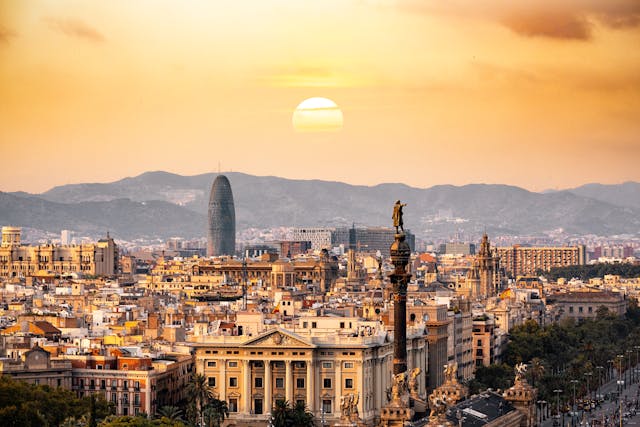
That is why Catalonia matters so much to the story. Spanish field hockey has deep roots in places such as Barcelona and Terrassa, where clubs have operated not just as teams but as sporting communities. Real Club de Polo in Barcelona, Club Egara, Atlètic Terrassa, CD Terrassa, and other Catalan institutions have helped give Spanish hockey an infrastructure that is unusually strong for a sport outside the country’s mainstream spotlight.
Terrassa is especially important. The city is widely associated with Spanish hockey, and reporting around the 2024–25 Copa del Rey and Copa de la Reina described it as “la ciudad del stick,” with Egara, Atlètic, Deportiu Terrassa, and Línia 22 together accounting for roughly a quarter of Spain’s field hockey licenses. That concentration helps explain how Spain can remain internationally relevant in a sport that does not dominate national attention.
The club culture also gives Spain a bridge between local identity and elite competition. Atlètic Terrassa, founded in 1952, has been one of the country’s major men’s clubs, with repeated División de Honor titles and regular Euro Hockey League appearances. Real Club de Polo has also been a major Spanish and European-level club, with recent domestic success and a continuing role in Spain’s top hockey structure. Spain’s field hockey identity, then, is not built from occasional national-team moments alone. It is built from clubs that keep producing players, habits, rivalries, and expectations.
The Olympic Results That Put Spain on the Field Hockey Map
Spain’s field hockey story becomes most visible at the Olympics. The men’s team has reached Olympic finals more than once, including silver-medal finishes in Moscow 1980, Atlanta 1996, and Beijing 2008. In Beijing, Spain lost the final 1–0 to Germany, adding another silver to a men’s Olympic record that already placed the country among the sport’s serious international programs.
The women’s defining moment came at Barcelona 1992. Spain, playing at home, won the women’s field hockey gold medal in one of the major host-nation breakthroughs of those Games. Olympics.com describes the result as one of the biggest upsets of Barcelona 1992. That mattered because it gave Spanish field hockey something rare: a moment that belonged not only to specialists but to the wider national memory of a home Olympics.
The location of that triumph also mattered. The women’s hockey event connected Spain’s Olympic moment to Catalonia’s hockey geography. Terrassa, already one of the country’s central hockey cities, became part of the sport’s most famous Spanish chapter. The result tied together the club base, the Olympic stage, and the idea that Spain could produce not merely competitive teams but championship teams.
Spain has also remained relevant in European competition. The men’s national team has been a European champion and a regular medal contender, while the women have built a modern record that includes European medals. In 2025, both Spain’s men and women won bronze at the EuroHockey Championships, giving the Red Sticks a double podium finish in the same European event.
That matters because it shows continuity. Spain’s hockey identity is not just a memory from Barcelona 1992 or a men’s Olympic silver from a previous era. It is a living competitive system. The country remains capable of producing teams that can challenge Europe’s strongest programs, even while the sport remains outside Spain’s most visible sporting conversation.
Why Spain’s Field Hockey Identity Still Feels Different
Spain’s field hockey identity is unusual because it is both elite and relatively quiet. The country has Olympic history, European medals, historic clubs, and recognizable development centers, but it does not present itself globally as a hockey-first nation. That gives the sport a distinctive place in Spanish athletics: important enough to produce world-class results, but specialized enough to depend heavily on local ecosystems.
Catalonia is central to that identity, but the larger Spanish story is not only Catalan. Madrid clubs, national institutions, and Spanish international teams all help carry the sport. Still, the Catalan influence gives Spanish field hockey much of its texture. It explains why certain cities, families, clubs, and neighborhoods matter so much. It also explains why Spain’s success can feel so structurally concentrated compared with sports that are spread more evenly through schools, media, and professional entertainment.
The sport’s position outside football’s shadow may even be part of its character. Spanish field hockey does not have to carry the same national noise as football. Its culture is more club-based, technical, and community-rooted. The players who emerge from that system are often shaped by close sporting environments where youth development, senior competition, and family tradition overlap.
That is why Spain’s results carry more meaning than a medal table alone can show. The women’s gold in 1992, the men’s Olympic silver medals, the European podiums, and the power of clubs in Terrassa and Barcelona all point to the same idea: Spain has built a field hockey identity that is smaller than its football identity, but much deeper than casual observers might expect.
Spain’s field hockey story is not about replacing the country’s football image. It is about widening it. Behind the stadiums, league titles, and global football stars is another Spanish sports tradition: one built on Olympic breakthroughs, Catalan club culture, European credibility, and a long-running ability to compete with the best teams in the world.