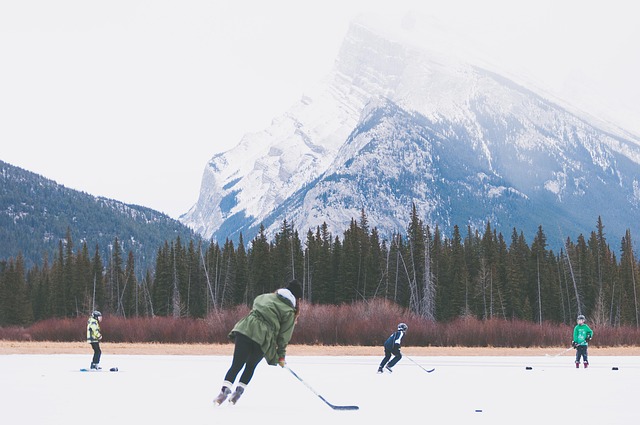
Most hockey coverage focuses on the NHL, international tournaments, elite junior leagues, and Olympic competition. Those levels matter, but they do not show the full life of the sport. Hockey also lives in late-night adult leagues, public rinks, backyard skating areas, frozen lakes, schoolyard games, and winter tournaments where the score matters less than the chance to keep playing.
Rec league hockey and pond hockey sit close to the roots of the game. They are not just casual versions of professional hockey. They are part of the culture that keeps hockey connected to ordinary players. A person does not need to be drafted, scouted, sponsored, or selected for a national team to have a serious relationship with hockey. Many players spend more years in adult leagues than they ever spent in youth hockey. Many people first understand the rhythm of the sport on outdoor ice, long before they ever play inside a formal arena.
This side of hockey is especially important in Canada and the United States, but it also exists across cold-weather countries and hockey regions around the world. In places with rinks, adult leagues give former youth, college, junior, and recreational players a way to stay in the game. In places with natural ice, pond hockey keeps alive the older winter tradition of skating, passing, and playing without the full structure of organized competition.
What Rec League Hockey Actually Is
Rec league hockey usually means organized adult hockey played outside elite, school, college, junior, or professional systems. It may be called adult hockey, beer league hockey, recreational hockey, house league, senior recreational hockey, or community hockey depending on the country or local culture. The format changes by rink and city, but the basic idea is the same: adults register as individuals or teams, play scheduled games, and compete at skill levels designed to keep games reasonably balanced.
A typical rec league is built around divisions. Better former high school, junior, college, or semi-pro players may play in the top divisions. Newer players, older players, and casual players may play in lower divisions. Many leagues also have beginner programs, women’s divisions, co-ed divisions, over-30, over-40, or over-50 leagues, and no-check formats. The structure allows people with very different hockey backgrounds to play at a level that fits their skating, fitness, and comfort.
This is important because hockey has a steep learning curve. Skating is not like running. A new player must learn balance, stopping, turning, stickhandling, passing, shooting, positioning, and game awareness at the same time. Rec leagues give adult players a place to keep improving without needing to enter elite competition.
Adult hockey is also a major participation category. USA Hockey reported 577,864 registered players, 67,253 coaches, and 31,316 officials for the 2024–25 season, showing the size of the American organized hockey base. In Canada, a published study using national health survey data noted that more than one million Canadian adults play recreational ice hockey, showing how deeply adult hockey is built into Canadian sport culture.
The Role of Local Rinks
Rec league hockey depends on rinks. The professional game depends on arenas too, but the rec game is tied more closely to the local rink as a community institution. The rink is where players learn, return, socialize, and build routines around the sport. Many adult league games take place late at night because youth hockey, school teams, figure skating, and competitive programs often receive the earlier ice times.
That late-night schedule is part of the culture. Adult players may work all day, handle family responsibilities, and then play at 9:30, 10:45, or even later. For some, that sounds inconvenient. For many hockey players, it becomes part of the rhythm of the week. The game is not just exercise. It is a scheduled commitment, a social anchor, and a reason to stay connected to the sport.
Rinks also create hockey communities that go beyond one league. A single rink might host youth hockey in the afternoon, high school games in the evening, adult leagues at night, and learn-to-play sessions on weekends. The same building may include former college players, new adult beginners, parents returning to the game, referees, coaches, and children learning to skate. Rec hockey is part of that ecosystem because it keeps adults involved after their competitive playing years end.
In the United States, adult hockey is not limited to traditional northern markets. USA Hockey reported in 2025 that Florida had 12,611 registered players age 19 and older during the 2024–25 season, trailing only California and Michigan in that category. That fact matters because it shows that rec league hockey can grow even in warm-weather states when there are enough rinks, NHL influence, adult players, and local demand.
Why Adults Keep Playing Hockey
Adults keep playing hockey for many reasons. Some are former youth or college players who never wanted to stop. Some start later because they became fans of the sport and wanted to try it themselves. Some join because friends, coworkers, spouses, or relatives already play. Others come through learn-to-skate or adult beginner programs.
The appeal is partly physical. Hockey requires skating, balance, short bursts of speed, coordination, and endurance. It is demanding even at lower levels. The game can give adults a form of exercise that feels more like competition than a workout. Instead of running on a treadmill or lifting alone, players chase the puck, defend, pass, and react to the game.
The appeal is also social. Rec league teams often become small communities. Players see each other every week. They share lines, rides, injuries, jokes, frustration, and the small routines of the season. Some teams stay together for years. Others rotate players as people move, change jobs, have children, or age into slower divisions.
In Canada, the health and social role of recreational hockey has been studied directly. Research published in 2016 found an association between regular recreational ice hockey and better health outcomes among physically active men aged 35 and older, compared with other physically active men. That does not mean hockey is magic, but it does show that adult recreational hockey is significant enough to be studied as part of public health and adult activity.
The Culture of Pond Hockey
Pond hockey is different from rec league hockey. It is less formal, more outdoor, and often closer to how many people imagine hockey’s old roots. Pond hockey is usually played on frozen lakes, ponds, rivers, backyard rinks, or outdoor community ice. It may involve no boards, no goalies, smaller nets, fewer players, and looser rules. The game often emphasizes skating, passing, space, and creativity.
The classic image of pond hockey is simple: players on natural ice, sticks in hand, winter air around them, and a game that can start with whoever shows up. In reality, modern pond hockey exists in several forms. There are informal pickup games. There are backyard family games. There are outdoor community events. There are also organized pond hockey tournaments with registration, divisions, sponsors, schedules, and championships.
Pond hockey matters because it removes some of the barriers of formal hockey. It does not always require a full rink, a referee, full equipment, or a perfect team structure. Many games are played four-on-four or three-on-three. Some use small goals without goalies. Some ban slap shots or heavy contact. The game becomes more about movement and puck skill than systems and physical battles.
This style of play can also help explain why hockey developed the way it did. Before indoor arenas became the center of organized hockey, outdoor ice was central to the sport’s growth in cold regions. Pond hockey keeps that link visible. It reminds players and fans that hockey began as a winter game before it became a professional entertainment industry.
Major Pond Hockey Events
Pond hockey has also become organized through major tournaments. One of the best-known American examples is the U.S. Pond Hockey Championships in Minnesota. The event began in 2006, when the first tournament was held on Lake Calhoun with 116 teams playing on 25 rinks. Later editions moved to Lake Nokomis in Minneapolis, which became closely associated with the tournament.
Canada also has major pond hockey traditions. The World Pond Hockey Championships are held in Plaster Rock, New Brunswick, on Roulston Lake. The event began in 2002 and grew from a local community idea into an international pond hockey tournament. This is exactly the kind of event that shows how pond hockey can connect local identity, tourism, winter culture, and recreational sport.
These tournaments are not the NHL outdoors. They are not the Winter Classic. They are different. Their identity comes from ordinary players, winter travel, small communities, local volunteers, and the idea that hockey can still belong to people who are not professionals. The teams may take the games seriously, but the appeal is also cultural. Players want the outdoor ice, the shared cold, the tradition, and the feeling of playing a version of hockey that is both competitive and stripped down.
Organized pond hockey also shows how informal traditions can become structured without losing their original meaning. A tournament can have brackets, sponsors, rules, and winners, but still feel different from indoor league play. The setting changes everything. The lake, weather, snowbanks, natural light, and imperfect ice all become part of the event.
Rec League Hockey vs. Pond Hockey
Rec league hockey and pond hockey overlap, but they are not the same.
Rec league hockey is usually organized around a season. Teams register, divisions are created, schedules are posted, referees are assigned, and standings are kept. It is hockey inside the rink system. Even at a casual level, it often has rules, penalties, jerseys, scorekeepers, and playoffs.
Pond hockey is more flexible. It can be organized or informal, but the spirit is usually less controlled. The game may have no checking, no goalies, no blue lines, and no formal faceoffs. Players may call their own goals and fouls. The smaller playing area and lack of boards change how people move the puck. Without goalies, players may need to shoot low, pass more, and use precision instead of power.
Both forms matter because they serve different parts of the hockey community. Rec leagues let adults keep playing a full version of the game with teams, schedules, and competition. Pond hockey keeps the sport close to outdoor tradition and informal play. One belongs to the rink calendar. The other belongs to winter itself.
Many players enjoy both. A person might play in a Tuesday night adult league and then join a pond hockey tournament in January. The two experiences support each other. Rec league keeps the player active all season. Pond hockey gives that player a different kind of memory.
Women’s Rec Hockey and Adult Beginners
One of the most important developments in recreational hockey is the growth of women’s adult hockey and adult beginner programs. For a long time, many women had fewer chances to play hockey as children. Adult leagues, learn-to-play programs, and women’s divisions have helped create new entry points.
Women’s rec hockey can include former college or high school players, adults who started later, and players returning after years away. Some leagues are highly competitive. Others are designed around development and inclusion. The same is true for co-ed adult hockey, which can work well when leagues manage skill levels and rules clearly.
Adult beginner hockey is especially important for the future of the sport. Many people discover hockey as fans first. They may watch the NHL, the Olympics, college hockey, or local teams before deciding they want to play. Beginner programs allow them to learn skating, puck control, passing, and basic positioning in a less intimidating environment.
This is a major difference between hockey and many other sports. An adult can join a soccer, basketball, softball, or running group with relatively little equipment and a lower technical barrier. Hockey is harder to enter. That makes beginner-focused rec programs essential. They are not just casual add-ons. They are the bridge between hockey fandom and hockey participation.
Equipment, Cost, and Access
The biggest challenge for rec league and pond hockey is access. Ice hockey is expensive. Players need skates, sticks, gloves, helmets, protective gear, bags, and ice time. Goalies face even higher equipment costs. Adult league fees can also be significant, especially in cities where rink time is limited and expensive.
Cost affects who plays. Players who grew up with hockey may already own equipment and understand the culture. New players may face a large first purchase before they ever play a game. Families with children in hockey may also struggle to afford their own adult participation after paying for youth programs, travel, and training.
Pond hockey can lower some barriers, but not all. Outdoor play may reduce ice-time costs, but players still need skates, sticks, and protective gear. Natural ice also depends on weather, location, maintenance, and safety. In many places, outdoor ice is less reliable than it used to be, and warmer winters can shorten the pond hockey season.
Access is not just financial. It is also geographic. A person who lives near multiple rinks has more chances to play. A person who lives far from a rink may have to drive long distances for late-night games. That matters for adult hockey because time is often the tightest resource. A sport that requires a long commute, expensive gear, and late ice time can lose players even when they love the game.
Outdoor Ice and Climate Pressure
Pond hockey depends on winter conditions. That makes it vulnerable in ways indoor rec hockey is not. Natural ice needs sustained cold. Lakes and ponds need to freeze deeply enough to support safe skating. Outdoor rinks need weather that allows ice to be built and maintained.
Warm winters can disrupt pond hockey events. Even major outdoor tournaments have had to adapt to weather problems. The U.S. Pond Hockey Championships’ own tournament history shows the event moved from Lake Calhoun to Lake Nokomis after its first year, and more recent tournament records note weather-related disruptions, including the cancellation of a championship round in 2024.
This does not mean pond hockey disappears. It means the tradition becomes more fragile. Communities may need better ice monitoring, backup plans, artificial outdoor rinks, or shorter event windows. In cold regions, pond hockey still has power because it connects people to place. But the future of outdoor hockey will depend on how reliably communities can create safe ice.
Indoor rec hockey has a different climate issue. It can continue in warm places, but it requires energy, refrigeration, and rink investment. That is why warm-weather adult hockey markets such as Florida are interesting. They show that hockey can exist far beyond natural winter, but only when rink infrastructure supports it.
Why Rec Hockey Matters to the Whole Sport
Rec league hockey may look separate from elite hockey, but it helps the whole sport. Adult players buy equipment, rent ice, coach children, referee games, volunteer, watch professional hockey, support local rinks, and introduce friends and family to the game. Many youth hockey parents are also adult players or former players. Many local hockey communities depend on adults who remain active in the sport long after their competitive youth years end.
Rec hockey also keeps players emotionally connected to hockey. A person who plays every week is more than a viewer. They understand the speed of the game, the difficulty of skating, the pressure of defending, and the satisfaction of a clean pass. That makes them more connected to elite hockey, not less.
Pond hockey does something similar, but through memory and identity. It gives the sport a language of winter, place, and tradition. A pond hockey tournament in Minnesota or New Brunswick is not just another recreational event. It is a public statement that hockey still belongs to local communities.
This is why rec league and pond hockey should not be treated as minor topics. They explain why hockey survives between major tournaments, NHL seasons, and Olympic cycles. They are where the sport becomes part of ordinary life.
Rec League and Pond Hockey Around the World
Although the strongest rec and pond hockey cultures are in Canada and the northern United States, the broader idea exists internationally. Adult recreational hockey is common in many European hockey countries, including Sweden, Finland, Czechia, Slovakia, Germany, Switzerland, Austria, Latvia, and Norway. These countries have club systems, municipal rinks, amateur competitions, and adult teams that allow non-professional players to stay involved.
Outdoor hockey also has deep roots in the Nordic countries, Russia, the Baltic region, and Central Europe. The form may not always be called “pond hockey,” but the idea is familiar: winter ice, informal games, community skating, and local play outside the professional structure.
In newer hockey countries, rec hockey can be even more important because it may form the first layer of the sport. Adult players sometimes become organizers, coaches, referees, and promoters. A small adult league can help create demand for youth programs. A group of recreational players can become the base for a national federation, a club team, or an international entry point.
That is one of the quiet truths of hockey development. Elite programs often grow from grassroots communities, not the other way around. A country may not have an NHL player, a major arena, or a famous national team, but if adults are playing regularly, the sport has a foundation.
The Future of Everyday Hockey
The future of rec league and pond hockey will depend on access, rinks, weather, and culture. Adult hockey needs affordable ice time, beginner programs, women’s leagues, balanced divisions, and local rinks that see recreational players as part of their core community. Pond hockey needs safe outdoor ice, local organization, and weather windows that allow tournaments and pickup games to continue.
Technology may help in small ways. Online scheduling, league apps, digital registration, live scoring, and social media make it easier to organize teams and find players. Streaming and local video can give adult tournaments and outdoor events more visibility. But the heart of rec hockey is still physical and local. A player has to show up, tie skates, step on the ice, and play.
The same is true for pond hockey. Its appeal is not polish. Its appeal is the feel of outdoor ice, the sound of skates in open air, and the freedom of a game that does not need to look like professional hockey to matter.
Rec league and pond hockey keep hockey grounded. They show that the sport is not only about stars, standings, contracts, and championships. It is also about ordinary players finding ice, building teams, returning every week, and keeping the game alive in the places where hockey first made sense: rinks, neighborhoods, frozen ponds, and winter communities.