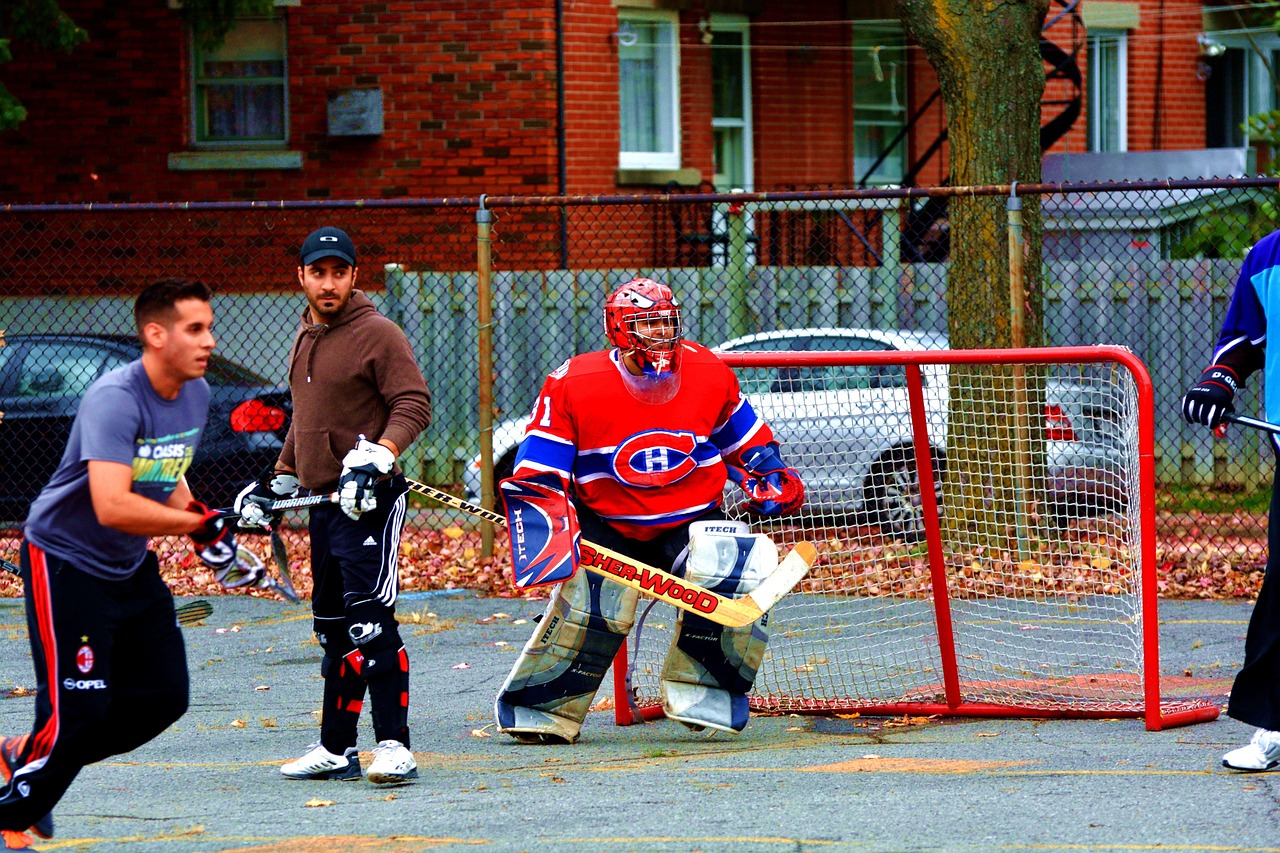
Quebec and hockey culture are tied together by more than the Montreal Canadiens, even though the Canadiens remain the province’s central hockey institution. The story runs through language, regional identity, junior hockey, the lost Quebec Nordiques, and the recurring question of whether Quebec City should have an NHL team again. In Quebec, hockey has often worked as a public language for deeper arguments: Montreal and Quebec City, French and English Canada, tradition and modern economics, local pride and league strategy. That is why the topic never really goes away. It is not only about whether the NHL can support another Quebec team. It is about what hockey is supposed to represent in one of the sport’s defining cultures.
The Canadiens Became Quebec’s Hockey Institution Before the NHL Became Modern
The Montreal Canadiens were founded in 1909, before the NHL itself, and were created in part as a team connected to Montreal’s francophone community. That origin matters because the Canadiens did not become symbolic only because they won. They became symbolic because they gave French-speaking Quebec a professional hockey institution at a time when sport, language, class, and public identity were deeply intertwined. The club’s 24 Stanley Cups made it the most decorated franchise in NHL history, but the emotional weight of the Canadiens comes from more than the banners.
For much of the twentieth century, the Canadiens were one of the places where Quebec could see itself at the center of North American sport. Players such as Maurice Richard, Jean Béliveau, Guy Lafleur, Patrick Roy, and others became more than stars. They became reference points in a larger cultural memory. Richard especially became inseparable from Quebec’s sense of pride, frustration, and recognition. He was not only a great player; he was a figure through whom many fans saw questions of respect, authority, and French Canadian identity.
That is why the Canadiens are not simply “Montreal’s team” in the way many franchises belong to one city. They are a provincial and cultural institution, even for many fans who criticize ownership, roster decisions, coaching choices, or the long Stanley Cup drought since 1993. The Canadiens carry the pressure of being both a hockey team and a symbol. In most markets, losing seasons are sports disappointment. In Montreal, they can feel like a civic argument.
Language is part of that pressure. The Canadiens operate in a bilingual city, but their place in Quebec means French is not decorative. It is central to how many fans understand the club. The debate over French-speaking coaches, French-speaking stars, francophone media access, and the team’s responsibility to Quebec talent is not an occasional side issue. It is one of the recurring themes of Canadiens history. The team’s identity exists inside the larger politics of Quebec itself.
Even small language moments can become public stories. In 2025, Quebec language authorities drew attention after a dispute over the use of “Go! Canadiens Go!” on public transit signs during the playoffs; the phrase became a reminder that hockey language in Quebec can carry cultural weight beyond the rink.
The Nordiques Made Quebec Hockey a Two-Team Argument
The Quebec Nordiques changed the meaning of hockey in the province because they gave Quebec City its own elite team and created a rivalry that was never only about standings. The Nordiques began in the World Hockey Association, joined the NHL in 1979, and played in Quebec City until the franchise relocated to Denver in 1995 and became the Colorado Avalanche.
Their rivalry with the Canadiens gave Quebec hockey a second pole. Montreal represented the old institution: championships, dynasties, the Forum, the national stage, and the most famous sweater in the sport. Quebec City represented something different: regional pride, defiance, and the idea that the province’s hockey identity did not have to run entirely through Montreal.
The Nordiques also sharpened the language and identity politics of hockey in Quebec. The rivalry was not simply Montreal versus Quebec City. It also mapped onto different visions of Quebec itself. The Canadiens had a broader, older, bilingual metropolitan identity, even while remaining deeply tied to francophone culture. The Nordiques were more directly associated with Quebec City, provincial nationalism, and a more explicitly Québécois identity. Their games against Montreal had the emotional structure of a derby, even though North American hockey does not usually use that language.
That is why the Nordiques’ relocation still matters. Many teams have moved. Not every relocation becomes a permanent wound. The Nordiques left just as the franchise was becoming loaded with talent, and the relocated Avalanche won the Stanley Cup in their first season in Colorado. For Quebec fans, that timing deepened the sense of loss. It was not only that a team left. It was that a team left at the moment when it seemed ready to become great.
The Nordiques’ afterlife remains unusually strong. Their logo, colors, and name still circulate in hockey culture. Fans still wear the sweaters. Quebec City still has a modern NHL-caliber arena in the Centre Vidéotron, which opened in 2015 and hosts the Quebec Remparts of the QMJHL. The building has long been part of the argument that Quebec City has already done some of the practical work needed for an NHL return.
But the debate is not only practical. It is emotional and symbolic. The question “Should Quebec City have a team again?” is really several questions at once. Does a province with Quebec’s hockey history deserve two NHL teams? Does the league value cultural depth as much as market growth? Should a ready-made hockey city matter more than a larger untapped American market? Can nostalgia become a viable business case?
Junior Hockey Keeps Quebec’s Hockey Identity Alive Below the NHL
Quebec’s hockey culture is not only built from the Canadiens and Nordiques. It is also sustained by junior hockey, local rinks, family habits, regional tournaments, and the long path from youth hockey to the professional game. The Quebec Maritimes Junior Hockey League, historically known as the Quebec Major Junior Hockey League, has been one of Canada’s major junior systems and has produced stars, local heroes, and regional identities far beyond Montreal.
Junior hockey matters because it spreads the sport across the province. It gives smaller cities and regions their own hockey centers of gravity. Rimouski, Shawinigan, Drummondville, Chicoutimi, Rouyn-Noranda, Gatineau, Sherbrooke, Val-d’Or, Baie-Comeau, Blainville-Boisbriand, and Quebec City all fit into a hockey map that is much wider than the NHL. In that structure, hockey is not just something watched on television. It is something organized locally, argued about locally, and remembered locally.
The Quebec Remparts are especially important because they connect the junior game to the larger Nordiques question. They play in the Centre Vidéotron, the same arena that keeps Quebec City visible in NHL-return discussions. The building is not just a venue. It is a standing argument. Every major hockey event there becomes another reminder that Quebec City can still gather hockey crowds, still present itself as a serious market, and still imagine itself as more than a former NHL city.
The NHL’s position, however, has remained cautious. In recent years, league expansion discussion has often focused on larger or strategically useful U.S. markets, while Quebec City’s case has been treated as emotionally compelling but economically complicated. In October 2025, Reuters reported that NHL Commissioner Gary Bettman said there were no active expansion discussions and that the league was content at 32 teams.
That leaves Quebec City in a familiar position: visible, prepared, passionate, and still outside the league. The case for a team is easy to understand from a hockey-culture perspective. The case against it is also clear from a league-growth perspective. Quebec City is a proven hockey market, but the NHL often looks for expansion to create new fans, new media reach, and new corporate opportunities. Quebec already watches hockey. That is part of the paradox. Its strength as a hockey market can be treated as a reason it deserves a team, but also as a reason the league may see less growth upside there than in a larger American city.
This is why the Nordiques debate never disappears. It sits at the intersection of memory and economics. Fans can point to history, culture, attendance, the arena, and the emotional logic of restoring a lost rivalry. The league can point to market size, currency, corporate base, media strategy, and expansion priorities. Both sides are talking about hockey, but they are measuring value in different ways.
Quebec hockey culture endures because it has never depended on one team alone. The Canadiens give it history and institutional weight. The Nordiques give it rivalry, loss, and unfinished business. Junior hockey gives it roots. Language gives it stakes. The question of Quebec City’s NHL return remains powerful because it is not only about adding a franchise. It is about whether one of hockey’s deepest cultures still has room for the team it lost.