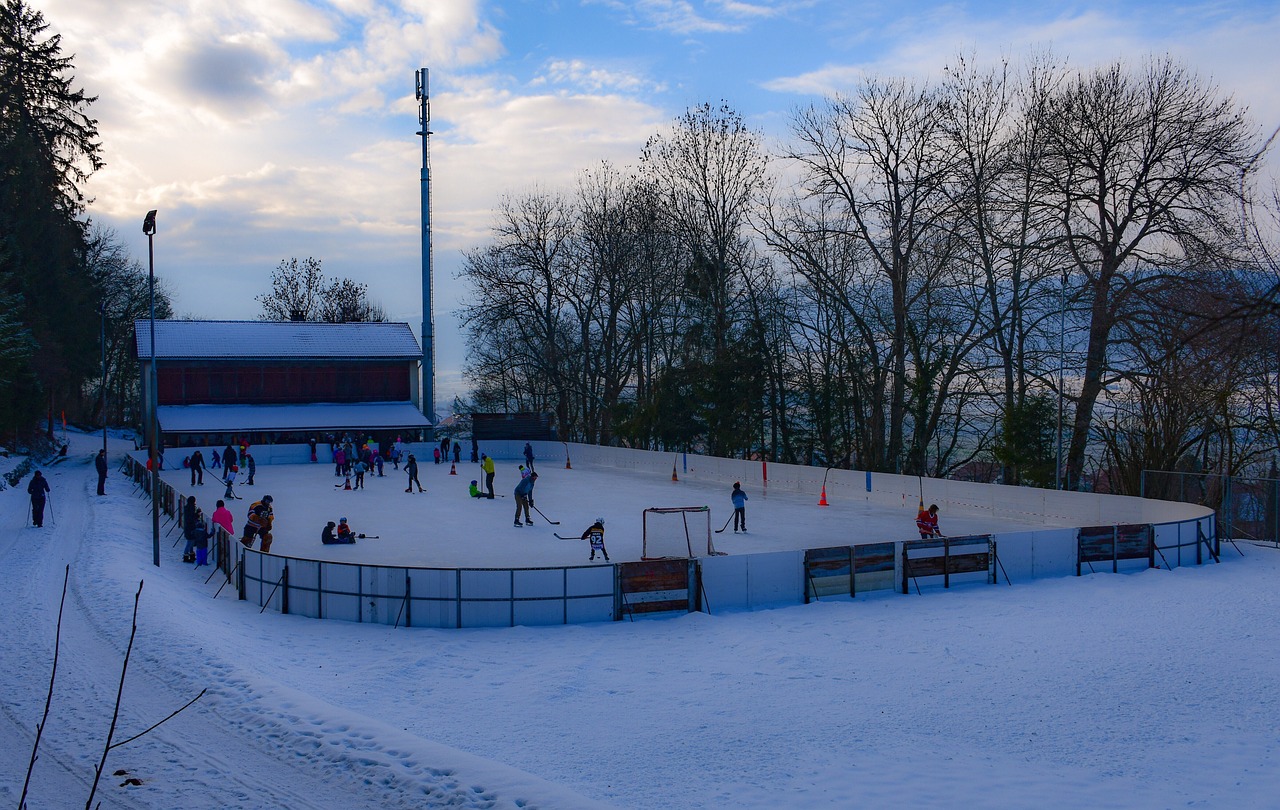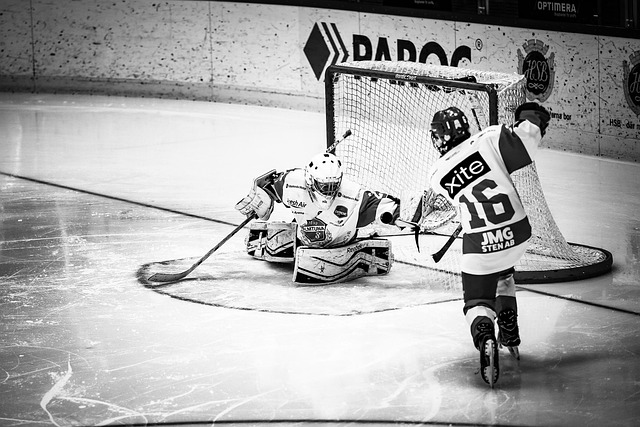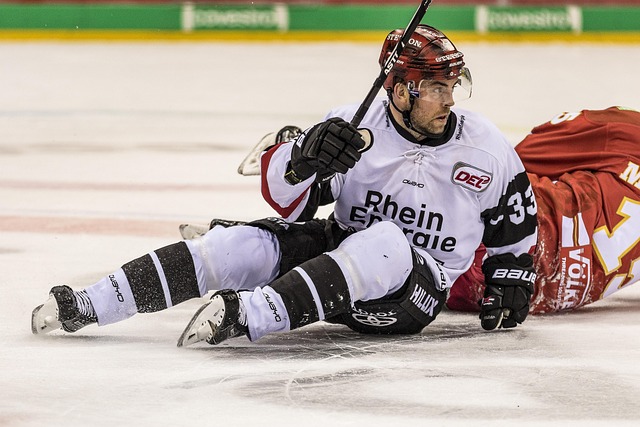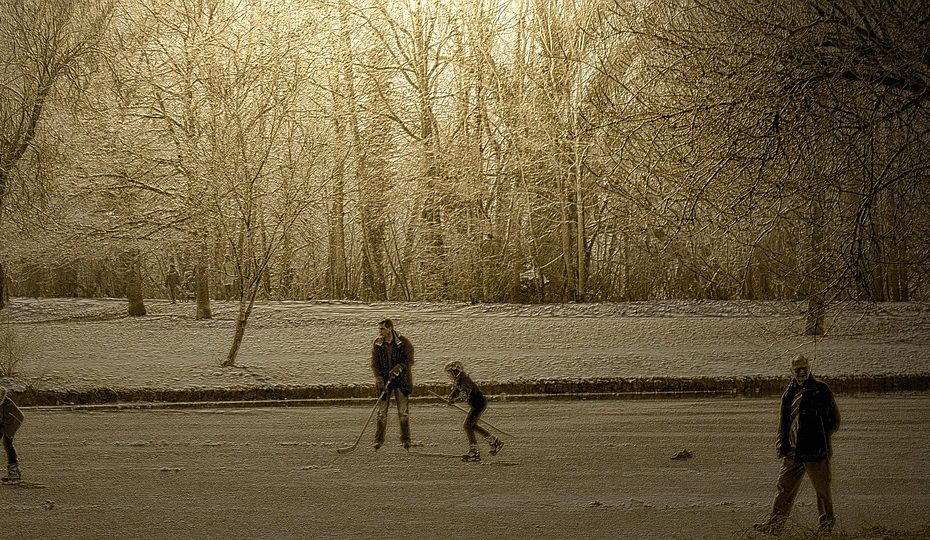
Pond hockey is more than a casual version of ice hockey. It is one of the sport’s most powerful origin stories: frozen lakes, shovel-marked lines, small groups of players, no boards, no benches, and no adult structure turning every shift into a lesson. The image matters because hockey has become a highly organized sport, shaped by systems, coaching, equipment, travel teams, and expensive indoor ice. Pond hockey preserves a different idea of the game. It suggests that hockey begins not with a league, a rink, or a development pathway, but with winter, open space, and players figuring the game out together.
The Frozen Surface Before the Organized Game
Before hockey became a rink sport with glass, boards, line changes, referees, and structured leagues, it belonged naturally to winter landscapes. Frozen ponds, lakes, rivers, and outdoor rinks gave players a surface, but not a script. The game could be adjusted to whatever space existed. Goals could be boots, sticks, rocks, chunks of snow, or anything else that marked an opening. Teams could change as people arrived or left. The clock was often the cold, the fading light, or the moment when someone had to go home.
That informality is central to the appeal of pond hockey. It strips the sport down to its most basic elements: skating, passing, shooting, defending, reading space, and reacting. There are no boards to trap the puck against. There is no perfect geometry. The ice may be rough, narrow, uneven, or oddly shaped. Players have to adapt because the setting refuses to behave like a controlled arena.
That is why pond hockey works so well as hockey’s romantic origin myth. It presents the sport as something discovered rather than manufactured. The game feels like it emerges from the season itself. Winter creates the rink. The players create the rules. The competition grows out of the moment.
The Game Without Boards, Systems, or Constant Instruction
The most important difference between pond hockey and organized hockey is not just the setting. It is the way the game teaches.
Indoor hockey often rewards structure. Players learn forechecks, breakouts, defensive-zone coverage, neutral-zone positioning, special teams, and shift discipline. Those are essential parts of the modern sport, especially as competition rises. But pond hockey teaches something else. It teaches feel.
Without boards, players cannot rely on the same angles. Without coaches stopping play, they have to solve problems while moving. Without strict positions, they learn when to attack, when to cover, when to hold the puck, when to pass, and when to chase. The game becomes a constant negotiation between instinct and space.
That freedom has helped make pond hockey a symbol of creativity. It is where the sport imagines players developing imagination before instruction. A player on a pond is not always a center, defenseman, winger, or system piece. A player is simply part of the game. That looseness allows skill to appear in less formal ways: a quick turn, a strange passing lane, a move around a snowbank, a shot released from bad ice, a defensive recovery made without anyone assigning a role.
The absence of adult noise also matters. Pond hockey is often remembered as a player-run world. There may be competition, argument, pride, and intensity, but the game belongs to the people playing it. That is part of its emotional force. It represents a version of hockey where the sport is not yet a résumé, a ranking, a tryout, or a pathway. It is still play.
Why Pond Hockey Still Shapes Hockey’s Imagination
Pond hockey still matters because modern hockey keeps moving in the opposite direction. Youth hockey has become more specialized, more expensive, and more organized. Indoor ice time is limited. Travel programs can demand major family commitments. Training has become more technical. Analytics and systems have changed how teams understand the game. None of that makes modern hockey less legitimate, but it does make the pond-hockey image more valuable.
The pond stands for access, memory, and simplicity. It reminds hockey that the sport’s emotional center is not only found in arenas. It can also exist in cold air, imperfect ice, and games that nobody records. For fans, pond hockey connects the professional game to something older and more personal. For players, it represents freedom from constant evaluation. For the sport as a whole, it keeps alive the idea that creativity often starts in unstructured spaces.
This is also why outdoor games, winter classics, backyard rinks, and pond hockey tournaments carry so much symbolic weight. They are not just nostalgic events. They are attempts to reconnect a polished professional sport with the rougher image that helped define it. The NHL rink may be the sport’s biggest stage, but the frozen pond remains one of its strongest metaphors.
Pond hockey endures because it gives hockey a memory of itself before the systems arrived. The myth is romantic, but not empty. It captures something real about how games become cultures: people gather, adapt to a place, make rules, compete, and keep coming back. That is why the image of hockey on a frozen pond still matters.