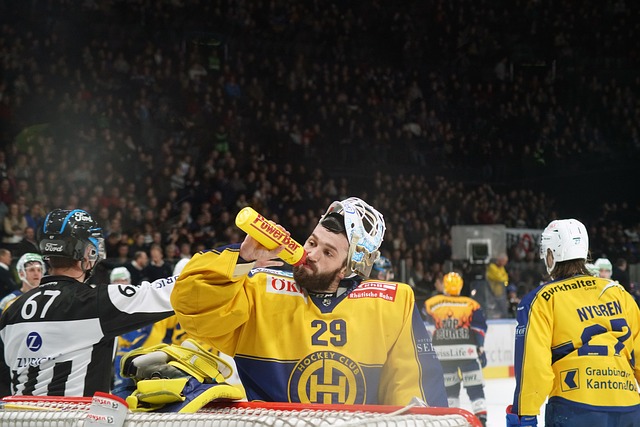
Pavel Datsyuk and the Magic Hands Department is really a story about how hockey intelligence can become spectacle. Datsyuk was not just a player with elite hands. He was a center who made skill feel strategic, turning stickhandling, deception, defensive pressure, and puck theft into one connected system. With the Detroit Red Wings, he became one of the NHL’s most admired two-way forwards, winning two Stanley Cups, three Selke Trophies, and four Lady Byng Trophies while building a highlight archive that still looks unusual even in the skill-heavy modern game. His dekes were famous, but the deeper story is that Datsyuk made creativity useful in every zone of the rink.
The Red Wings Center Who Played Between Structure and Imagination
Datsyuk arrived in the NHL with Detroit in 2001, joining a Red Wings organization that already had stars, standards, and championship expectations. That mattered. He was not asked to become a solo entertainer on a loose team. He had to fit into a mature hockey machine, one built around puck possession, defensive responsibility, and veteran precision.
That setting helped shape the way his skill was understood. Datsyuk’s hands were not just decorative. They served the larger demands of Detroit’s system. He could slow a rush down, pull a defender out of position, delay until a passing lane opened, or protect the puck long enough for teammates to reset the attack. His stickhandling made him entertaining, but his patience made him dangerous.
The phrase “magic hands” fits because Datsyuk seemed to control the puck at a different rhythm than the players around him. He could make a defender commit too early, move the puck through a tiny gap, then recover it before the play looked physically possible. But the “department” part matters too. This was not one trick. It was an entire office of small, repeatable hockey decisions: soft touches, body angles, shoulder fakes, backhand passes, quick lifts, sudden stops, and defensive reads that turned loose pucks into Detroit possessions.
That is why Datsyuk became more than a highlight player. He was a skill player trusted in serious hockey situations. Coaches could put him on the ice because his creativity did not come at the expense of responsibility. It often created responsibility for the other team.
Pavel Datsyuk and the Magic Hands Department Made Defense Look Like Skill
The most unusual part of Datsyuk’s reputation is that his defensive game became part of the same mythology as his offense. Many gifted puck handlers are remembered for what they did after receiving the puck. Datsyuk was just as famous for how he took it away.
His steals did not usually look like heavy collisions or desperate reaches. They looked like anticipation. He read where the puck carrier wanted to go, closed the gap at the right moment, and used his stick like a precision instrument. He could lift a stick cleanly, poke the puck loose without breaking stride, or appear beside a player just as that player thought he had escaped pressure. That skill helped make him a three-time Selke Trophy winner as the NHL’s best defensive forward.
That is what made him feel so different. Datsyuk did not separate offense and defense into two personalities. A steal could become a pass. A defensive read could become a rush. A backcheck could turn into a scoring chance before the other team had fully processed the turnover. His game compressed the rink. Opponents were not safe simply because they had possession.
The Lady Byng Trophies add another layer to the story. Datsyuk won the award four straight times from 2006 through 2009, an honor tied to sportsmanship and high-level play. That combination matters because his defensive brilliance was not built mainly on intimidation or penalty risk. He disrupted opponents through timing, balance, and technique.
His famous dekes worked the same way. They were not random flourishes. They were built on the same principles as his defensive play: control the opponent’s expectation, wait for the commitment, then move into the space the opponent has just abandoned. The puck seemed to follow him, but the real trick was that he kept making other players reveal themselves first.
Why Datsyuk’s Hands Still Feel Modern
Datsyuk’s legacy fits neatly into the modern NHL because today’s game increasingly rewards the things he made visible: puck possession, transition pressure, stick detail, deception, and two-way creativity. Young players now grow up studying edge work, small-area skill, and puck manipulation as core tools. Datsyuk looked like a preview of that world.
His influence is not only statistical, even though the résumé is strong. He recorded 314 goals and 604 assists across 14 NHL seasons, became a two-time Stanley Cup champion with Detroit, and later entered the Hockey Hall of Fame as part of the Class of 2024. But the more lasting part is stylistic. Datsyuk expanded what a complete forward could look like.
He made defense beautiful without making it soft. He made skill responsible without making it dull. He made puck theft feel as memorable as a goal. For many fans, the “Datsyukian deke” became a shorthand for a move that bends expectation: a fake that sends the goalie one way, a stick motion that freezes a defender, or a puck touch that seems to arrive from an angle no one else saw.
That is why his highlights still travel so easily. They do not depend only on nostalgia for a Red Wings era. They remain legible to anyone who understands how difficult hockey is at speed. The rink is crowded, the puck is small, the windows close quickly, and most players have only a fraction of a second to decide. Datsyuk made those fractions feel spacious.
Pavel Datsyuk and the Magic Hands Department endures because it describes more than a nickname or a collection of moves. It describes a way of playing hockey where deception, defense, patience, and imagination all belonged to the same craft. Datsyuk’s hands made the highlights, but his mind made them matter.