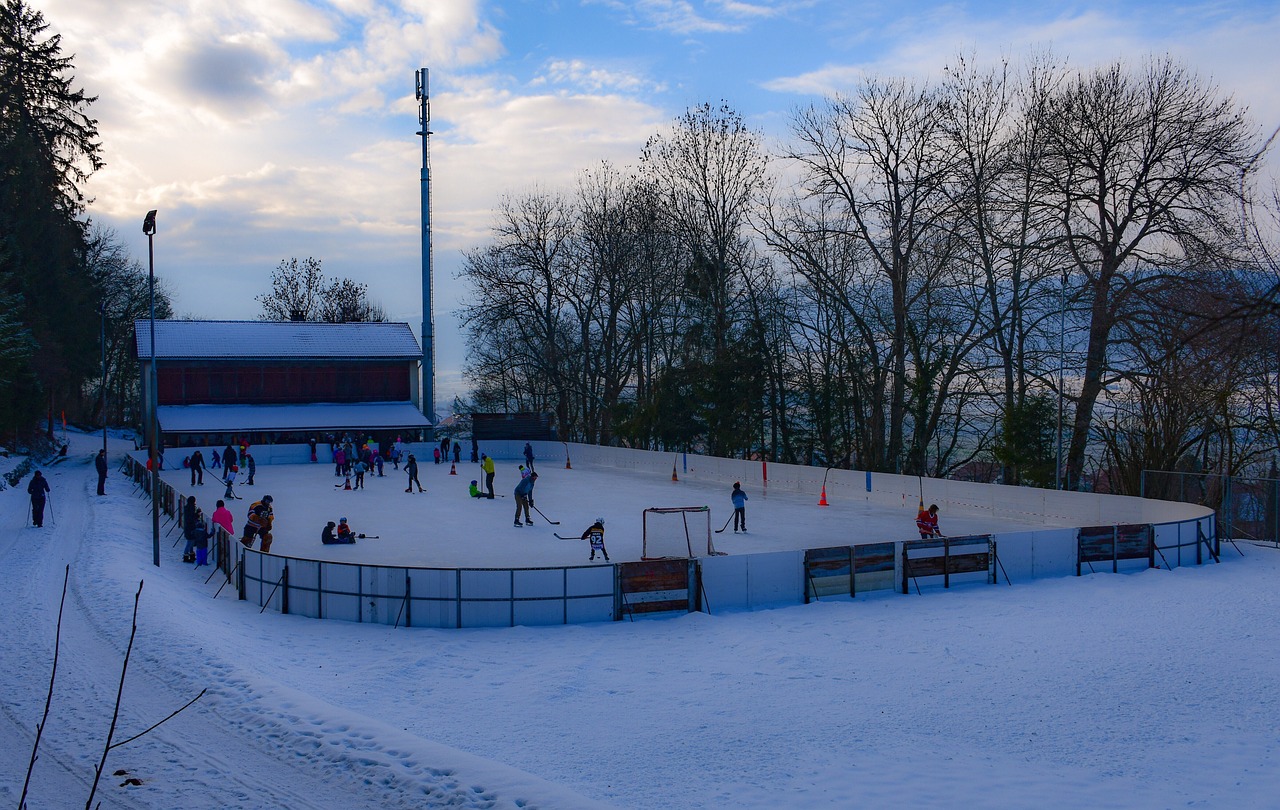
Outdoor games and hockey nostalgia theater work because they make the sport feel older, colder, simpler, and larger than a normal regular-season game. The Winter Classic, Stadium Series, and Heritage Classic are not just alternate venues. They are staged acts of memory: outdoor rinks, throwback uniforms, football and baseball stadiums, snow-globe camera shots, and crowds that turn discomfort into proof of devotion. The NHL did not invent outdoor hockey, but it found a way to package the backyard, pond, and community-rink mythology of the sport into national television inventory and major-event revenue. The result is one of modern hockey’s clearest examples of nostalgia becoming business strategy. The Heritage Classic began in 2003, the Winter Classic in 2008, and the Stadium Series in 2014.
The Rink Before It Became a Stage
Hockey has always had a natural relationship with outdoor memory. Even when most elite hockey moved indoors, the sport kept telling stories about frozen ponds, neighborhood rinks, winter air, and childhood games that did not need tickets, luxury suites, or a video board. That memory became part of hockey’s emotional language. It gave the sport a way to present itself as both professional entertainment and something rooted in winter life.
The NHL’s outdoor-game model takes that memory and enlarges it. A rink is placed inside a stadium built for another sport. A regular-season game is surrounded by ceremony. Uniforms often point backward. Broadcasts emphasize breath in the cold, players walking through tunnels in tuques or letterman-style jackets, and families sitting together under blankets. The game becomes only one part of the event. The rest is atmosphere.
The 2003 Heritage Classic between the Edmonton Oilers and Montreal Canadiens at Commonwealth Stadium was the first outdoor regular-season game in NHL history, and it established the basic power of the format: two historic Canadian teams, a massive football venue, extreme winter conditions, and a crowd experiencing professional hockey in a setting that felt connected to the sport’s origin story.
The Winter Classic then gave the NHL a repeatable American television ritual. The first Winter Classic was played on January 1, 2008, in Buffalo, with the Pittsburgh Penguins beating the Buffalo Sabres 2-1 in a shootout at what was then Ralph Wilson Stadium. Sidney Crosby’s shootout winner gave the event the perfect closing image: snow, a star player, a packed football stadium, and a game that felt designed for memory before it was even over.
How the NHL Learned to Sell the Feeling Around the Game
The genius of the outdoor-game format is that it turns context into content. A normal regular-season game has two teams, standings points, stars, tactics, and rivalries. An outdoor game adds weather, venue, uniforms, visual novelty, and emotional framing. The product is no longer simply “Team A vs. Team B.” It becomes “hockey returns to its roots,” even when the rink has been engineered inside a modern stadium with corporate sponsors, television windows, and thousands of temporary seats.
The Winter Classic is the cleanest version of that formula. It is usually framed as the sport’s New Year’s showcase, built around memory and tradition. The Heritage Classic leans more directly into Canadian hockey identity, especially the relationship between the professional game and outdoor winter culture. The Stadium Series is more flexible. It can use major American stadiums, newer markets, regional rivalries, and visual experimentation without carrying the same old-time burden as the Winter Classic.
That flexibility mattered when the Stadium Series began in 2014. The first Stadium Series game was played at Dodger Stadium between the Anaheim Ducks and Los Angeles Kings, with the Ducks winning 3-0. It was an important shift because outdoor hockey was no longer only about snow and northern nostalgia. The NHL could stage an outdoor game in Southern California and still make it feel like a major hockey event.
That is where the nostalgia theater becomes more interesting. Some games sell the memory of frozen ponds. Others sell the contrast between hockey and an unexpected setting. The same basic format can support Edmonton in deep winter, Chicago at Wrigley Field, Los Angeles at Dodger Stadium, or a football stadium filled with more than 100,000 people. The common thread is not always weather. It is the idea that hockey becomes more meaningful when the venue makes the game feel like an occasion.
The 2014 Winter Classic at Michigan Stadium showed the scale of that ambition. The Toronto Maple Leafs and Detroit Red Wings played before 105,491 fans, one of the clearest examples of outdoor hockey as mass spectacle rather than novelty. The rink was small compared with the stadium around it, but that visual imbalance was part of the point. Hockey looked different because it was placed inside something enormous.
Why Outdoor Games Still Work Even After the Novelty Fades
The NHL has now used outdoor games often enough that they are no longer shocking. That could have weakened the idea, but the format still works because it serves multiple purposes at once. It gives television a visual event. It gives host cities a tourism and civic-pride moment. It gives teams special uniforms and merchandise. It gives fans a story they can say they attended. It also gives the league a way to turn regular-season inventory into something closer to a festival.
The best outdoor games are not memorable only because of the final score. They are remembered through images: snow falling in Buffalo, the huge crowd in Ann Arbor, the lake-effect feel of Canadian games, baseball stadium sightlines transformed into hockey backdrops, and fans accepting uncomfortable weather as part of the ritual. The cold is not a defect in the product. It is part of the proof.
That is why outdoor hockey remains useful to the NHL even when the games themselves are uneven. Some are classics. Some are ordinary games in unusual places. Some are remembered more for jerseys, venue shots, or attendance than for the hockey. But the format gives the league something most regular-season games cannot offer: a built-in story before the puck drops.
Outdoor games also help hockey solve one of its central marketing problems. The sport is fast, technical, and intense, but it can be difficult to explain visually to casual audiences. Outdoor games simplify the image. Big stadium. Cold air. Bright rink. Historic uniforms. Familiar rivalry. The setting tells viewers that this is supposed to matter.
That does not make every outdoor game essential. It does explain why the concept keeps returning. The NHL has found a reliable way to turn hockey’s past into a present-day event without needing the game itself to carry all the weight. The Winter Classic, Stadium Series, and Heritage Classic work because they let hockey sell what it has always wanted people to feel: that the sport belongs to winter, memory, place, and shared endurance.