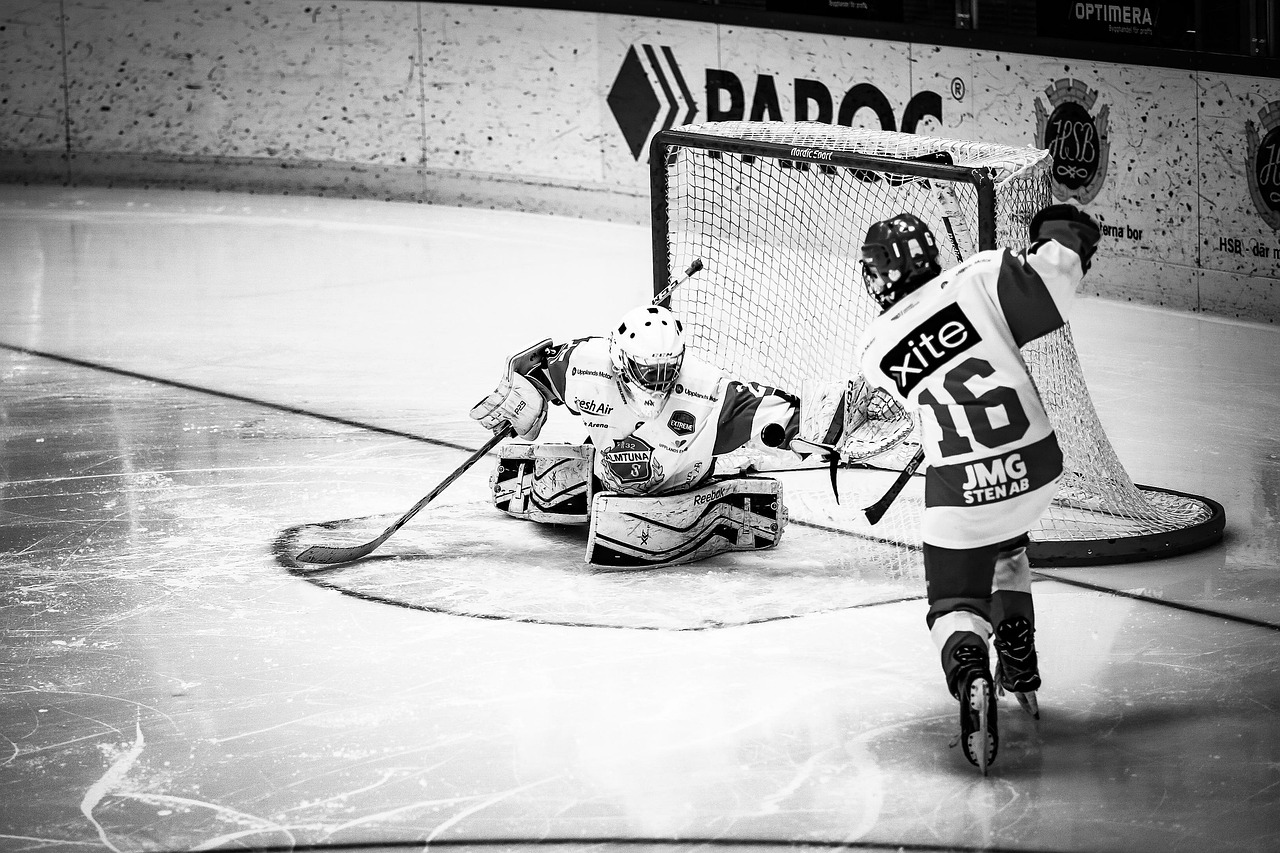
The Strategy That Made Hockey Boring on Purpose is the story of how defensive hockey became a championship weapon. The neutral zone trap did not make the New Jersey Devils famous for speed, flair, or open-ice spectacle. It made them famous for control. By clogging the middle of the rink, forcing turnovers, and turning risky rushes into dead ends, the Devils helped prove that hockey could be won by denying rhythm instead of chasing it. The result was one of the most effective and controversial tactical eras in modern NHL history: a style that frustrated opponents, divided fans, and showed how beauty in hockey does not always look like motion.
The Open Ice the Trap Was Built to Destroy
Before the neutral zone trap became a symbol of defensive hockey, the NHL still carried a strong cultural attachment to flow. Fans wanted speed through the middle, clean zone entries, odd-man rushes, and skill players attacking with room. Even teams that defended well often had to frame that defense inside a broader idea of toughness, goaltending, or physical sacrifice.
The neutral zone trap challenged that expectation. Instead of treating the neutral zone as empty space between two real battles, trap teams made it the main battlefield. The goal was simple: stop the puck carrier before the attack could become dangerous. Rather than backing up and allowing opponents to build speed, a trapping team placed skaters in lanes, took away easy passes, and forced the attacking side toward low-percentage choices.
In its most recognizable form, the trap used a 1-2-2 structure. One forward pressured the puck, two players formed the next wall, and two defensemen stayed positioned behind them. The shape could shift, but the principle stayed the same. The puck carrier was invited into a narrow decision tree. Carry the puck into traffic. Make a difficult pass. Dump it in without support. Turn it over.
That was the tactical power of the trap. It did not need to steal the puck every time. It only needed to prevent the opponent from entering the offensive zone with speed and structure. Once that happened repeatedly, a fast team could begin to look slow, a skilled team could look impatient, and a confident team could start forcing plays that were never really open.
The strategy also fit the conditions of the era. Two-line pass restrictions, heavier clutching and grabbing, and more tolerance for obstruction made it harder for attacking teams to stretch the ice. A disciplined defensive team could compress the game, slow transitions, and make opponents work through bodies instead of space. The trap did not create every low-scoring trend in hockey, but it became the clearest symbol of that style.
How the New Jersey Devils Turned Patience Into Pressure
The New Jersey Devils did not invent defensive hockey, but they became the team most closely associated with the neutral zone trap because they turned it into a championship identity. Under Jacques Lemaire, the Devils became a model of structure, discipline, and positional trust. They did not need every player to chase the puck. They needed every player to occupy the right space.
That distinction mattered. Bad defensive hockey can look passive. The Devils’ best defensive hockey was not passive. It was patient pressure. The first forechecker did not have to win the puck immediately. He had to guide the play toward help. The second layer did not have to make a dramatic hit. It had to close the next option. The defensemen did not have to gamble at the blue line. They had to hold the structure long enough for the opponent’s attack to run out of clean choices.
The 1995 Devils made the trap famous because they won the Stanley Cup with it. That championship gave the system proof. It was no longer just a defensive scheme. It was a title-winning model. New Jersey swept the Detroit Red Wings in the Stanley Cup Final, turning a highly skilled opponent into a frustrated one. The Devils were not simply surviving. They were imposing a tactical argument on the series.
That argument was uncomfortable for many viewers. Hockey had long sold itself through speed, contact, and sudden creativity. The Devils showed that denying those things could be just as decisive as producing them. Their games could feel compressed because they were designed to be compressed. The trap was not accidental boredom. It was intentional friction.
The Devils also had the personnel to make the system work. Scott Stevens gave them physical authority and defensive presence. Scott Niedermayer gave them skating and transition ability from the back end. Ken Daneyko supplied rugged reliability. Martin Brodeur gave the structure an extraordinary safety net in goal, and his puck-handling made dump-ins less effective than they would have been against many other teams.
That last point is essential. The trap was not just five skaters standing in the way. It was a full-team ecosystem. If opponents dumped the puck in, Brodeur could often retrieve it and restart possession. If they tried to carry it through, the skaters clogged the lanes. If they forced passes, New Jersey could counter. The Devils made the opponent choose between bad options, then built their game around punishing the least bad one.
The style also demanded emotional discipline. A trapping team had to accept that it might not look dominant in the obvious ways. It might not produce constant pressure or long highlight sequences. It might win by making the game smaller, tighter, and more predictable. That kind of hockey can be hard to love from the outside, but it is deeply valuable from the bench. Coaches prize repeatable advantages. The trap gave the Devils one.
Why the Neutral Zone Trap Still Shapes Hockey Debates
The neutral zone trap became controversial because it forced hockey to confront a basic question: should a winning strategy also be entertaining? The Devils did not owe the league open ice. Their job was to win. But the league had to think about the product, and by the late 1990s and early 2000s, many fans and commentators saw trapping systems as part of a broader problem. Scoring was down. Space was limited. Skilled players were being slowed before they could create.
The trap became shorthand for everything people disliked about defensive hockey, even when the real picture was more complicated. Not every low-scoring game was caused by the trap. Not every defensive team played the same way. Not every complaint about the era should be placed on New Jersey. But the Devils were successful, visible, and easy to identify with the tactic, so they became the face of the debate.
That reputation sometimes obscures how sophisticated the strategy was. The neutral zone trap was not simply anti-hockey. It was hockey reduced to structure, timing, and collective decision-making. It asked whether space could be managed as carefully as the puck. It treated impatience as something to be harvested. It made the opponent’s frustration part of the system.
The league eventually moved in a direction that made pure trapping harder to sustain. Rule changes after the 2004–05 lockout, including the removal of the two-line pass and stricter enforcement against obstruction, helped open the game. Faster skating, more mobile defensemen, and more sophisticated breakout systems also changed how teams attacked pressure in the neutral zone. The sport did not leave defensive structure behind, but it became harder to win by simply closing the middle and leaning on interference.
Still, the trap never disappeared. Its logic remains everywhere. Modern teams still protect the middle. They still stack the neutral zone when protecting leads. They still use layered pressure to force dump-ins. They still understand that controlling entries can be as important as defending shots. The difference is that today’s best defensive teams usually blend structure with speed. They want to deny space, but they also want to turn denial into immediate attack.
That is the legacy of the neutral zone trap. It taught hockey that the neutral zone was not empty territory. It was a place where games could be controlled before danger ever reached the net. The Devils made that idea impossible to ignore, and their success forced everyone else to respond.
The Strategy That Made Hockey Boring on Purpose was never really about boredom. It was about control. The New Jersey Devils showed that hockey could be won by removing options, shrinking space, and making talented teams play in uncomfortable patterns. The trap’s reputation remains harsh, but its influence is permanent: modern hockey still lives with the lesson that preventing speed can be just as powerful as creating it.