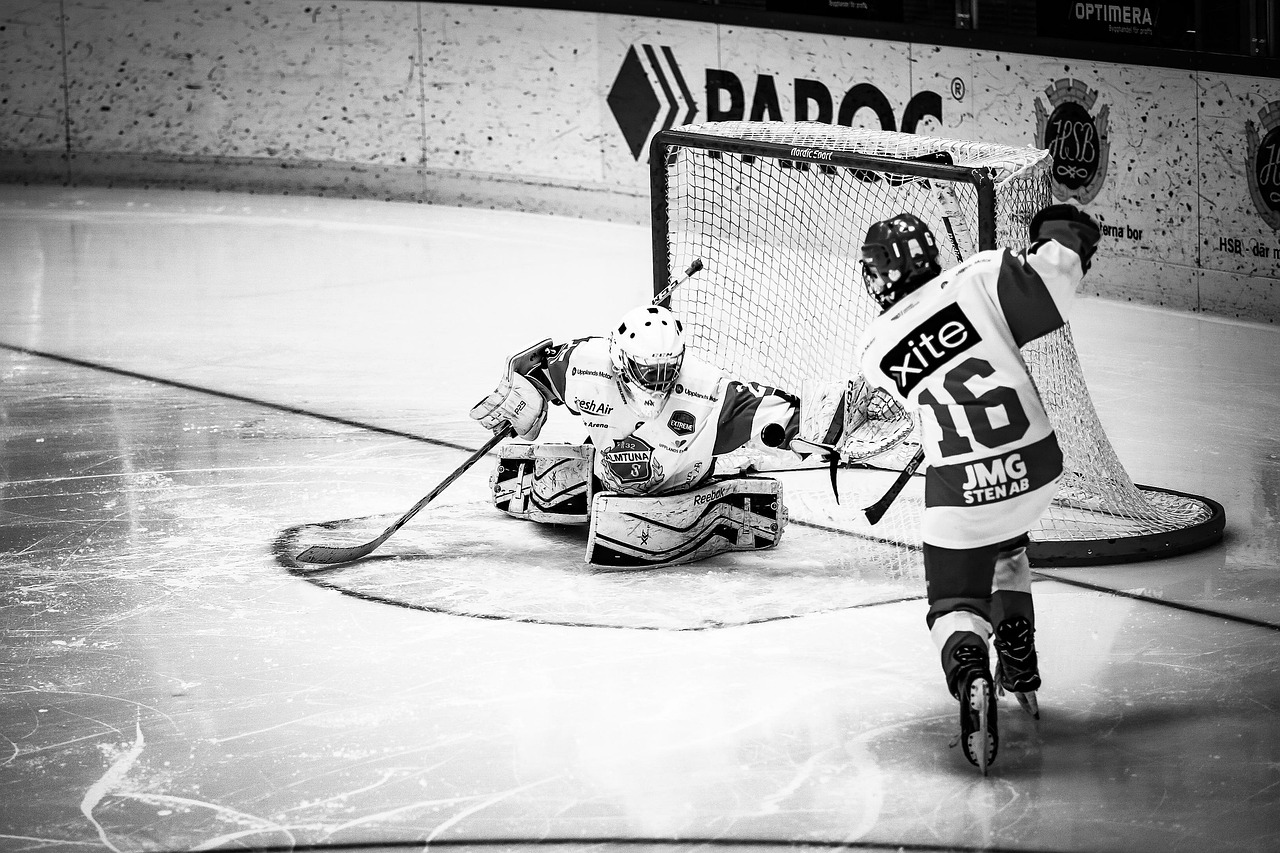
The Michigan Goal is one of hockey’s clearest examples of a move traveling from curiosity to controversy to accepted skill. The play is simple to describe and difficult to execute: a player controls the puck behind the net, lifts it onto the blade, carries it around the post, and tucks it high before the goalie can seal the angle. Mike Legg made the move famous for the University of Michigan in the 1996 NCAA Tournament, but its larger meaning came later. Once NHL players began scoring with it, the lacrosse-style goal became more than a highlight. It became a debate about creativity, risk, tradition, and what modern hockey should reward.
The Behind-the-Net Space Before the Michigan Goal
For much of hockey history, the area behind the net was treated mostly as a setup zone. Players used it to protect the puck, reverse play, find a passing lane, or begin a wraparound. The goalie’s job was to track the puck across the back of the cage while defenders tried to block passing options in front. It was dangerous territory for the defending team, but it was not usually treated as a direct shooting platform.
The lacrosse-style goal changed that geometry. Instead of using the back of the net as a place to wait for a pass or create a screen, the attacking player turned it into a launch point. The puck did not move flat across the ice. It rose onto the blade, crossed the goal line in the air, and attacked the top corner from a place goaltenders were not traditionally trained to defend.
That is why the move felt so disruptive. It did not require a new rule, a new rink, or a new piece of equipment. It required a player to see the space behind the net differently. The move asked whether a puck carried on a stick blade could be part of normal hockey skill rather than an exhibition trick.
Mike Legg Turns a Skill Move Into a Hockey Reference Point
The move became known as the Michigan Goal because of Mike Legg’s goal for the Michigan Wolverines against Minnesota on March 24, 1996. Michigan’s own account of the game described it as a “lacrosse-like wraparound effort” that tied the score in the second period, after Minnesota had carried much of the early play. Michigan went on to win, which helped turn the goal from a strange highlight into a tournament moment.
Legg’s goal mattered because it happened in a real competitive setting. It was not a practice clip. It was not a skills competition. It was an NCAA Tournament game, with the puck on his blade, a goalie to beat, defenders nearby, and the season at stake. That context gave the move legitimacy even as it made some people uncomfortable.
The discomfort was part of the story. Hockey has always valued creativity, but it has also had strong unwritten rules about how creativity should look. A saucer pass, a toe drag, or a one-timer could fit inside the game’s accepted language. The Michigan Goal looked different. It seemed to borrow from lacrosse. It made the puck airborne from behind the net. It turned a hidden part of the rink into a scoring lane.
That tension followed the move for years. It was admired, copied, challenged, and debated. But once players at higher levels kept attempting it, the question slowly changed. The issue was no longer whether the move belonged in hockey. The issue became who could pull it off under pressure.
How the Lacrosse-Style Goal Entered the NHL Skill Era
The Michigan Goal reached a new stage when Andrei Svechnikov scored a lacrosse-style goal for the Carolina Hurricanes on October 29, 2019. The NHL described Svechnikov as the first player in league history to score the “Michigan” goal, giving the move its most visible professional breakthrough.
That NHL moment changed the move’s status. Before Svechnikov, the Michigan Goal was famous, but it still carried a certain novelty label. After Svechnikov, it became a live NHL scoring option. It could happen in a regular-season game, against elite goaltending, inside the speed and pressure of the modern league.
The next phase was not just the goal itself, but the culture around it. Trevor Zegras helped push that culture further with his behind-the-net creativity, including the December 2021 lacrosse-style setup to Sonny Milano for Anaheim against Buffalo. NHL.com described the play as Zegras faking the lacrosse goal before lobbing the puck to Milano, who finished it out of the air.
That play showed why the Michigan Goal became bigger than one shot. Once defenders and goalies had to respect the possibility of the puck being lifted from behind the net, the move created new options. A player could attempt the goal, fake the goal, pass from the same posture, or force the defense to hesitate. The skill became tactical pressure.
The modern legacy of the Michigan Goal is that it widened hockey’s imagination near the crease. It gave young players a move to practice, gave coaches a defensive problem to solve, and gave fans a highlight that looks instantly different from ordinary scoring chances. Its controversy has never fully disappeared, but that is part of its importance. The Michigan Goal sits at the edge between tradition and invention, and modern hockey keeps making more room for players who can live on that edge.