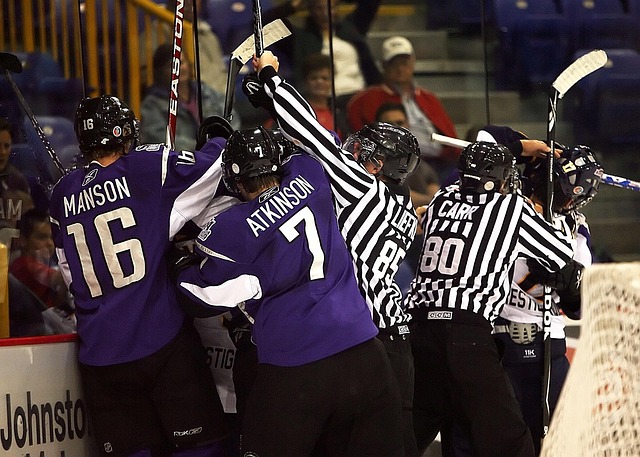
The longest NHL games matter because they reveal what playoff hockey becomes when the sport strips away every shortcut. There is no shootout, no clock escape, and no shared result. In the Stanley Cup Playoffs, tied games continue with 20-minute sudden-death overtime periods until someone scores, which turns a normal contest into a test of conditioning, bench management, goaltending, nerve, and patience. The famous marathon games are remembered for the winning goals, but their real story is the long stretch before the goal: the blocked shots, tired shifts, conservative decisions, and exhausted players trying to keep one mistake from ending a season.
Why NHL Playoff Overtime Can Stretch Past Reason
Playoff overtime in the NHL is built on a simple principle: the game continues until it has a winner. That makes hockey different from sports that can use a timed extra period, a penalty shootout, or a statistical tiebreaker. The format protects the integrity of the game by keeping the result inside normal hockey, but it also creates the possibility of a contest lasting far beyond the length of an ordinary night.
That structure changes the sport as the game gets longer. In the first overtime, teams may still attack with something close to their normal rhythm. Defensemen jump into plays. Forwards press forechecks. Coaches trust their full bench.
By the third or fourth overtime, the game often becomes narrower. Players simplify their decisions. The puck gets chipped deep instead of carried through traffic. Defensemen avoid risky pinches. Goalies become central figures because one clean look can end hours of work. Every icing, faceoff, line change, and blocked shot begins to feel larger than it would in regulation.
The longest NHL games are not just long versions of normal games. They become a different kind of hockey. Skill still matters, but survival matters too. The players are not only trying to win. They are trying to stay organized while fatigue slowly removes precision from the game.
The Night Detroit and Montreal Played Into NHL History
The longest game in NHL history came on March 24, 1936, when the Detroit Red Wings beat the Montreal Maroons 1-0 in Game 1 of their Stanley Cup semifinal series. The game lasted 176 minutes and 30 seconds of playing time, ending in the sixth overtime when Mud Bruneteau scored for Detroit.
The score tells part of the story. A 1-0 game that lasts nearly three full regulation games is not just a defensive struggle. It is a game where every attacking chance disappears into pressure, goaltending, tired legs, or hesitation. Normie Smith, Detroit’s goaltender, became one of the central figures of the night because the game could not have reached that depth without sustained work in the crease.
Bruneteau’s goal has lasted in hockey memory because it ended something that had moved beyond ordinary competition. By the sixth overtime, the contest was no longer only about tactics. It had become an endurance record, a mental contest, and a strange form of shared discipline. Players on both sides had already passed through the normal emotional arc of a playoff game. They had lived through regulation, one overtime, then another, then enough additional hockey that the original rhythm of the night had disappeared.
Other games later joined the marathon category. The 1933 playoff game between the Toronto Maple Leafs and Boston Bruins also reached a sixth overtime before Toronto won 1-0. The 2000 game between the Philadelphia Flyers and Pittsburgh Penguins lasted into a fifth overtime before Keith Primeau scored to give Philadelphia a 2-1 win. ESPN’s list of the longest Stanley Cup playoff games places those among the sport’s defining overtime marathons.
Those games endure because the final goal feels both sudden and inevitable. Hockey can produce goals from pressure, structure, chaos, or one small opening. In a marathon game, the winner often arrives after hours of evidence that neither team is willing to break. Then one shot changes the entire meaning of the night.
Why the Longest NHL Games Still Feel Different
The longest NHL games remain powerful because they show the Stanley Cup Playoffs at their most severe. A regular-season overtime format can prioritize entertainment, scheduling, and quick resolution. Playoff overtime protects finality through repetition. The teams keep playing the same sport until the sport itself produces an answer.
That is why these games become part of hockey’s identity. They turn ordinary playoff themes into something visible. Depth matters because stars cannot play every shift. Conditioning matters because tired players still have to make clean reads. Goaltending matters because a single rebound can decide everything. Coaching matters because the bench shortens, risk changes, and every matchup becomes heavier.
The marathon format also changes how fans remember the game. The winning scorer becomes the headline, but the memory belongs to everyone who lasted long enough for the goal to exist. The goaltenders, penalty killers, depth forwards, trainers, and defensemen absorbing minutes all become part of the same story. The game becomes less about one highlight and more about cumulative pressure.
Modern hockey is faster, more specialized, and more carefully managed than the game was in 1936, but the possibility of a marathon still connects eras. When a playoff game reaches the third overtime, fans understand that they are no longer watching a normal contest. They are watching the sport test its own limits.
The longest NHL games matter because they turn hockey’s simplest playoff rule into one of its greatest dramas: keep playing until someone scores. That rule can create exhaustion, caution, brilliance, and tension in the same night. The final goal ends the game, but the hours before it are what make these marathons feel unlike anything else in the sport.