The KHL as Post-Soviet hockey power project is one of the clearest examples of a sports league trying to do more than organize games. Founded in 2008 as a successor to Russia’s top domestic league structure, the Kontinental Hockey League was designed to preserve elite Russian hockey, project influence across Eurasia, and offer an alternative center of gravity to the NHL. Its story is about money, national pride, oligarch-backed clubs, international ambition, and the long shadow of Soviet hockey. The KHL has never simply been a hockey competition. It has been a statement that Russian hockey still belongs near the center of the sport’s world order.
The Soviet Hockey Memory Behind the KHL
Russian hockey did not need the KHL to prove it had history. The Soviet national program had already built one of the most influential hockey systems in the world, defined by skating, passing, collective movement, state-backed training, and international dominance. Soviet hockey was not just successful; it was stylistically distinct. It offered a different answer to what elite hockey could look like.
That memory mattered when the KHL emerged. After the Soviet Union collapsed, Russian hockey still produced brilliant players, but many of its biggest stars left for the NHL. The best Russian players were often seen through a North American frame: drafted by NHL clubs, measured by NHL success, and absorbed into NHL storylines. The domestic game remained important, but the center of global professional power had clearly shifted west.
The KHL was a response to that imbalance. It did not recreate the Soviet sports machine, but it borrowed from its emotional inheritance. The league’s name, structure, and ambition all suggested scale. “Kontinental” was not modest branding. It implied a league that could reach beyond Russia, pull in neighboring hockey markets, and give Russian hockey a modern institutional home.
That is why the KHL always carried more meaning than an ordinary domestic league. It was built on the idea that Russian hockey should not merely export talent. It should host talent, pay talent, develop talent, and keep enough prestige at home to challenge the assumption that the NHL was the only true destination for elite professionals.
The League Built With Money, Geography, and National Pride
The KHL’s power came from the way it combined sport with money and geography. At different points, the league included clubs from Russia, Belarus, Kazakhstan, Latvia, Finland, Slovakia, Croatia, the Czech Republic, Ukraine, and China. That footprint gave the KHL a transnational identity, especially in its first decade, when expansion helped it look like a Eurasian counterweight to North American hockey.
This is where oligarch economics and state-adjacent money became central to the story. Several KHL clubs were not built like ordinary market-dependent teams. They often relied on major industrial sponsors, regional political support, energy-sector money, and wealthy ownership structures. That model could produce high salaries, modern arenas, and ambitious rosters, but it also made the league’s economics feel different from the NHL’s salary-cap, franchise-value, revenue-machine structure.
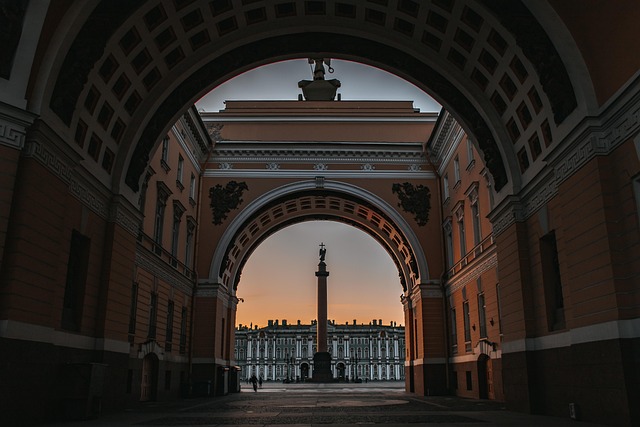
The NHL’s power is corporate, commercial, and media-driven. The KHL’s power has often been more institutional: tied to national champions, strategic companies, regional patrons, and prestige projects. SKA Saint Petersburg became one of the clearest symbols of that model, while clubs such as CSKA Moscow, Ak Bars Kazan, Metallurg Magnitogorsk, and Dynamo Moscow carried older layers of Soviet and Russian hockey identity into the modern league.
The result was a league that could attract players who wanted money, minutes, status, or a return home. It also gave Russian stars a bargaining chip. The KHL did not need to surpass the NHL to matter. It only needed to be credible enough to keep some players in Russia, pull some foreign players east, and remind the hockey world that professional power did not have to be entirely North American.
The Gagarin Cup also mattered symbolically. Naming the championship trophy after Yuri Gagarin connected the league to a broader Russian story of achievement, prestige, and national memory. That choice made the KHL’s mythology clear: this was not only about crowning a hockey champion. It was about placing hockey inside a larger post-Soviet narrative of greatness, continuity, and international stature.
Why the KHL Still Carries Post-Soviet Weight
The KHL’s international project became more complicated after Russia’s 2022 invasion of Ukraine. The IIHF suspended Russian and Belarusian national teams and clubs from its competitions in February 2022, and foreign-linked KHL clubs such as Jokerit Helsinki and Dinamo Riga withdrew from the league in the immediate aftermath.
That changed the league’s meaning. The KHL was once trying to look broadly continental. After 2022, it became more visibly centered on Russia and its closest remaining hockey partners. Its current official structure is smaller and more concentrated, with the 2025–26 KHL season listed by the league as 22 teams from Russia, Belarus, China, and Kazakhstan.
That contraction does not make the KHL irrelevant. It makes the league more revealing. The KHL now functions less as a pan-European expansion story and more as a post-Soviet hockey fortress: a place where Russian hockey can maintain elite domestic competition while international access remains restricted. It preserves jobs, rivalries, development pathways, and prestige for a hockey culture that has been pushed away from many global stages.
The NHL rivalry is still part of that picture, but it is no longer just a competition for players. It is also a competition over legitimacy. The NHL remains the strongest professional hockey league in the world, but the KHL remains the clearest institutional expression of Russian hockey power. It is where Soviet memory, Russian national pride, modern capital, and geopolitical isolation meet on the ice.
That is what makes the KHL such a useful sports story. It is not only about whether the league is better or worse than the NHL. It is about what a league can represent when a country with deep hockey history wants its own stage, its own heroes, its own trophy, and its own claim to the sport’s future.
The KHL remains one of hockey’s most politically loaded institutions because it carries several eras at once. It remembers Soviet hockey, operates through modern Russian money, competes against the NHL’s global pull, and now reflects the isolation of Russian sport. Its power is not only in the teams it fields, but in the argument it keeps making: Russian hockey still wants to be a center, not a feeder system.