Indoor hockey nations matter because they show that the indoor version of the sport is not just field hockey moved under a roof. In Germany, Austria, the Netherlands, Poland, Belgium, Iran, Namibia, South Africa, and other countries, indoor hockey has developed its own rhythm, specialists, competitions, and national traditions. The smaller court, sideboards, six-a-side format, and constant transitions create a version of hockey that rewards speed, close control, passing angles, and quick decision-making. That gives the sport a different identity from the outdoor game, while still feeding the same wider hockey culture. The strongest indoor hockey nations prove that a winter hall sport can become a serious international pathway, not merely an off-season training tool.
Why Indoor Hockey Became More Than a Winter Version of Field Hockey
Indoor hockey grew naturally in countries where weather, infrastructure, and club calendars made indoor competition useful. In much of central and western Europe, winter conditions pushed hockey clubs into halls for part of the year. What began as a practical adjustment became a discipline with its own skills. The ball moves differently indoors. The boards keep play alive. The smaller space makes pressure immediate. Players have less time to carry the ball, so passing speed and first touch become central.
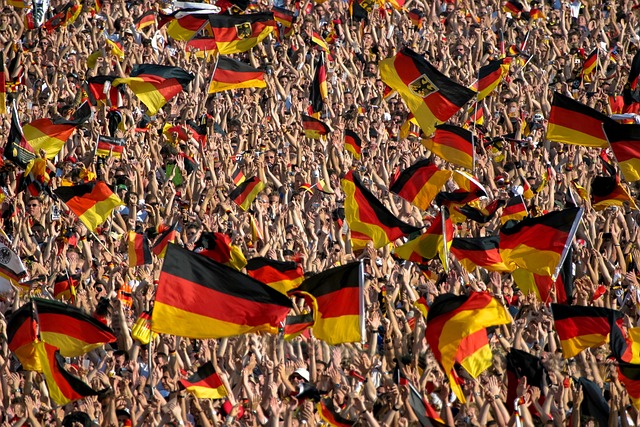
Germany is the clearest example of this development. The country has long treated indoor hockey as a serious branch of the sport, not just a seasonal substitute. That seriousness shows in the international record. The FIH lists Germany as men’s Indoor World Cup champion in 2003, 2007, 2011, and 2025, giving it four of the first seven men’s titles.
The Netherlands also helped define the indoor game, especially through its women’s program. The Dutch women won Indoor World Cup titles in 2007, 2015, and 2023, while the Dutch men won in 2015. Austria then became one of the major modern indoor powers, with men’s titles in 2018 and 2023 before reaching another final in 2025.
That history matters because it shows how indoor hockey rewards countries that build real domestic habits around the format. The best indoor nations are not simply strong outdoor nations playing inside. They are countries that understand the hall as its own tactical environment.
The Countries That Built the Indoor Hockey Map
Germany, Austria, and the Netherlands form the central spine of modern indoor hockey history, but the map is wider than that. Belgium, Poland, Czechia, Switzerland, Iran, Australia, South Africa, Namibia, Argentina, Malaysia, the United States, and others have all developed competitive indoor programs. The 2025 men’s indoor rankings placed Austria first, Germany second, Belgium third, Iran fourth, Australia fifth, South Africa sixth, Poland seventh, Namibia eighth, Argentina ninth, and Czechia tenth.
Austria’s rise is especially important because it shows that indoor hockey can create a distinct national lane. Austria is not usually treated as one of the defining outdoor hockey powers in the same way as Germany, the Netherlands, Belgium, Australia, or India. Indoors, though, Austria has become central. Its men won the Indoor World Cup in 2018 and 2023, then reached the 2025 final before Germany ended its bid for a third straight title.
Poland’s women added another major chapter in 2025. FIH described Poland’s women as claiming their first indoor crown, while the official tournament standings listed Poland first, Austria second, Czechia third, and Germany fourth. That result matters because it widened the story beyond the usual Germany-Netherlands-Austria axis and showed how indoor hockey can produce a different competitive hierarchy from the outdoor game.
Iran is another important indoor hockey nation because it gives the sport a strong Asian presence. Its men ranked fourth in the 2025 FIH indoor rankings, ahead of several countries with longer global profiles in outdoor hockey. Namibia and South Africa also show the African side of the indoor game. South Africa ranked sixth in the 2025 men’s indoor rankings, while Namibia ranked eighth, and the 2025 men’s World Cup produced a bronze medal for South Africa.
The result is a useful side-door content lane because indoor hockey does not follow the exact same national hierarchy as outdoor hockey. It lets readers understand hockey through a different map.
Why Indoor Hockey Nations Give the Sport a Different Kind of Story
Indoor hockey changes what counts as an advantage. Outdoor hockey often rewards space, running power, pressing systems, aerial skill, and the ability to stretch the field. Indoor hockey compresses everything. The game becomes more immediate. Players have to solve pressure with fast hands, sharp passing, body position, and awareness of the sideboards. Goalkeepers face quick shots from tight angles. Defenders have to protect central lanes without much room to recover.
That makes indoor hockey valuable as both a separate competition and a player-development environment. It can sharpen technical habits that matter outdoors, but it also creates specialists who understand the indoor game on its own terms. The FIH describes the Indoor World Cup as a six-a-side competition with 24 teams, split between 12 men’s teams and 12 women’s teams, played over seven days. The format itself explains why the sport feels different: fewer players, less space, faster restarts, and constant contact with the ball.
For content, this opens a strong set of article paths. Germany can be covered as the historic indoor standard. Austria can be covered as the modern men’s indoor power. The Netherlands can be covered through its women’s tradition and its broader technical hockey culture. Poland can be covered through the breakthrough women’s title. Iran, Namibia, and South Africa can be covered as examples of how indoor hockey gives nontraditional hockey hierarchies more room to matter.
Indoor hockey nations also make the sport easier to explain to readers who may not know field hockey deeply. The format is compact, high-scoring, and tactically clear. The national stories are strong enough to stand on their own, but they also connect back to the larger world of hockey.
Indoor hockey has become one of hockey’s most useful alternate lenses. It shows how facilities, climate, tactics, and national investment can create a different competitive map inside the same sport. Germany, Austria, the Netherlands, Poland, and the wider group of indoor powers prove that the hall is not just a place hockey goes in winter. It is a place where hockey developed another identity.