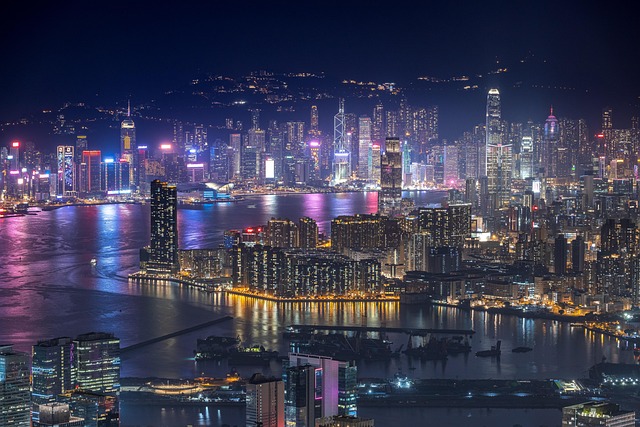
Hockey in Hong Kong is shaped by density, indoor facilities, international communities, school and club sport, and the challenge of building ice-based competition in a subtropical city. Hong Kong is not a traditional ice hockey country, and it does not have the outdoor winter culture that supports the sport in Canada, Finland, Sweden, Russia, or northern parts of the United States. Its ice hockey identity is built around indoor rinks, private clubs, youth development, adult leagues, international tournaments, and the work of the Hong Kong, China Ice Hockey Association.
The city also has a separate and older field hockey tradition. Field hockey in Hong Kong has been organized since the colonial era, with Hockey Hong Kong, China founded in 1933 after the sport had already made progress locally. The association later became connected to the wider international field hockey structure through the FIH and Asian Hockey Federation.
That split makes Hong Kong a useful hockey case study. Ice hockey is newer, indoor, rink-limited, and tied to Asian ice hockey development. Field hockey is older, club-based, and connected to Hong Kong’s school, league, and regional sports traditions. Together, they create a hockey culture that is smaller than the city’s football, basketball, rugby, racing, or racket-sport scenes, but still organized enough to deserve serious coverage.
The History of Hockey in Hong Kong
The history of hockey in Hong Kong begins more clearly with field hockey than ice hockey. Hockey Hong Kong, China traces its founding to June 22, 1933, when an inaugural meeting was held because the sport had already grown enough to need a central body. The organization later gained affiliation with the English Hockey Association by 1935, reflecting Hong Kong’s colonial sporting links and the way field hockey spread through British institutions, clubs, schools, and expatriate networks.
Field hockey therefore has a deeper organized history in Hong Kong than many readers might expect. It was not a recent import or a casual school activity. It became structured through a governing body, leagues, clubs, and international connections. Over time, Hong Kong developed men’s and women’s field hockey teams and became part of the Asian field hockey landscape, even though it has usually competed below the strongest Asian powers such as India, Pakistan, Malaysia, South Korea, China, and Japan.
Ice hockey arrived later and developed under very different conditions. Hong Kong’s first local ice hockey activity was informal and facility-dependent. The Hong Kong Amateur Hockey Club describes early local players learning skating and hockey skills at Lai Chi Kok Amusement Park, even building their own goal with nails and wood before forming Hong Kong’s first ice hockey team, Leader, in 1976.
The formal ice hockey structure grew in the 1980s. The Hong Kong Ice Hockey Association was founded in 1980, and Hong Kong joined the International Ice Hockey Federation in 1983. Hong Kong’s men’s national team made its World Championship debut in 1987 at Pool D in Perth, Australia, tying Chinese Taipei 2–2 in its first international game.
After that early appearance, Hong Kong spent long periods outside the top layers of international ice hockey, but the sport continued to grow locally through rinks, leagues, youth tournaments, and international competition. The modern ice hockey story is not one of mass participation. It is the story of a small but persistent hockey community using limited ice infrastructure to stay connected to the sport’s Asian and global systems.
Where Hockey Fits in Hong Kong Sports Culture
Hockey in Hong Kong is a niche sport, but not an accidental one. It exists because the city has the facilities, international population, club culture, and organizational structure to support sports that are not part of the mainstream local hierarchy. Football, basketball, horse racing, swimming, badminton, table tennis, rugby sevens, and fitness culture all have much broader public visibility. Hockey sits in a smaller lane, but that lane is real.
Ice hockey’s place in Hong Kong is especially unusual because the sport depends almost entirely on indoor rinks. There is no natural winter base, no frozen pond culture, and no deep neighborhood rink network. Instead, hockey is tied to shopping-mall rinks, private development, organized clubs, and scheduled ice time. That makes participation more expensive and more controlled by facility access than in traditional hockey countries.
Hong Kong’s ice hockey culture is also shaped by its international character. Expatriate players, local families, business communities, international schools, and Asian tournament networks have all helped the sport survive. This is common in smaller ice hockey markets: the first stage of development often depends on people who already know the sport from Canada, the United States, Europe, Japan, South Korea, or mainland China, then the second stage depends on whether local youth players begin to claim the sport as their own.
Field hockey fits differently. It is more connected to Hong Kong’s older club and school sports culture. It does not require ice, which makes the participation model less facility-restricted than ice hockey. Field hockey also has a more established Asian competition context, because the sport has deep roots across South Asia, East Asia, Southeast Asia, and Commonwealth sporting systems.
For Hong Kong, hockey is therefore not one single sporting identity. Ice hockey is a compact, urban, indoor, international sport. Field hockey is older, outdoor, club-based, and historically embedded in Hong Kong’s organized sports system. The two sports share a name, but they reach Hong Kong through different routes.
Hockey Teams, Leagues, and Competitions in Hong Kong
Ice hockey in Hong Kong is organized through the Hong Kong, China Ice Hockey Association, which is the governing body responsible for national teams, junior teams, women’s hockey, development, and league operations. The IIHF lists Hong Kong, China as a member national association since April 30, 1983.
The Hong Kong League is the official ice hockey league of Hong Kong and is organized by the Hong Kong, China Ice Hockey Association. The league gives local players an organized competitive structure and provides a domestic base for the sport in a city where there is no professional club system comparable to Japan, South Korea, or the larger European leagues.
Hong Kong’s ice hockey calendar also includes youth tournaments, junior competitions, and regional events. The Hong Kong Ice Hockey Association site lists youth participation in events such as the MegaIce Hockey 5’s, Asian Youth Ice Hockey Challenge Tournament, Guangdong-Hong Kong-Macau Bay Area youth tournaments, Japan challenge events, and other age-group competitions. These events matter because young Hong Kong players need competition beyond a small local player pool.
The Mega Ice Hockey 5’s has become one of Hong Kong’s most recognizable ice hockey events. A 2026 report described the tournament as Asia’s largest ice hockey tournament, with 109 teams from 16 countries and cities competing in Kowloon Bay. Even allowing for event promotion language, the tournament’s scale shows that Hong Kong can act as a regional hockey hub even if its domestic ice hockey base is small.
Hong Kong also has several key ice facilities. Public listings identify rinks such as Festival Walk Glacier in Kowloon Tong, The Rink at Elements in Tsim Sha Tsui, Mega Ice in Kowloon Bay, and DB Ice Rink in Discovery Bay. These rinks are central to the entire ice hockey ecosystem. Without them, there is no serious path for youth hockey, adult hockey, women’s hockey, or national team development.
Field hockey is governed separately by Hockey Hong Kong, China. The organization is affiliated with the International Hockey Federation and the Asian Hockey Federation and oversees the field hockey side of the sport. Hong Kong fields men’s and women’s national field hockey teams and competes within the Asian field hockey structure, where the sport has a much larger regional footprint than ice hockey.
Famous Hockey Players and Hong Kong Hockey Figures
Hong Kong has not produced a large list of globally famous hockey players, and the territory should not be framed as if it has the same player-production profile as Canada, the United States, Sweden, Finland, Czechia, or Russia. The more accurate story is institutional and developmental. Hong Kong hockey is defined by national-team players, club organizers, coaches, youth developers, and the people who keep the sport active in a difficult environment.
In ice hockey, the men’s national team gives Hong Kong its most visible player platform. Hong Kong’s men’s team has competed in IIHF competition, Asian events, and the Challenge Cup of Asia. The team won the IIHF Challenge Cup of Asia in 2011, which remains one of the clearest achievements in Hong Kong ice hockey history.
Hong Kong’s national team records identify players such as Justin Cheng and Alvin Sham among the statistical leaders of the men’s program, with Cheng listed as the top scorer and points leader and Sham listed among the most-capped players. For a small hockey market, those names matter because national-team continuity is one of the main ways the sport builds identity.
Women’s ice hockey also gives Hong Kong an important development lane. The Hong Kong, China Ice Hockey Association identifies women’s hockey as part of its league and development structure, and the IIHF lists Hong Kong as a host for the 2026 Women’s World Championship Division II Group B. Hosting that kind of tournament matters because it gives local women’s hockey more visibility and connects Hong Kong directly to the international women’s game.
In field hockey, the most important figures are often connected to clubs, national teams, and Hockey Hong Kong, China rather than to global celebrity. Hong Kong’s men’s and women’s field hockey teams compete internationally, and the governing body’s long history gives the sport a deeper institutional base than ice hockey.
The player story in Hong Kong is therefore not about NHL stars or Olympic field hockey legends. It is about representation, persistence, and local development. A Hong Kong hockey player who reaches the national team, competes in Asian events, plays in international youth tournaments, or helps build a local club is part of a small but meaningful sporting ecosystem.
Youth Hockey and Player Development in Hong Kong
Youth development is the most important long-term issue for hockey in Hong Kong. The city cannot rely on outdoor winter culture, large open spaces, or a deep inherited hockey tradition. It must build players through organized programs, coaching, ice access, school connections, parental commitment, and regional competition.
In ice hockey, the first challenge is ice time. Hong Kong has rinks, but not a dense network of full-sized hockey facilities. Shopping-mall rinks can support skating and some hockey activity, but serious player development requires consistent training time, proper competition, coaching, and age-group structure. That makes scheduling and cost major factors.
The Hong Kong Ice Hockey Association’s junior competition history shows how much local development depends on tournament access. Its listed junior events include U8, U10, U12, U14, U15, and U16 competitions in Hong Kong, mainland China, Japan, Thailand, and other regional settings. This regional exposure is necessary because Hong Kong’s domestic player base is too small to provide all the competition young players need.
The Greater Bay Area also matters. Hong Kong’s proximity to Shenzhen, Guangzhou, Macau, and mainland Chinese ice hockey development gives the city a regional hockey context that did not exist in the same way decades ago. Cross-border tournaments and youth events can help Hong Kong players face a wider variety of opponents without traveling as far as they would to North America or Europe.
Women’s and girls’ hockey is another important part of development. In small hockey markets, girls’ hockey can struggle because there may not be enough players to create full age-group structures. But when a women’s league, national team, and international tournament pathway exist, the sport becomes easier to sustain. Hong Kong’s hosting of a 2026 IIHF women’s tournament gives that side of the sport a concrete marker of visibility.
Field hockey development has different needs. It depends more on schools, clubs, pitches, coaching, and league structures. Because it has a longer history in Hong Kong, field hockey has a more traditional pathway through organized clubs and the national governing body. The future of field hockey depends on keeping that club-and-school pipeline active in a crowded urban sports environment.
Hockey Rinks, Communities, and Local Geography in Hong Kong
Hong Kong’s hockey geography is compact but highly facility-dependent. Unlike a Canadian province or northern U.S. state, where hockey may be spread across towns, school districts, outdoor rinks, and community arenas, Hong Kong’s ice hockey map is concentrated around a small number of indoor rinks.
Mega Ice in Kowloon Bay is especially important because it has hosted major ice hockey events, including the Mega Ice Hockey 5’s. The tournament’s scale has made Kowloon Bay one of the clearest hockey locations in Hong Kong. Festival Walk Glacier, The Rink at Elements, and DB Ice Rink also help define the skating and ice sport landscape.
This geography affects who plays. Families need access to specific districts, transport routes, training schedules, and rink fees. A player’s development may depend less on neighborhood tradition and more on whether the family can reach the right facility at the right time. That is one of the defining features of hockey in dense Asian cities.
The community side of Hong Kong hockey is also international. Adult leagues, youth programs, school families, expatriates, local players, coaches, and tournament visitors all interact within a relatively small hockey scene. That can make the community close-knit. It can also create pressure because the sport depends on a limited number of organizers, rinks, and committed families.
Field hockey has a different geographic structure because it is played on pitches rather than ice. It has more natural overlap with schools, clubs, and outdoor sports facilities. That gives field hockey a broader physical base than ice hockey, even if it still competes for space in one of the most densely built urban environments in the world.
The Future of Hockey in Hong Kong
The future of hockey in Hong Kong depends on access, facilities, youth development, and regional connection. Ice hockey will probably remain a niche sport, but it can become a stronger niche if local leagues, junior programs, women’s hockey, and international tournaments continue to grow. Hosting IIHF events in 2026 gives Hong Kong a useful opportunity to raise visibility and strengthen its connection to the global ice hockey structure.
Field hockey has a different future path. It already has a long organized history and a governing body founded in 1933. Its challenge is maintaining relevance among young athletes in a crowded sports market while continuing to compete in Asian field hockey.
Hong Kong will not become a traditional hockey power, but that is not the right measure. Its hockey identity is built around doing difficult things in a dense, warm-weather city: keeping ice hockey alive through indoor rinks and international networks, sustaining field hockey through clubs and schools, and giving local players a way to compete beyond Hong Kong’s small domestic base. That makes hockey in Hong Kong a compact but serious part of the city’s wider sports landscape.