Hockey5s is field hockey’s small-sided answer to a familiar problem: how can a sport with deep tradition become easier to stage, faster to watch, and more accessible to new players? The format reduces hockey to a smaller, sharper version of itself, with five athletes per side and short matches built around speed, constant pressure, and frequent scoring chances. Its importance is not only tactical. Hockey5s gives international hockey a development tool, especially in places where full-sized pitches, large squads, and established club systems are harder to build. Since its Youth Olympic debut in 2014 and the first FIH Hockey5s World Cup in 2024, the format has become one of hockey’s clearest attempts to widen the sport’s global map.
Why Hockey5s Became a Different Kind of Hockey Opportunity
Traditional field hockey rewards structure, spacing, endurance, and deep team organization. Hockey5s keeps the stick skills and attacking instincts of the sport, but changes the entry point. A smaller game can be easier to organize, easier to understand quickly, and easier to fit into spaces where a full hockey infrastructure may not exist yet.
That matters because field hockey has always had a global footprint, but not always an equal one. In established hockey countries, the sport can rely on clubs, schools, artificial pitches, coaching networks, and national development systems. In newer or smaller hockey markets, those same pieces may be limited. Hockey5s does not solve every development problem, but it lowers some of the barriers that can keep hockey from spreading. Smaller teams need fewer players. Shorter matches create a more compact event. A faster format gives new audiences a clearer first impression of the sport.
The format also fits a wider trend in global sports. Basketball has 3×3. Rugby has sevens. Cricket has Twenty20 and other short formats. In each case, the smaller version does not replace the traditional game. It creates another doorway into it. Hockey5s works in that same space: not as a rejection of field hockey, but as a simplified, intensified version that can travel more easily.
Hockey5s and the Push for Speed, Goals, and Global Reach
The central appeal of Hockey5s is that it compresses the sport. With fewer players and less space, there is less time for slow buildup and more pressure on every touch. Defenders have less cover. Attackers have more direct routes to goal. Goalkeepers face repeated danger. For viewers, the result is a version of hockey that explains itself quickly: movement, skill, transition, shot, reset.
That is why the format has value beyond entertainment. A sport trying to grow internationally needs formats that can work at development level, school level, festival level, and elite level. Hockey5s can be used as a teaching format because players are involved more often. There are fewer places to hide, more decisions per minute, and more repeated moments of attack and defense. For young players, that can mean more touches. For coaches, it can mean a clearer way to teach core hockey ideas.
The international structure gave the format more weight. Hockey5s debuted at the Nanjing 2014 Youth Olympic Games, and the first FIH Hockey5s World Cup was held in Muscat, Oman, in 2024. That inaugural World Cup brought together 16 men’s teams and 16 women’s teams from across five continents, giving the format a true global championship stage rather than leaving it as a youth or exhibition concept.
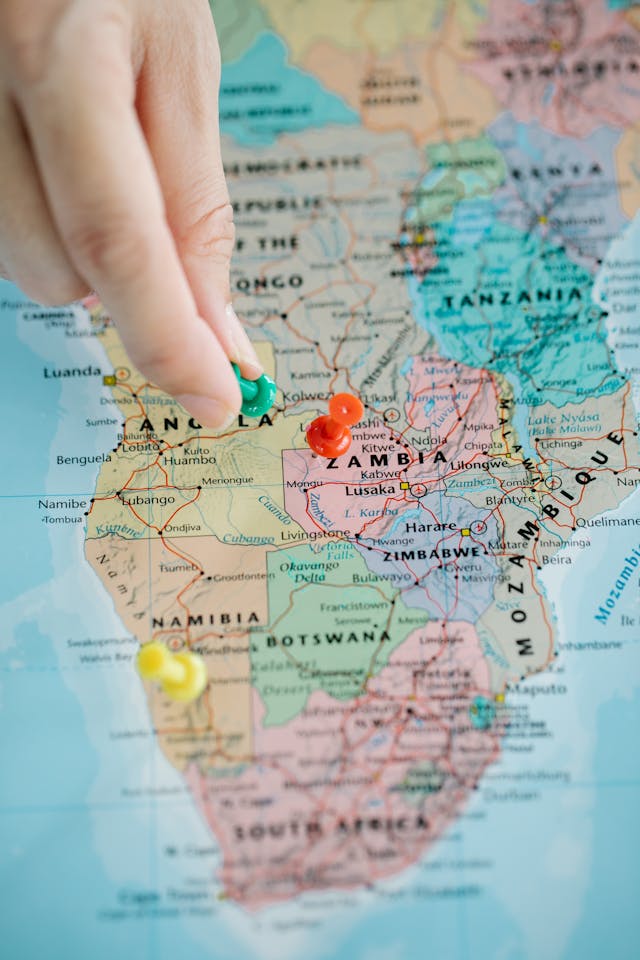
The winners also mattered. The Netherlands won the first men’s Hockey5s World Cup, while the FIH tournament records list the Netherlands first in the women’s competition as well. That gave the new format immediate legitimacy from one of hockey’s strongest traditional nations, while the broader field showed its development purpose: countries such as Oman, Fiji, Zambia, Namibia, Malaysia, Uruguay, Nigeria, Jamaica, Kenya, and Trinidad and Tobago were part of the men’s or women’s World Cup pools.
Why Hockey5s Could Matter Most in Growth Markets
The biggest question around Hockey5s is not whether it is faster. It clearly is. The bigger question is whether it can help hockey grow in places where the full version of the sport is difficult to scale. That is where the format’s long-term value may be strongest.
Growth markets often need sports that can be taught quickly, staged affordably, and adapted to different venue realities. Hockey still requires sticks, goals, safe playing surfaces, and coaching, but Hockey5s reduces the overall burden compared with a full eleven-a-side structure. It also gives national federations a format that can be used for introductory events, school competitions, urban showcases, and regional tournaments.
There is also a storytelling advantage. A small-sided format can give emerging hockey countries more visible international moments. A traditional hockey power may still dominate over time, but shorter games and compressed formats can create more competitive windows. That matters for countries trying to build attention, attract youth players, and show that hockey is not only a sport played somewhere else.
Hockey5s is best understood as a bridge. It can connect youth participation to elite ambition. It can connect nontraditional hockey markets to international competition. It can connect casual viewers to the basic thrill of the sport. It does not need to replace full field hockey to matter. Its value comes from giving hockey another shape: smaller, faster, and easier to introduce without stripping away the sport’s central skills.
Hockey5s matters because it gives field hockey a practical growth language. The format turns the sport into something more portable without making it unrecognizable. For established hockey nations, it is another competitive pathway. For growth markets, it may become something more important: a realistic first step toward building a hockey culture.