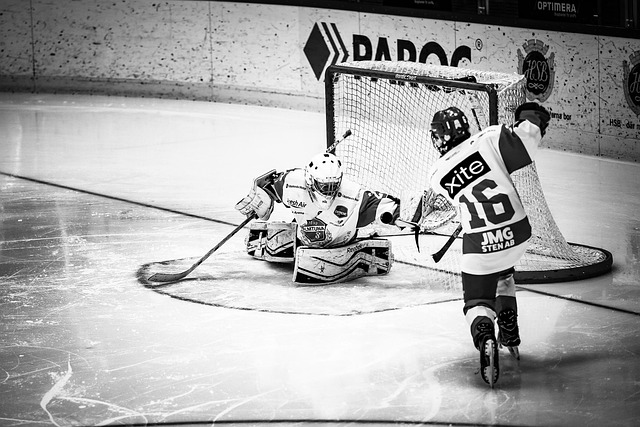
Hockey is a fast sport, but its meaning often comes from the past. Every game moves quickly, with players skating, running, passing, checking, pressing, defending, and shooting under pressure. Yet behind that speed is a deep sense of tradition. Hockey traditions can come from old rinks, famous fields, national teams, club histories, school rivalries, Olympic memories, family routines, and the stories people tell about players who came before.
This is true in both ice hockey and field hockey. Ice hockey tradition is often tied to winter, rinks, community teams, professional clubs, junior hockey, college rivalries, and national-team tournaments. Field hockey tradition is often tied to schools, clubs, Olympic history, colonial-era spread, South Asian pride, Dutch and German club systems, Australian high-performance programs, and Argentine women’s hockey culture.
Tradition matters because hockey is not only a game that changes each season. It is also a sport that carries memory. A jersey, a trophy, a rivalry, a national anthem, a clubhouse photo, or a banner in a rink can connect today’s players to earlier generations. That continuity helps explain why hockey can feel so important in places where it has deep roots.
Ice Hockey and the Tradition of the Rink
In ice hockey, tradition often begins at the rink. The rink is where young players learn to skate, where families spend cold mornings, where local teams play, and where communities gather during winter. Over time, the rink becomes part of the sport’s memory.
In Canada, this rink tradition is central to hockey culture. Outdoor ponds, community arenas, minor hockey associations, junior teams, and professional clubs all help create a long chain between childhood and elite competition. A player may begin on a backyard rink or local ice sheet, move into organized youth hockey, play junior or college hockey, and eventually reach a professional league. Even if that player never becomes a professional, the tradition still matters because the game remains part of family and community life.
In the United States, ice hockey tradition is especially strong in states such as Minnesota, Michigan, Massachusetts, Wisconsin, North Dakota, New York, and Maine. Minnesota’s high school hockey tradition is one of the clearest examples. The state tournament has become a major event because it connects schools, towns, players, alumni, and fans. It is not only about finding the best team. It is about preserving a hockey culture that has been passed down through generations.
College hockey also carries strong tradition. Programs such as Michigan, Minnesota, North Dakota, Boston University, Boston College, Denver, Wisconsin, Cornell, Harvard, Maine, and Michigan Tech have long histories, famous arenas, and loyal fan bases. Their traditions are built through rivalries, championship memories, student sections, alumni pride, and the idea that college hockey belongs to both the campus and the wider community.
Field Hockey and the Tradition of Clubs
Field hockey has its own deep traditions. In many countries, the club is the heart of the sport. Clubs teach young players, organize adult teams, host matches, train coaches, and preserve local history. A field hockey club can become a place where several generations of the same family play, volunteer, support, and socialize.
The Netherlands is one of the strongest examples of club-based field hockey tradition. Dutch field hockey success at the Olympic and world level is supported by a deep domestic club culture. Players grow up in organized environments where the sport is taught seriously and played regularly. That club tradition helps explain why the Netherlands has been so strong in both men’s and women’s field hockey.
Germany and Belgium also show the importance of club tradition. Germany has long been one of the major field hockey nations, with strong clubs and national teams. Belgium’s rise in modern men’s field hockey came from a more organized development system that turned local and club strength into international success.
In South Asia, field hockey tradition carries a different meaning. India and Pakistan built some of the greatest Olympic histories in the sport. India’s run of Olympic gold medals from 1928 through 1956 remains one of the most famous dynasties in team-sport history. Pakistan’s Olympic and World Cup success made field hockey a central part of national sporting pride. In both countries, field hockey tradition is tied to national memory, local institutions, and the status the sport held across much of the 20th century.
Olympic Tradition in Hockey
The Olympics are one of the most important sources of hockey tradition. Field hockey and ice hockey both have long Olympic histories, but they belong to different Olympic seasons.
Men’s field hockey first appeared at the Olympics in 1908 and became a regular Olympic sport from 1928 onward. Women’s field hockey joined the Olympic program in 1980. Olympic field hockey tradition includes India’s early dominance, Pakistan’s rise, the Netherlands’ long-term strength, Germany’s consistency, Australia’s high-performance culture, Argentina’s women’s success, Belgium’s modern growth, and Great Britain’s historic role.
Ice hockey made its Olympic debut in 1920, before the Winter Olympics existed, and became part of the first Winter Olympics in 1924. Olympic ice hockey tradition includes early Canadian dominance, the rise of the Soviet Union, the 1980 “Miracle on Ice,” the arrival of NHL players in 1998, and the continuing importance of men’s and women’s national-team competition.
Women’s ice hockey has built its own Olympic tradition since 1998. The Canada-United States rivalry has shaped much of the tournament’s history, while Finland, Sweden, Switzerland, Czechia, Japan, and other countries have helped expand the field. Olympic tradition is especially important for women’s hockey because the Games give the sport a global stage that can be larger than its regular professional or club structures.
Rivalries as Living Tradition
Rivalries are one of the strongest forms of hockey tradition. A rivalry keeps history active because every new game carries the weight of earlier games.
In ice hockey, rivalries such as Canada against the United States, Sweden against Finland, Czechia against Slovakia, and Russia or the Soviet Union against major opponents have shaped international competition. In the NHL, rivalries such as Montreal-Toronto, Montreal-Boston, Edmonton-Calgary, New York Rangers-New York Islanders, and Philadelphia-Pittsburgh connect teams to city identity and league history. In college hockey, rivalries such as Michigan-Michigan State, Boston College-Boston University, Minnesota-North Dakota, Minnesota-Wisconsin, and Cornell-Harvard carry regional and campus meaning.
Field hockey has equally important rivalries. India and Pakistan remain the most historically powerful rivalry in the sport, even when the teams are not at the same competitive level they once held. The Netherlands and Germany have met in major men’s and women’s matches. Australia and New Zealand bring regional rivalry into international competition. Argentina and the Netherlands have built important women’s field hockey history through major tournament meetings.
Rivalries matter because they make hockey more than a schedule. They create anticipation, memory, pressure, and identity. A rivalry game is not only about points or medals. It is about where the teams come from and what their history means.
Traditions Passed Through Families
Hockey tradition is often inherited through families. Parents take children to games. Older siblings teach younger siblings to skate or handle a stick. Families support local clubs, school teams, national teams, or professional franchises. In some places, hockey becomes part of family identity across generations.
This is especially visible in ice hockey communities where rink life becomes a family routine. Early practices, weekend tournaments, used equipment, team travel, and cold arenas become part of childhood memory. In field hockey communities, family tradition may form around club membership, school teams, weekend matches, and national-team support.
Family tradition helps hockey survive difficult periods. A professional team may struggle. A national team may lose. A sport may receive limited media attention. But if families keep bringing children into the game, the tradition continues.
This also explains why hockey identity can be so strong in places where the sport is not the biggest national game. A field hockey club in a football country, or an ice hockey team in a region dominated by other sports, can still matter deeply because families and local communities preserve the tradition.
Tradition and Change
Tradition does not mean hockey stays the same forever. Both ice hockey and field hockey have changed dramatically.
Ice hockey has become faster, more skilled, more international, and more tactical. Equipment has improved. Goaltending has changed. Analytics influence team-building. Women’s professional hockey has grown. NHL rosters include more players from the United States, Sweden, Finland, Czechia, Slovakia, Russia, Germany, Switzerland, and other countries than earlier generations did.
Field hockey has also changed. The move from grass to artificial turf changed the speed and style of the game. Penalty corner tactics became more specialized. Women’s field hockey became a major Olympic sport. Countries such as the Netherlands, Germany, Australia, Argentina, Belgium, India, China, and Great Britain have shaped the modern game through different systems and styles.
Tradition survives when it adapts. A club can honor its history while improving coaching. A national team can remember past champions while developing modern tactics. A college program can protect old rivalries while recruiting international players. A youth program can preserve community identity while expanding access to girls, new families, and players from different backgrounds.
The strongest hockey cultures are not frozen in the past. They use tradition as a foundation, not a limit.
Why Hockey Tradition Still Matters
Hockey tradition matters because it gives the sport depth. Without tradition, hockey would still be exciting, but it would lose much of its emotional force. A goal matters more when it comes in a rivalry. A championship matters more when a community has waited for it. A national-team win matters more when it connects to decades of memory. A local club matters more when families have built their lives around it.
In ice hockey, tradition lives through rinks, jerseys, trophies, junior teams, college rivalries, Olympic memories, and winter routines. In field hockey, tradition lives through clubs, schools, Olympic history, national teams, local grounds, and international rivalries. In women’s hockey, tradition is still being built and expanded through college programs, professional leagues, Olympic teams, and clubs that give girls and women a stronger place in the sport.
Hockey tradition is not only about famous teams or old championships. It is also about ordinary repetition: the same rink, the same field, the same rival, the same club colors, the same family drive to practice, the same story told again to a younger player. That repetition gives hockey its memory.
The sport keeps changing, but tradition is why it still feels connected to where it came from. That is true on frozen ponds, in indoor arenas, on college campuses, at field hockey clubs, in Olympic stadiums, and in towns where the game has become part of local life.