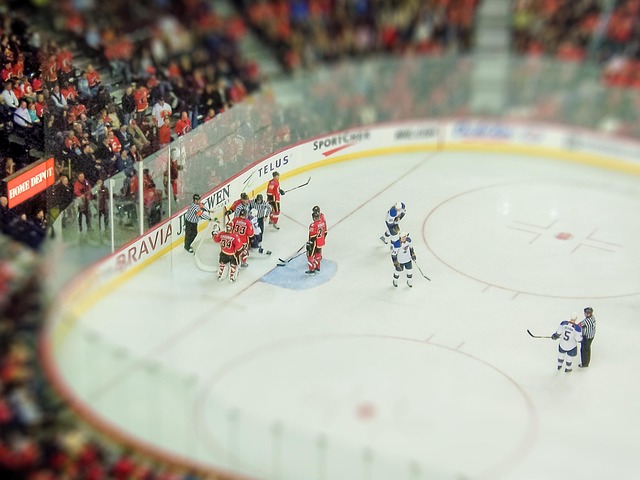
Hockey can mean ice hockey or field hockey, and both versions of the sport reward speed, skill, teamwork, and decision-making. The surfaces are different. Ice hockey is played on skates with a puck, while field hockey is played on turf with a ball. The equipment, contact rules, and playing areas are also different. But both sports ask similar questions: Can a team move the ball or puck under pressure? Can it create space? Can it defend dangerous areas? Can it turn possession into scoring chances?
At the beginner level, hockey can look chaotic because the game moves quickly. Players change direction, passes travel through tight lanes, defenders close space, and goalkeepers have to react in a fraction of a second. But strong teams are not just faster or stronger. They are organized. They understand where space will open, when to attack, when to reset, and how to defend as a unit.
That is what makes hockey such a rich sport. It combines individual skill with group structure. A great player can change a game, but successful teams usually win because their skating or movement, passing, defensive shape, and transition play all work together.
Core Skills: Movement Comes First
The first major skill in hockey is movement. In ice hockey, that means skating. In field hockey, it means running, cutting, accelerating, stopping, and changing direction with balance. A player who moves well can reach loose pucks or balls, escape pressure, close down opponents, and create attacking angles.
In ice hockey, skating is the base of everything. Players need forward speed, backward skating, edge control, crossovers, quick starts, tight turns, and balance while handling contact. A skilled ice hockey player can accelerate without losing control of the puck, turn away from pressure along the boards, and move laterally to create a shooting lane. Defensemen especially need strong backward skating and pivots because they must defend attackers who are moving at high speed.
In field hockey, movement is just as important, but it works differently. Players need speed over short distances, quick body positioning, and the ability to receive or pass while moving. Because field hockey is played with a ball on turf, players must adjust to fast passes, changing angles, and tight spaces. A player who arrives half a step early can intercept a pass, win a tackle, or create space for a shot.
Good movement is not only athletic. It is also intelligent. The best players move before the pass arrives. They know when to sprint into space, when to slow down, and when to pull a defender away from a teammate.
Stick Skills and Ball or Puck Control
Stick skills are the most visible part of hockey. In ice hockey, players use stickhandling to control the puck, protect it from defenders, and create shooting or passing options. In field hockey, players use dribbling, receiving, passing, and close control to move the ball under pressure.
In ice hockey, puck control is difficult because the game is played at high speed on ice. A player must control a small puck while skating, reading defenders, and preparing for contact. Good stickhandlers do not simply perform tricks. They use small touches to change the puck’s angle, force defenders to shift their weight, and open passing or shooting lanes.
In field hockey, ball control is shaped by the rules. Players use the flat side of the stick and must be precise when receiving, carrying, or passing. First touch is especially important. A clean first touch can turn a difficult pass into an attack. A poor first touch can lead to a turnover. Elite field hockey players are excellent at receiving the ball while already scanning the field.
In both sports, control under pressure separates strong players from average ones. It is one thing to pass or shoot with no defender nearby. It is much harder to make the right play when space is closing and the defense is forcing a quick decision.
Passing, Spacing, and Creating Chances
Hockey is often won through passing and spacing. Strong teams do not simply rush forward and hope for a shot. They move defenders out of position. They create passing lanes. They attack open space. They use width, timing, and support.
In ice hockey, passing is central to zone entries, breakouts, power plays, and odd-player rushes. A clean breakout from the defensive zone can turn pressure into attack. A quick pass through the neutral zone can create a controlled entry. In the offensive zone, teams often cycle the puck along the boards, pass from low to high, or move the puck across the ice to force the goaltender and defense to shift.
In field hockey, passing patterns are often built through triangles, width, and quick support. Teams move the ball across the back line, through midfield, and into attacking channels. Because field hockey has no offside rule, attacking movement can stretch the field. Good teams use that space carefully, looking for passes into the circle, baseline attacks, deflections, and penalty corner opportunities.
Spacing matters because crowded teams are easy to defend. If all attackers move into the same area, defenders can close them down. If attackers spread properly, they make the defense choose. That choice is where chances are created.
Shooting and Finishing
Scoring is the hardest part of hockey because goalkeepers have a clear advantage when shots are predictable. Successful teams create shots from dangerous locations and force goalkeepers to move before the shot arrives.
In ice hockey, strong scoring chances often come from the slot, rebounds, screens, deflections, one-timers, and cross-ice passes. A shot from the outside can be useful if it creates a rebound or traffic in front of the net, but low-danger shots rarely beat elite goaltenders cleanly. That is why teams fight for inside position and net-front presence.
In field hockey, goals can only be scored from inside the shooting circle. That rule shapes attacking strategy. Teams work to enter the circle with control, win penalty corners, create deflections, or pass across the face of goal. Penalty corners are especially important in high-level field hockey because they give teams a structured scoring opportunity from a set play.
Finishing requires calm. A player may only get one clear chance in a tight game. The best scorers do not rush every shot. They read the goalkeeper, understand angles, and choose the right finish for the situation.
Defense: Protecting the Dangerous Areas
Good hockey teams defend the middle of the playing area. In ice hockey, that means protecting the slot, the front of the net, and the center of the defensive zone. In field hockey, it means protecting the circle, blocking central passing lanes, and preventing clean entries into scoring areas.
Defense is not only about one-on-one tackling. It is about structure. Players must know when to pressure, when to contain, when to block a lane, and when to support a teammate. A defender who chases the ball or puck too aggressively can open space behind them. A defender who waits too long can give the attacker time to pass or shoot.
In ice hockey, defensive systems include forechecking, neutral-zone pressure, defensive-zone coverage, shot blocking, and backchecking. Forwards have defensive responsibilities too. A winger who fails to cover the point or a center who misses an assignment can break the whole structure.
In field hockey, defensive shape often depends on pressing. Teams may press high to force turnovers near the opponent’s goal, or they may sit deeper and protect central areas. Tackling must be controlled because fouls can lead to free hits, cards, or penalty corners. Smart defenders know that forcing a bad pass can be just as valuable as making a clean tackle.
Transition: The Game Between Attack and Defense
One of the most important parts of hockey is transition. Transition is the moment when possession changes. A team that was defending suddenly attacks. A team that was attacking suddenly has to recover.
In ice hockey, transition can be explosive. A turnover at the blue line can lead to a breakaway. A blocked shot can become an odd-player rush. A strong first pass from a defenseman can turn defensive pressure into speed through the neutral zone. Many goals come not from long, settled possessions, but from quick changes of direction after a mistake.
In field hockey, transition is also decisive. A turnover in midfield can create open space before the defense is set. Because the field is large and there is no offside rule, quick attacking movement can punish teams that lose shape. At the same time, teams must be careful not to overcommit forward and leave themselves open to counterattacks.
Successful teams are usually good in both directions. They attack quickly when the chance is there, but they also recover quickly when they lose the ball or puck. That balance is a major sign of a well-coached team.
Special Teams and Set Plays
Special situations can decide games. In ice hockey, special teams usually means the power play and penalty kill. When one team has more players on the ice because of a penalty, it has a major chance to score. Power-play units use puck movement, screens, one-timers, bumper plays, and net-front traffic to break down the penalty kill. Penalty-killing units try to block shots, clear the puck, pressure at the right moments, and protect the middle.
In field hockey, penalty corners are one of the most important set plays. Teams practice them carefully because they create clear scoring chances. A penalty corner may involve a direct drag flick, a pass to a shooter, a deflection, or a planned variation designed to move defenders and the goalkeeper. Defending penalty corners requires bravery, timing, and organization.
Set plays matter because they give teams a chance to prepare. In open play, hockey is fast and unpredictable. On special teams or set pieces, coaching and execution become even more visible.
Goalkeeping Changes Everything
Goalkeepers are central to both ice hockey and field hockey. A great goalkeeper can keep a weaker team in the game, protect a lead, and change the emotional balance of a match.
In ice hockey, goaltenders must track the puck through traffic, control rebounds, move post to post, handle screens, and read passing options. Modern goaltending is highly technical, with butterfly positioning, angle control, edge work, and recovery movements all playing major roles.
In field hockey, goalkeepers wear protective gear and face shots, deflections, penalty corners, and close-range attacks. They must be explosive, brave, and vocal. Field hockey goalkeepers also help organize the defense because they can see the whole field in front of them.
A strong team does not rely only on its goalkeeper, but nearly every successful team needs reliable goalkeeping. Bad defensive structure can leave a goalkeeper exposed. Strong defensive structure can make a goalkeeper’s job easier by reducing high-quality chances.
What Makes Teams Successful
Successful hockey teams usually share several traits. They move well. They pass with purpose. They defend the dangerous areas. They create high-quality chances instead of settling only for low-percentage shots. They manage transitions. They stay disciplined. They get strong goalkeeping. They also understand their identity.
Some teams win through speed. Some win through possession. Some win through defensive structure and counterattacks. Some rely on set plays or special teams. The best teams usually have more than one way to win. They can play fast when space is available, but they can also stay patient when the opponent is organized.
Team chemistry matters because hockey requires constant support. A puck carrier or ball carrier needs passing options. A defender needs cover. A goalkeeper needs clear communication. A forward who loses possession needs teammates to recover. No player can control the whole game alone.
Hockey rewards talent, but it punishes disorganization. A team with skilled players can still lose if it leaves gaps, takes bad penalties, or attacks without structure. A less talented team can compete if it stays compact, wins key moments, and understands its strengths.
Why Hockey Is Hard to Master
Hockey is difficult because it combines speed with precision. Players must make decisions while moving, under pressure, with limited time. In ice hockey, they must do this while skating. In field hockey, they must do it while controlling a fast ball with one side of the stick. Both versions of the game require athletic ability, technical skill, tactical understanding, and mental discipline.
That is why hockey is more than a game of running or skating after a ball or puck. It is a sport of timing, angles, space, and pressure. The best teams make the game look simple because they have already done the hard work: they know where to move, when to pass, how to defend, and how to respond when the game changes.
For new fans, the best way to watch hockey is to look beyond the puck or ball. Watch the players without possession. Watch how teams create space. Watch how defenders protect the middle. Watch how quickly teams react after turnovers. That is where the deeper game becomes visible.
Hockey success comes from skill, but it also comes from structure. The teams that win most often are not just the teams with the best individual players. They are the teams that turn individual skill into connected, disciplined, intelligent hockey.