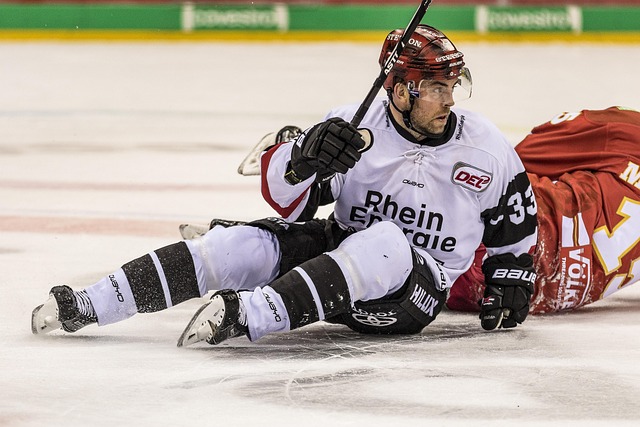
Hockey is often discussed through famous leagues, Olympic tournaments, and international stars, but the sport’s strongest identity usually begins locally. A child does not first understand hockey through the NHL, the Olympics, the FIH Hockey World Cup, or a national federation. They often understand it through a rink, a field, a school team, a neighborhood club, a family routine, or a town that treats hockey as part of its shared life.
That is true in both ice hockey and field hockey. In Canada, a local rink can be one of the main public spaces in a town. In Minnesota, high school hockey can carry the emotional weight of a community event. In the Netherlands, Belgium, Germany, India, Argentina, Australia, and South Africa, field hockey clubs can become important social institutions. In the United States, field hockey is often tied to school identity, especially in states such as Pennsylvania, New Jersey, Maryland, Virginia, Massachusetts, and Connecticut.
Hockey creates local identity because it gives people a place to gather, a team to follow, and a story to pass down. The sport is not only about the players on the ice or field. It is also about the parents driving to practices, the volunteers running youth clubs, the coaches teaching basic skills, the old trophies in clubhouses, the rival towns on the schedule, and the familiar sounds of a rink or field on game day.
The Rink as a Community Center
In ice hockey regions, the local rink is often more than a sports facility. It is a meeting place. In Canadian towns and northern U.S. communities, rinks host youth practices, high school games, adult leagues, figure skating, public skating, tournaments, fundraisers, and community events. The rink becomes part of the town’s rhythm.
This is one reason ice hockey has such a strong relationship with local identity. A rink is not just where games happen. It is where people grow up. Families spend early mornings there. Coaches become local figures. Older players return to help younger teams. Former players are remembered through banners, photos, or stories that stay in the building long after their final game.
In Canada, this connection is especially deep. Hockey is often tied to small-town identity in provinces such as Saskatchewan, Manitoba, Ontario, Alberta, Quebec, and Nova Scotia. A player who reaches major junior, college hockey, the NHL, or a national team may become a symbol of the place that produced them. Even players who never become professionals can still matter locally because they helped build teams, coach kids, or keep the sport alive.
The same pattern exists in American hockey communities. Minnesota’s high school hockey culture is one of the clearest examples. The state tournament is not only a competition; it is a civic event that connects schools, towns, alumni, and generations of fans. Michigan, Massachusetts, North Dakota, Wisconsin, New York, and other states also have strong local hockey identities built through schools, youth programs, colleges, and community rinks.
Field Hockey Clubs and Local Belonging
Field hockey creates local identity through a different structure. In many countries, the club is the center of the sport. Clubs are not only teams; they are social institutions. They may include youth programs, adult teams, women’s teams, men’s teams, coaching programs, clubhouses, and long-standing community traditions.
In the Netherlands, field hockey clubs are deeply connected to local sport culture. Dutch hockey success at the Olympic and international level is supported by strong clubs, youth development, coaching, and regular competition. A player may grow up inside a club environment where the sport is part of family life and community routine.
Belgium’s rise in men’s field hockey also shows the power of club structures. The country’s modern success did not happen by accident. It grew from investment, organization, and a stronger development system that connected local clubs to national ambition. When Belgium won major international titles, those victories were tied back to years of work at the club level.
In India and Pakistan, field hockey has a different local identity. The sport has been connected to schools, military teams, public-sector institutions, railway teams, police teams, and local clubs. Olympic history made field hockey part of national memory, but the sport also lived in cities, towns, and institutions where players learned the game before reaching international stages.
Argentina’s women’s field hockey identity also shows how a national team can grow from local roots. Las Leonas became an important part of Argentine Olympic sport, but the team’s strength depends on clubs, coaching, youth systems, and local playing cultures that develop players before they become national figures.
Schools, Colleges, and Regional Pride
Schools and colleges are another major source of hockey identity. In some places, hockey is not built around professional clubs first. It is built around school colors, college rivalries, and regional competition.
In the United States, college ice hockey is a major example. Schools such as Minnesota, Michigan, North Dakota, Boston College, Boston University, Denver, Wisconsin, Cornell, Harvard, Maine, Michigan Tech, and many others carry hockey traditions that are deeply connected to campus identity. A college hockey team can represent a university, a town, an alumni network, and a region all at once.
Women’s field hockey in the United States also has strong school and college roots. Many players first experience the sport through school teams and then continue through club programs, college recruiting, and NCAA competition. In this structure, local identity often comes through schools, counties, regions, and college programs rather than professional teams.
This matters because school-based hockey creates emotional loyalty. People support teams because they attended the school, live in the town, know the players, or grew up around the rivalry. The identity is personal. It is not only about entertainment. It is about belonging.
Local Rivalries Give Hockey Its Edge
Local identity becomes strongest when there is a rival nearby. Hockey rivalries often work because they are close. A neighboring town, a nearby school, a regional club, or a familiar national opponent can give the sport sharper meaning.
In ice hockey, local rivalries can form through high school schedules, junior leagues, college conferences, minor league hockey, or professional teams. Boston and Montreal, Toronto and Montreal, Edmonton and Calgary, Michigan and Michigan State, North Dakota and Minnesota, and many other rivalries carry regional identity because they are connected to place.
In field hockey, club rivalries and national rivalries serve a similar role. India and Pakistan created one of the sport’s most important rivalries, shaped by shared history, political division, and Olympic competition. The Netherlands and Germany have played major matches across men’s and women’s field hockey. Australia and New Zealand carry a natural regional rivalry. Argentina’s women’s team has built strong competitive relationships with the Netherlands, Germany, and other elite programs.
Rivalries help local identity because they give communities a clear story. Winning matters more when it is against a familiar opponent. A game becomes more than a result. It becomes part of a longer record between places.
Hockey in Smaller Cities and Towns
Hockey can be especially important in smaller places. A major city may have many teams and cultural institutions, but a small town may have only one or two teams that carry public attention. In those places, hockey can become a central part of local pride.
Minor league ice hockey is a strong example. Cities that do not have NHL teams often build deep loyalty around AHL, ECHL, junior, or university teams. The Hershey Bears in Pennsylvania, the Grand Rapids Griffins in Michigan, and many other clubs show how hockey can matter outside the largest markets. Fans follow the team because it represents their city, not because it is the biggest league in the world.
Junior hockey in Canada also gives smaller communities a powerful identity. A Western Hockey League, Ontario Hockey League, or Quebec Maritimes Junior Hockey League team can become one of the main symbols of a city. Players may stay with local families, appear in community events, and become part of the town before moving on to professional careers.
Field hockey can serve a similar role through local clubs and schools. A club may not be famous globally, but it can matter deeply to the people who play there. The clubhouse, the field, the youth teams, and the weekend schedule can become part of local life.
National Teams and Local Roots
National teams often look like the highest level of hockey identity, but they are built from local places. An Olympic ice hockey player may represent Canada, the United States, Sweden, Finland, Czechia, or Slovakia, but that player first belonged to a hometown, youth association, club, school, or junior team. A field hockey player may represent India, the Netherlands, Argentina, Australia, Germany, Belgium, or Great Britain, but that player also comes from a local club or development system.
This is why national-team success often reflects local strength. India’s Olympic field hockey history is tied to the places and institutions that produced generations of players. Canada’s ice hockey success is tied to the towns, rinks, and minor hockey systems that built its player base. The Netherlands’ field hockey success reflects club depth and youth development. The United States’ growth in ice hockey reflects expanding youth participation, college hockey, and NHL markets creating new local identities.
When a national team wins, local communities see themselves in the victory. A small town can claim a player. A school can celebrate an alum. A club can point to its development work. National hockey identity is made from many local identities stacked together.
Why Local Identity Keeps Hockey Alive
Hockey survives because people care about it before it becomes famous. The NHL, Olympics, world championships, college tournaments, and major field hockey events all depend on local systems that teach the game and preserve loyalty.
Local identity gives hockey emotional depth. It turns a rink into a landmark, a field into a meeting place, a club into a family tradition, and a team into a symbol of home. It also keeps the sport alive when national attention is limited. A field hockey club may matter even without television coverage. A minor league ice hockey team may matter even without national headlines. A school rivalry may matter because the community has made it important.
Hockey’s global identity is built from these local pieces. The sport belongs to countries, leagues, and Olympic tournaments, but it also belongs to towns, schools, clubs, rinks, fields, and families. That is why hockey can feel so personal. It is not only a sport people watch. In many places, it is part of how they understand where they come from.