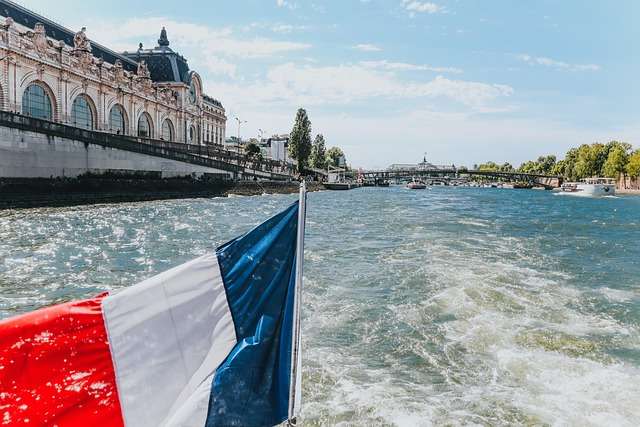
Paris hockey has history, but it does not have the same modern weight as Paris football, rugby, basketball, tennis, or cycling culture. That contrast is what makes it interesting. The city is France’s capital and largest media market, yet ice hockey has often been a smaller, more fragmented presence rather than a dominant professional force.
The most historic ice hockey name in Paris is Français Volants de Paris. Founded in 1933, the club became one of the important teams in early French ice hockey, winning national championships in 1936, 1937, 1938, and 1989. Today, the club plays below the top level, which reflects the larger Paris hockey story: deep roots, real tradition, but limited modern top-flight visibility.
What Defines Paris Hockey
Paris hockey is defined by contrast. The city has enough size, wealth, and sporting infrastructure to seem like an obvious hockey market, but ice hockey has never become one of Paris’s leading sports. Instead, the game exists through historic clubs, local rinks, youth programs, recreational players, and a smaller community of committed fans.
That makes Paris different from French hockey cities where the sport carries more visible local weight. Grenoble, Rouen, Amiens, Angers, and other French hockey markets often feel more central to the country’s top ice hockey structure. Paris, despite being the national capital, has not consistently functioned as France’s dominant hockey city.
The Paris hockey identity is therefore less about mass attention and more about persistence. Hockey survives in the city because clubs, players, families, and organizers keep it active despite competition from many larger sports and entertainment options.
The Hockey Style and Fan Culture of Paris
Paris hockey has a local, niche, and historically aware feel. The city does not have the same week-to-week top-level hockey atmosphere as stronger French Ligue Magnus markets. Instead, its hockey culture is built around people who seek out the sport rather than people who inherit it as a major civic habit.
That creates a different kind of fan culture. Paris hockey fans are often following the game because they already love it, not because the city constantly pushes hockey into public view. The sport’s audience is more specialized, and the atmosphere around clubs is more intimate than in major arena markets.
The challenge is visibility. In a city with Paris Saint-Germain, major rugby, international tennis, basketball, Olympic venues, and huge cultural competition, hockey has to fight for attention. That does not make the sport irrelevant. It means Paris hockey has to be understood as a dedicated subculture inside a massive sports city.
The Institutions Behind Paris Hockey
Français Volants de Paris is the clearest historical institution behind Paris hockey. Eurohockey lists the club as founded in 1933, with blue, white, and red colors and active club status. The club’s long life gives Paris a genuine hockey lineage even if the city is not currently the center of elite French hockey.
The club’s historic achievements still matter. Français Volants won multiple French championships before and after World War II and returned to national prominence with a title in 1989. That gives Paris hockey a stronger historical résumé than its current profile might suggest.
Modern Paris hockey is also shaped by rink access. Elite Prospects lists Français Volants at Patinoire Sonja Henie, a small-capacity rink environment rather than a major arena setting. That detail captures the Paris hockey problem well: the city has history and population, but not the same top-tier hockey infrastructure or visibility as France’s strongest hockey markets.
How Paris Develops Hockey People
Paris develops hockey people through clubs, rinks, recreational communities, and families who choose hockey in a city where many other sports are easier to find. That makes the development culture more intentional. Young players usually do not fall into hockey by accident; they need rink access, parental commitment, coaching, and enough competition to stay involved.
The city’s size can help. A large metropolitan population means there is potential for players, fans, and adult recreational leagues. But scale alone does not create a hockey culture. Hockey needs ice time, stable clubs, and competitive pathways.
For Paris, the long-term opportunity is turning scattered interest into stronger structures. If the city can connect youth hockey, historic club identity, recreational participation, and better visibility, it can become more than a hockey footnote in France’s largest urban area.
Why Paris Hockey Matters
Paris hockey matters because it shows that size alone does not determine hockey strength. A capital city can have history without dominance, clubs without mass visibility, and a real hockey community without being the national center of the sport.
The Paris story is useful because it avoids the lazy assumption that every major city must automatically be a major hockey market. In France, Paris has hockey roots, but its role is complicated. It remains a city where hockey exists through commitment, not inevitability.

Interested in Sports in Paris (France)?
American Football in Paris | Baseball in Paris | Basketball in Paris | Cricket in Paris | Football (Soccer) in Paris | Rugby in Paris