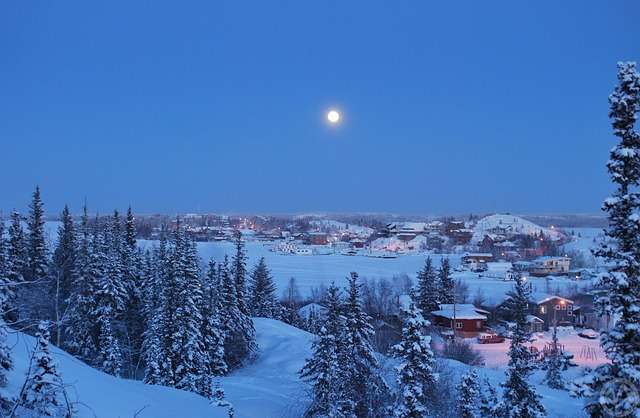
Northwest Territories hockey is one of Canada’s most community-driven hockey stories. It is not built around NHL teams, major junior franchises, or large urban rink networks. It is built around winter, local arenas, outdoor ice, small communities, youth programs, adult recreation, and the commitment required to play hockey across long distances.
In the Northwest Territories, hockey is not just a sport people watch. It is a winter activity, a community gathering point, and a way for towns to stay connected during the coldest months of the year. The territory’s hockey identity is shaped by geography as much as competition. Travel is harder, player pools are smaller, and facilities are more precious. That makes every rink and every organized program matter.
What Defines Northwest Territories Hockey
Northwest Territories hockey is defined by community and distance. In larger hockey provinces, players may have many rinks, leagues, and teams within a short drive. In the NWT, hockey depends on local organization, travel planning, community volunteers, and the ability to make the most of limited facilities.
Winter gives the sport a natural place in territorial life. Frozen lakes and ponds can become hockey spaces, and outdoor ice remains part of the wider culture of the game. Northwest Territories tourism material describes winter, frozen lakes, and ponds as central to the experience of hockey and cold-weather recreation in the territory.
Organized hockey is also important. Hockey NWT serves as the territorial hockey body and supports events, development, and competition, including preparation connected to the 2026 Canada Winter Games. In a region like this, the governing body’s role is practical and cultural. It helps turn scattered local enthusiasm into a more connected hockey structure.
The Communities That Keep Hockey Alive
Northwest Territories hockey is best understood through its communities. Yellowknife is the territory’s largest city and most visible sports hub, but hockey also matters in smaller places where the local arena may be one of the most important buildings in town.
Fort Smith’s Centennial Arena, for example, lists minor hockey, figure skating, adult recreation hockey, women’s hockey, and public skating among its uses. That kind of facility shows how hockey operates in the North. The rink is not only for elite players. It serves children, adults, women’s programs, recreational players, skaters, families, and public events.
This gives Northwest Territories hockey a different identity from major hockey provinces. The story is not about producing the most NHL stars or winning the most national championships. It is about sustaining a sport that requires ice, equipment, coaching, and travel in a region where all of those things take extra effort.
The style of hockey is shaped by that reality. It is resilient, practical, and community-first. Players learn that the game depends on the people who organize it.
The People and Places Behind Northwest Territories Hockey
The people behind Northwest Territories hockey are often local coaches, parents, volunteers, officials, arena staff, and community organizers. In small hockey systems, these people are not background figures. They are the structure of the sport.
Youth hockey depends on adults who can organize teams, find ice time, coordinate travel, and keep children involved. Adult recreational hockey also matters because it gives the sport continuity beyond youth competition. Women’s hockey and girls’ hockey are important because they widen the player base and make hockey less dependent on one narrow participation group.
The territory’s hockey places are equally important. Yellowknife, Fort Smith, Inuvik, Hay River, and other communities contribute to the broader hockey map in different ways. Each rink or outdoor ice surface gives the sport a local home.
Why Northwest Territories Hockey Matters
Northwest Territories hockey matters because it shows what hockey means outside the large-market version of the sport. In the NWT, hockey is not mainly a commercial product. It is a community practice. It gives people something to do in winter, creates shared routines, and connects communities that may otherwise be separated by geography.
It also matters because northern hockey is part of Canada’s larger hockey identity. Canada’s hockey story is not only Toronto, Montreal, Edmonton, or Vancouver. It is also small arenas, remote communities, outdoor ice, and places where the game survives because people make it survive.
The Future of Northwest Territories Hockey
The future of Northwest Territories hockey depends on facilities, volunteers, youth programs, travel support, and keeping the sport affordable. In a territory with long distances and smaller player pools, sustainability matters more than scale.
The NWT does not need to become a major hockey factory to have an important hockey culture. Its identity is already meaningful: community rinks, winter resilience, outdoor ice, recreational play, youth development, and a version of hockey that remains close to everyday northern life.
Interested in Sports in Northwest Territories?
American Football in Northwest Territories | Baseball in Northwest Territories | Basketball in Northwest Territories | Cricket in Northwest Territories | Football (Soccer) in Northwest Territories | Rugby in Northwest Territories