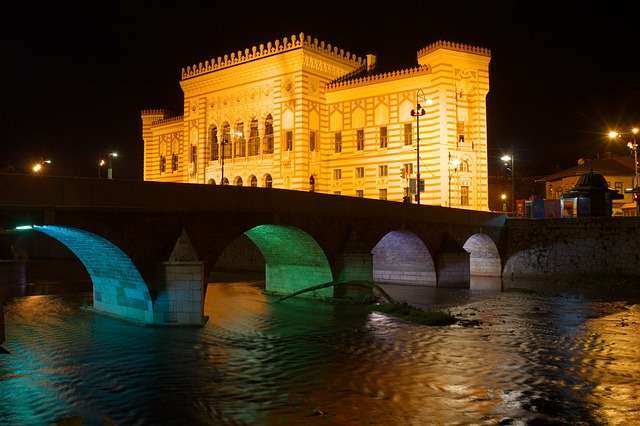
Bosnia and Herzegovina hockey is a small but meaningful part of the country’s sporting landscape. It is not a major national sport, and it does not have the depth of neighboring or nearby European hockey countries such as Slovenia, Austria, Hungary, Croatia, or Serbia. Still, the sport has real structure. Bosnia and Herzegovina has been an IIHF member since 2001, and the national team gives the country a place in international ice hockey, even if that place is still developing.
What Defines Bosnia and Herzegovina Hockey
Bosnia and Herzegovina hockey is defined by Sarajevo, small-player-pool persistence, and international participation. The country’s hockey identity cannot be separated from Sarajevo’s winter-sport history. The city hosted the 1984 Winter Olympics, and that Olympic memory gives ice sports a deeper symbolic connection than the size of the current hockey system might suggest.
The national hockey structure is modest. IIHF data lists Bosnia and Herzegovina with a small player base and lower world-ranking position, but the country’s membership and participation still matter. For a smaller hockey nation, being part of the IIHF system creates a pathway into international competition, development programs, and national-team identity.
What defines Bosnia and Herzegovina hockey is not scale. It is continuity. The sport has to survive through limited facilities, a small base of players, and the challenge of competing in a country where football, basketball, handball, and other sports carry far more attention.
How Hockey Is Building Its Identity in Bosnia and Herzegovina
Bosnia and Herzegovina hockey has a developing identity built around national-team pride and Sarajevo’s role as the sport’s main hub. The men’s national team is known as the Ice Dragons, a nickname that gives the team a recognizable identity even within the lower divisions of world hockey. The team’s home is connected to Sarajevo’s Olympic infrastructure, especially the Juan Antonio Samaranch Olympic Hall.
The local style of hockey is shaped by scarcity. In countries with many rinks, players can move through several levels of youth, club, junior, and professional competition. In Bosnia and Herzegovina, the path is narrower. Players need commitment, travel opportunities, and enough domestic organization to stay active.
International competition becomes especially important. For smaller hockey countries, IIHF tournaments are not just events; they are measuring sticks. They show whether the country is developing, whether the player pool is stable, and whether the national team can create moments that attract more attention.
The People and Places Behind Bosnia and Herzegovina Hockey
The most important place in Bosnia and Herzegovina hockey is Sarajevo. Its Olympic legacy, arena infrastructure, and symbolic winter-sport identity make it the natural center of the sport. Without Sarajevo, the country’s ice hockey story would be much thinner.
The people behind the sport include national-team players, federation officials, coaches, and local organizers who keep hockey active despite limited conditions. The men’s national team has recorded multiple World Championship appearances since its first official game in 2008, according to international hockey records. That kind of participation gives players a goal and gives the sport a national symbol.
Bosnia and Herzegovina does not have a long list of NHL stars or major professional clubs. Its hockey identity is built through national representation, local commitment, and the use of Sarajevo’s winter-sport memory as a foundation for future growth.
Why Bosnia and Herzegovina Hockey Matters
Bosnia and Herzegovina hockey matters because it represents the smaller end of European ice hockey. Europe is full of hockey powers and mid-level hockey nations, but it also includes countries where the sport survives with limited players, limited ice, and limited funding. Bosnia and Herzegovina belongs to that second story.
Its presence in the IIHF system matters because global hockey depends on more than the top countries. Lower-division nations help expand the sport’s map and give players from smaller countries a chance to represent their flags.
Bosnia and Herzegovina also has one of the more interesting symbolic cases because of Sarajevo. The country’s hockey scene may be small, but it exists in a place with real Olympic winter-sport history.
The Future of Bosnia and Herzegovina Hockey
The future of Bosnia and Herzegovina hockey depends on rink access, youth recruitment, domestic organization, coaching, and continued international participation. The country does not need to become a major European hockey power for the sport to matter. A realistic future would mean a stable player base, stronger youth programs, regular national-team activity, and a clearer local pathway centered around Sarajevo and other possible development hubs.
Interested in Sports in Bosnia and Herzegovina?
American Football in Bosnia and Herzegovina | Baseball in Bosnia and Herzegovina | Basketball in Bosnia and Herzegovina | Cricket in Bosnia and Herzegovina | Football (Soccer) in Bosnia and Herzegovina | Rugby in Bosnia and Herzegovina