Austrian hockey sits in the middle of European ice hockey’s hierarchy: established, historic, organized, and respected, but usually positioned below the continent’s top powers. Austria is not Canada, Sweden, Finland, Czechia, Switzerland, or Germany in hockey terms, but it is also not a fringe hockey country. It has a long IIHF history, a national federation, a domestic professional structure, a recognizable club culture, and a national team capable of competing in the top division of the IIHF World Championship. Austria has been an IIHF member since 1912, and the Austrian federation is listed as a full member.
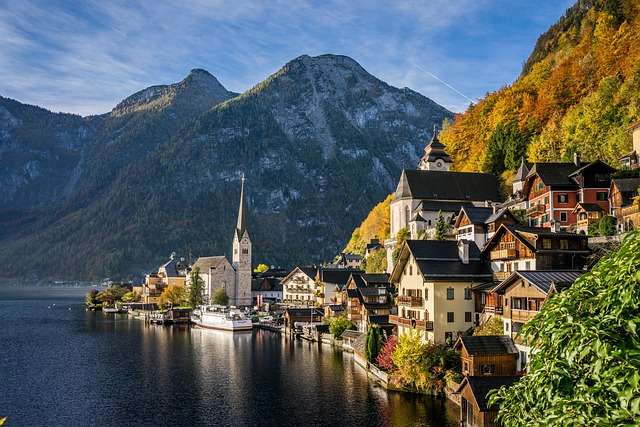
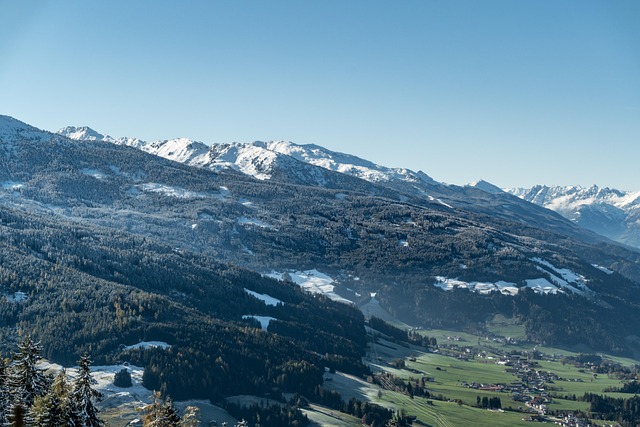
The Austrian hockey identity is shaped by geography as much as by sport. This is an Alpine country where winter sports matter, but skiing has long been the dominant national winter identity. Hockey has had to carve out its space alongside alpine skiing, football, and other established sports. That gives Austrian hockey a distinct profile: serious, club-based, regionally passionate, and internationally ambitious without being the country’s defining winter obsession.
What Defines Austrian Hockey
Austrian hockey is defined by its club system, its Alpine setting, and its position as a competitive second-tier European hockey nation. It has enough infrastructure to sustain a serious hockey culture. The IIHF lists Austria with dozens of indoor and outdoor rinks, along with senior, youth, and female registered players. Those numbers do not place Austria among the deepest hockey nations in the world, but they do show a real national hockey base.
The Austrian game is strongly connected to club identity. Cities and towns such as Klagenfurt, Villach, Salzburg, Vienna, Linz, Graz, Innsbruck, and others have helped form the country’s hockey map. The sport is not evenly distributed across every part of Austria, but where it has roots, it can be intense. Club rivalries, local arenas, and regional pride give Austrian hockey a stronger domestic identity than outsiders sometimes recognize.
Austria’s top hockey structure has also become increasingly international. The ICE Hockey League functions as Austria’s top-tier league while also including teams from neighboring countries such as Hungary, Italy, and Slovenia. That cross-border structure reflects Austria’s location in Central Europe and gives its clubs a competitive environment that is broader than a purely domestic league.
The Style and Reputation of Austrian Hockey
Austrian hockey’s reputation is built around competitiveness, resilience, and the challenge of surviving against deeper hockey nations. At the international level, Austria often exists near the border between the top division and Division I. That creates a particular kind of hockey identity: every top-level tournament matters, every point is valuable, and every upset can feel like a statement.
The Austrian national team is rarely expected to dominate the strongest countries, but it has shown that it can be difficult to play against when organized, disciplined, and opportunistic. Austria’s best performances usually come when it limits mistakes, gets strong goaltending, and turns games into contests of structure and patience rather than pure skill depth. Against larger hockey nations, Austria often has to play efficiently because it does not have the same number of elite NHL-level players.
Domestically, Austrian hockey has a more open and international character. The ICE Hockey League includes imports, cross-border opponents, and different club styles. That gives Austrian players regular exposure to a professional environment with varied influences. It also means Austrian hockey is not isolated. It sits within a Central European hockey corridor, influenced by Germany, Switzerland, Czechia, Slovakia, Hungary, Slovenia, and northern Italy.
Austria’s reputation has also been lifted by players who reached the NHL and gave the country more visibility. Thomas Vanek, Michael Grabner, Michael Raffl, Andreas Nödl, Christoph Brandner, and others helped show that Austrian players could succeed beyond the domestic league system. Vanek, in particular, became the country’s most prominent modern hockey export.
The Moments That Shaped Austrian Hockey
Austrian hockey has a long international history. The national team played in early European competition and has appeared many times at the IIHF World Championship. Austria’s men’s team has also made repeated Olympic appearances, with its first Olympic participation coming in 1928. Its older international record includes bronze medals at the World Championship in 1931 and 1947, which remain high points in the country’s hockey history.
Modern Austrian hockey has often been shaped by promotion, relegation, and survival in the top division. That rhythm matters. For countries outside the top handful of hockey powers, staying in the elite World Championship group can be a major achievement. Austria’s recent appearances in the top division have kept the national team visible and given its players regular tests against stronger opponents.
The rise of Austrian NHL players was another defining development. Thomas Vanek’s NHL career changed the way Austrian hockey was perceived internationally. Michael Grabner’s speed, Michael Raffl’s two-way game, and other Austrian exports added to that visibility. These players did not turn Austria into a hockey superpower, but they gave the country recognizable names in the world’s strongest league.
Club success and domestic rivalries have also shaped Austrian hockey. EC KAC, VSV, Red Bull Salzburg, Vienna Capitals, and other clubs have helped carry the sport’s domestic identity. Red Bull Salzburg’s broader sports infrastructure and hockey investment gave Austrian hockey a modern professional force, while older clubs preserved the local tradition that gives the sport its emotional base.
The Players, Teams, and Pathways Behind Austrian Hockey
Austrian hockey development is built through clubs, youth programs, domestic competition, and international exposure. The country’s best players often develop within Austrian clubs before moving into stronger European leagues, North American junior or college routes, or professional hockey abroad. The domestic system gives players a starting point, but the highest-end prospects usually need to test themselves beyond Austria.
The national team draws heavily from players developed through Austrian clubs and from Austrians competing elsewhere in Europe. ICE Hockey League clubs matter because they provide professional minutes, local visibility, and a development environment. Red Bull Salzburg, EC KAC, VSV, Vienna Capitals, Black Wings Linz, Graz 99ers, Innsbruck, and other teams are part of the country’s broader hockey ecosystem.
Austria’s best-known players show the range of possible pathways. Thomas Vanek developed into an elite NHL forward after moving through North American hockey. Michael Grabner became known for his speed and NHL scoring bursts. Michael Raffl built a long professional career through a more physical, responsible style. Older figures such as Christoph Brandner and Reinhard Divis helped establish Austrian visibility in higher-level leagues before the current generation.
Women’s hockey is part of the Austrian picture, though it does not have the same visibility as the men’s national team or the top men’s club league. The IIHF lists female senior and youth players in Austria, which shows that the women’s game has an organized base, even if it remains smaller than the men’s side.
Where Austrian Hockey Goes Next
The future of Austrian hockey depends on depth. The country already has history, clubs, rinks, national teams, and professional competition. The next challenge is producing more high-end players while also expanding the base of youth and women’s participation.
Austria’s hockey ceiling will likely be shaped by whether its clubs can keep improving development, whether its best young players can access stronger competition, and whether the national team can remain stable in the top tier of world hockey. Austrian hockey does not need to become a giant to matter. Its identity is already clear: a serious Central European hockey nation trying to turn strong club culture and selective elite talent into sustained international competitiveness.

Interested in Sports in Austria?
American Football in Austria | Baseball in Austria | Basketball in Austria | Cricket in Austria | Football (Soccer) in Austria | Rugby in Austria