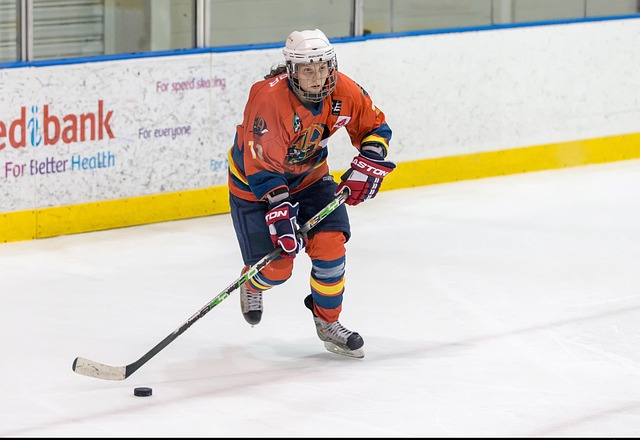
Hockey can feel chaotic to new viewers. The puck moves quickly in ice hockey. The ball moves quickly in field hockey. Players rotate, sprint, defend, attack, and change direction in seconds. At first, it can seem like everyone is simply chasing the play. But hockey is much more organized than that.
Both ice hockey and field hockey are built around space, timing, movement, and pressure. Teams try to move the puck or ball into dangerous areas while stopping the other team from doing the same. The best players are not only fast or strong. They read the game early. They know where pressure is coming from, where a teammate will be, and when to pass, shoot, carry, or defend.
For a new fan, the best way to watch hockey is not to follow only the puck or ball. Watch the space around it. Look at where defenders are standing. Look at how attackers move without the puck or ball. Look at how teams create passing lanes, protect the middle of the field or ice, and force opponents toward less dangerous areas. Once those patterns become clear, the game slows down.
The Basic Equipment in Ice Hockey
Ice hockey equipment is designed for speed and protection. Players skate at high speed, block shots, absorb contact, and handle a hard rubber puck. That makes equipment central to how the sport is played.
The most obvious piece of equipment is the skate. Ice hockey skates have sharp blades that allow players to accelerate, stop, turn, and change direction on ice. Strong skating is one of the main differences between average and elite players. A great skater can create space even before touching the puck.
The stick is used to pass, shoot, receive the puck, defend, and control space. Modern sticks are usually made from composite materials and are much lighter than old wooden sticks. The curve of the blade affects shooting, passing, puck control, and release angle.
Players also wear helmets, gloves, shoulder pads, elbow pads, shin guards, padded pants, and protective cups. Goalies wear much larger equipment, including leg pads, a blocker, a catching glove, a chest protector, a mask, and a wider stick. Goalie equipment is not just for protection. It is also part of the position’s technique. Goalies use their pads to seal the ice, their gloves to control rebounds, and their positioning to make the net look smaller.
Understanding the equipment helps explain the game. A player who blocks a shot is not just being brave. He or she is using protective gear, body angle, and timing to take away a shooting lane. A goalie dropping into the butterfly is not just falling down. The goalie is using pads to cover the lower part of the net while keeping the upper body ready for rebounds or high shots.
The Basic Equipment in Field Hockey
Field hockey equipment is lighter than ice hockey equipment, but it is still important. Players use a curved stick with a flat side, and they can only legally play the ball with that flat side. This rule shapes the entire sport. It affects dribbling, passing, shooting, tackling, and body position.
Field hockey players wear shin guards, mouthguards, and turf shoes or cleats. Goalkeepers wear much heavier protective gear, including leg guards, kickers, hand protectors, a helmet, chest protection, and padded shorts. Because the ball is hard and can be struck at high speed, goalkeeper equipment is essential.
The surface matters too. Modern elite field hockey is usually played on artificial turf, often watered turf. This creates a faster, smoother game than old grass surfaces. Passing is sharper, ball movement is quicker, and technical skill becomes more precise. A player receiving the ball must control it cleanly, move it quickly, and make decisions under pressure.
The stick rules make field hockey especially technical. Players must position their hands, body, and feet correctly to receive and move the ball. Because only one side of the stick can be used, turning, defending, and passing require constant adjustment. New viewers should watch how players open their bodies to receive passes and how defenders angle attackers away from dangerous areas.
The Culture of Ice Hockey
Ice hockey culture is strongly tied to winter, rinks, local identity, and team loyalty. In Canada, hockey has deep national meaning and is connected to small towns, major cities, outdoor rinks, junior teams, and professional clubs. In the United States, hockey culture is especially strong in states such as Minnesota, Michigan, Massachusetts, New York, Wisconsin, North Dakota, and Pennsylvania, but it has also grown in newer markets such as California, Texas, Florida, Tennessee, Nevada, Arizona, and North Carolina.
In Europe, ice hockey has its own powerful traditions. Sweden, Finland, Czechia, Slovakia, Switzerland, Germany, Latvia, Austria, Norway, and Denmark all have important hockey cultures. Some countries are famous for club hockey. Others are better known through national teams and international tournaments. In places such as Finland and Sweden, hockey is a major winter sport with strong youth development systems. In Czechia and Slovakia, the sport is tied to national pride and a long history of elite players.
Ice hockey culture also includes rituals. Fans stand for national anthems. Teams have goal songs. Playoff beards are part of NHL tradition. Rivalries matter deeply. In college hockey, student sections and local traditions shape the atmosphere. In junior hockey, communities often treat teams as civic institutions.
The sport also has a strong internal language. A “forecheck” is pressure applied in the attacking zone. A “power play” happens when one team has more players because the opponent has taken a penalty. A “penalty kill” is the short-handed team’s attempt to survive that disadvantage. A “line change” is the substitution of skaters during play. Learning those terms makes the game easier to follow.
The Culture of Field Hockey
Field hockey has a different global map. It is especially important in countries such as India, Pakistan, the Netherlands, Germany, Australia, Argentina, Belgium, Great Britain, Spain, New Zealand, South Africa, China, and Malaysia. In many places, field hockey is tied to schools, clubs, universities, national teams, and Olympic history.
India and Pakistan are central to field hockey history because of their Olympic success and long cultural connection to the sport. India dominated men’s Olympic field hockey for much of the early and mid-20th century, while Pakistan became a major power later. The Netherlands has become one of the modern centers of the sport, with elite men’s and women’s teams and a strong club system. Argentina’s women’s team, Las Leonas, helped make women’s field hockey a major part of the country’s Olympic identity.
Field hockey culture is often less tied to professional leagues than ice hockey culture. The Olympics, World Cup, continental championships, college competitions, and club tournaments are especially important. In some countries, the national team is the main public face of the sport. In others, clubs provide the foundation.
For new viewers, field hockey may feel more like soccer in its use of space, pressing, and passing, but the stick skills and shooting rules make it very different. The circle, also called the shooting circle or D, is one of the most important areas on the field. In field hockey, goals usually must be scored from inside the circle. That rule makes attacking entries, penalty corners, and defensive structure especially important.
How to Watch Ice Hockey Better
The first step to watching ice hockey better is to understand the zones. The rink is divided into the defensive zone, neutral zone, and attacking zone. Teams try to break out of their defensive zone, move through the neutral zone, and create chances in the attacking zone.
Do not watch only the puck. Watch the nearest defender, the open winger, and the player arriving late into the play. Many goals are created before the shot happens. A defenseman might make a clean breakout pass. A winger might enter the zone with control. A center might drive toward the net and pull defenders away. The goal is the final moment, but the play often begins much earlier.
Line changes are another key. Ice hockey players take short shifts because the sport is exhausting. A strong shift might last 35 to 50 seconds. Teams change players constantly, often while the game continues. A bad line change can create a rush chance for the other team. A good line change keeps fresh players on the ice without losing defensive shape.
Special teams are also central. On a power play, watch how the attacking team moves the puck to force defenders out of position. On a penalty kill, watch how the short-handed team protects the slot, blocks shooting lanes, and pressures at the right moments. Many games turn on special teams, even when most of the game is played at even strength.
How to Watch Field Hockey Better
Field hockey becomes easier to watch when you understand the circle, passing lanes, and penalty corners. Because goals must come from inside the shooting circle, teams spend much of the game trying to create clean entries into that area. A team can control the ball for long periods, but if it cannot enter the circle with danger, the possession may not matter.
Watch how teams use width. Field hockey teams often move the ball wide to stretch the defense, then look for angled passes into the circle. The best attacks do not simply run straight at goal. They shift the defense, change the angle, and create a moment where a forward can receive the ball in a dangerous position.
Penalty corners are one of the most important parts of the sport. They happen after certain defensive fouls inside the circle or serious fouls near it. On a penalty corner, the attacking team inserts the ball from the baseline, usually to a player at the top of the circle. From there, the team may shoot, pass, deflect, or use a set play. Many elite field hockey matches are decided by penalty corner execution.
Defensively, watch how teams protect the center. Good defenders do not only chase the ball. They block passing lanes, force attackers wide, and prevent easy circle entries. Goalkeepers must react quickly because shots and deflections can come from short distances.
What New Fans Usually Miss
New hockey fans often focus only on scoring. Scoring matters, but hockey is also built on small territorial wins. In ice hockey, a team may have a good shift even without scoring because it keeps the puck in the attacking zone, forces tired defenders to stay on the ice, and creates momentum. In field hockey, a team may build pressure by winning free hits, earning circle entries, or forcing penalty corners.
Another thing new fans miss is off-ball movement. In both ice hockey and field hockey, the most important player is not always the one with the puck or ball. A forward driving toward the net can create space for a teammate. A midfielder moving into a passing lane can change the angle of attack. A defender stepping forward at the right moment can stop a counterattack before it becomes dangerous.
Physical play also needs context. In ice hockey, body checking is part of many men’s leagues, including the NHL, but the rules depend on level and gender. In women’s ice hockey, body checking is generally restricted, but physical battles, angling, stick pressure, and board play are still important. In field hockey, physical contact is more limited, but the game is still intense because players fight for space, position, and control at high speed.
Why Hockey Rewards Repeat Viewing
Hockey becomes better the more you watch it. At first, the speed can hide the structure. Over time, patterns appear. You start to notice how a defenseman controls the blue line in ice hockey, how a center supports the breakout, how a goalie manages rebounds, or how a field hockey team creates a penalty corner from a wide attack.
The best way to learn is to follow one team for several games. Watch how it starts play, how it defends leads, how it uses its best players, and how it reacts under pressure. In ice hockey, watch the same line for a full shift instead of only following the puck. In field hockey, watch how the midfield connects defense to attack.
Hockey is a game of speed, but it is also a game of habits. Equipment shapes what players can do. Culture shapes how the sport is played and supported. Rules shape where danger appears. Once those pieces become familiar, hockey stops looking random and starts looking like one of the most detailed team sports in the world.