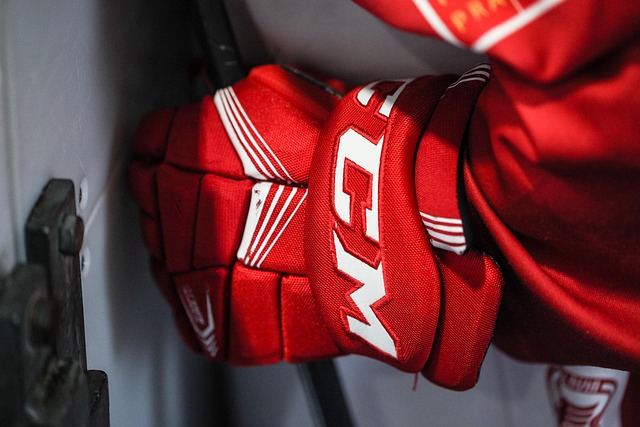
Hockey is one of the world’s major stick-and-ball or stick-and-puck sports, but the word “hockey” can mean different things depending on where someone lives. In Canada, the United States, Sweden, Finland, Czechia, and other ice hockey countries, “hockey” usually means ice hockey. In India, Pakistan, the Netherlands, Argentina, Australia, South Africa, and many other countries, “hockey” often means field hockey.
Both sports involve teams using sticks to move an object toward a goal. Both require speed, spacing, passing, defensive positioning, and quick decision-making. But they are not the same game. Ice hockey is played on ice with skates and a puck. Field hockey is played on a turf or grass field with a small hard ball. Ice hockey is usually faster in short bursts because of skating and line changes. Field hockey is more continuous, with more running, wider field spacing, and different stick rules.
For a new fan, the first step is simple: understand which version of hockey you are watching. From there, the game becomes much easier to follow.
The Basic Goal of Hockey
The basic goal in both ice hockey and field hockey is to score more goals than the opponent. A goal is scored when the puck or ball crosses the goal line inside the goal cage. Teams try to create shooting chances through passing, movement, pressure, and attacking patterns.
In ice hockey, players move the puck with their sticks while skating. They can also use their skates to direct the puck, but they cannot usually kick it into the net in a deliberate scoring motion. In field hockey, players use the flat side of the stick to move the ball. Unlike ice hockey, field hockey players cannot use both sides of the stick, which makes stick control and body positioning especially important.
The scoreboard looks simple, but the sport underneath it is built around space. Teams are always trying to create better angles, move defenders out of position, and get the puck or ball into dangerous scoring areas.
Ice Hockey: The Basic Setup
Ice hockey is played with six players per team on the ice at a time: one goaltender, two defensemen, and three forwards. The three forwards are usually a center, left wing, and right wing. The defensemen usually play left defense and right defense.
The center takes faceoffs and often plays a major role in both attack and defense. The wingers help create offense along the sides of the rink and attack the net. Defensemen protect their own zone, move the puck out of danger, and often take shots from the blue line. The goaltender protects the net and is the last line of defense.
Ice hockey is played in three periods. In the NHL, each period is 20 minutes. Other leagues may also use three 20-minute periods, though rules and overtime formats can vary. The clock stops often, which means a game takes longer than the listed playing time.
One of the most important features of ice hockey is line changes. Players take short shifts, often around 30 to 60 seconds, because the game is physically demanding. Teams rotate groups of forwards and defensemen throughout the game. A team’s depth matters because the third and fourth lines may have to play important minutes, not just the stars.
Field Hockey: The Basic Setup
Field hockey is usually played with 11 players per team: one goalkeeper and ten field players. The field players are often arranged as defenders, midfielders, and forwards, though formations can change depending on the team and match situation.
The goalkeeper protects the goal and wears heavy protective equipment. Defenders stop attacks and move the ball forward. Midfielders connect defense and attack, covering large areas of the field. Forwards press defenders, make runs into scoring areas, and try to finish chances.
Modern international field hockey is played in four quarters of 15 minutes. The game is fast, tactical, and built around passing lanes, pressing, counterattacks, and penalty corners. Unlike ice hockey, field hockey does not have boards around the playing area. The ball can go out of bounds, and restarts are part of the rhythm of the game.
One major rule for new fans: in field hockey, a goal can only be scored from inside the shooting circle, also called the D. A long hit from outside the circle does not count as a goal unless it is touched by an attacking player inside the circle before entering the cage. This makes circle entries one of the most important parts of field hockey strategy.
The Most Important Ice Hockey Rules
Ice hockey has several rules that new fans should learn early.
Offside is one of the biggest. A player cannot enter the attacking zone before the puck crosses the blue line. If an attacking player enters too early and then touches the puck, play is stopped. This rule keeps teams from simply camping near the opponent’s goal.
Icing is another common stoppage. In many situations, a team cannot shoot the puck from behind the center red line all the way past the opponent’s goal line without anyone touching it. If that happens, play usually comes back to the offending team’s zone for a faceoff. Icing prevents teams from constantly dumping the puck down the ice just to relieve pressure.
Penalties are also central. Common penalties include tripping, hooking, holding, slashing, interference, roughing, and high-sticking. A minor penalty usually sends a player to the penalty box for two minutes. During that time, the other team goes on the power play, meaning it has more skaters on the ice. The penalized team is short-handed and tries to kill the penalty.
Power plays are major scoring opportunities. Teams move the puck quickly, create shooting lanes, and try to force the defense and goaltender to shift out of position. Penalty killing is the opposite: the short-handed team blocks shots, clears the puck, and protects the most dangerous areas.
The Most Important Field Hockey Rules
Field hockey also has rules that shape the entire game.
Players can only use the flat side of the stick. Using the rounded side is illegal. Players also cannot use their feet or body to control the ball, except for goalkeepers inside the circle. Foot fouls are common, especially when the ball hits a defender’s foot and stops an attack.
The shooting circle is essential. Attacking teams must get the ball into the circle before they can score. This makes the final third of the field highly tactical. Teams are not only trying to shoot. They are trying to enter the circle with control, force defensive mistakes, or win penalty corners.
Penalty corners are one of the most important set pieces in field hockey. They are awarded for certain defensive fouls inside the circle or serious fouls near it. On a penalty corner, attackers start with the ball on the back line, pass it out to teammates at the top of the circle, and try to create a shot. Elite teams spend huge amounts of time practicing penalty corner routines because they can decide close matches.
Cards also matter. A green card usually means a short suspension, a yellow card means a longer temporary suspension, and a red card means a player is sent off. The exact impact depends on the level and competition rules, but discipline is important because playing short-handed can quickly change a match.
Positions and Roles Are About Space
In both ice hockey and field hockey, positions are not just labels. They describe how a team controls space.
In ice hockey, the center often supports both ends of the rink. Wingers stretch the ice, pressure defenders, and attack from wide areas. Defensemen protect the front of the net, control gaps, and start breakouts. The goalie reads screens, rebounds, angles, and traffic.
In field hockey, defenders build play from the back and handle opposing forwards. Midfielders are the link between the defensive and attacking lines. Forwards press, lead into space, and try to receive the ball in or near the circle. Goalkeepers organize the defense and handle shots, deflections, and penalty corners.
New fans often follow the ball or puck only. That is natural at first. But the game becomes clearer when you start watching off-ball or off-puck movement. Good players are not just reacting to the play. They are creating space before the pass arrives.
How Teams Create Goals
In ice hockey, teams create goals through rushes, forechecking, cycling, rebounds, screens, and special teams. A rush happens when a team attacks quickly after gaining possession. A forecheck happens when a team pressures the opponent in its own defensive zone. Cycling means moving the puck around the boards and corners to wear down defenders and create openings.
Many goals come from traffic in front of the net. A shot from distance may not beat the goalie cleanly, but a screen, deflection, or rebound can turn a routine shot into a dangerous chance. That is why players fight for position near the crease.
In field hockey, goals often come from circle entries, penalty corners, quick passing combinations, baseline attacks, and deflections. Teams try to move the ball quickly enough to pull defenders out of shape. A pass across the face of goal can be more dangerous than a shot from a bad angle.
In both sports, the best teams create pressure before they create goals. They force turnovers, make defenders turn around, and attack before the defense is fully organized.
Major Competitions to Know
For ice hockey, the biggest professional league is the NHL. Below it are leagues such as the AHL and ECHL in North America, plus major European leagues in Sweden, Finland, Switzerland, Czechia, Germany, and other countries. International ice hockey is organized around events such as the Winter Olympics, IIHF World Championship, World Junior Championship, and women’s world championships.
For field hockey, the major international competitions include the Olympic Games, FIH Hockey World Cup, FIH Pro League, continental championships, and major junior tournaments. Olympic field hockey is one of the sport’s most important stages, especially for countries such as India, the Netherlands, Germany, Australia, Argentina, Belgium, Great Britain, Pakistan, Spain, and New Zealand.
Women’s hockey is central in both sports. Women’s ice hockey has major international importance through the Olympics, world championships, NCAA hockey, and professional leagues such as the PWHL. Women’s field hockey is one of the most competitive and developed parts of the field hockey world, with the Netherlands, Argentina, Australia, Germany, Great Britain, Belgium, India, and China among the important programs.
What New Fans Should Watch First
A new fan should watch three things: possession, pressure, and space.
Possession means who controls the puck or ball. Pressure means how quickly the defending team tries to win it back. Space means where the attacking team is trying to move the defense.
In ice hockey, watch how teams enter the attacking zone, how they defend the front of the net, and how they use line changes. In field hockey, watch how teams enter the circle, how they press in midfield, and how they handle penalty corners.
The more you watch, the less chaotic hockey becomes. The speed is real, but it is not random. Hockey is a game of patterns, timing, and decisions. Once a new fan understands the basics, both ice hockey and field hockey become easier to follow and much more rewarding to watch.