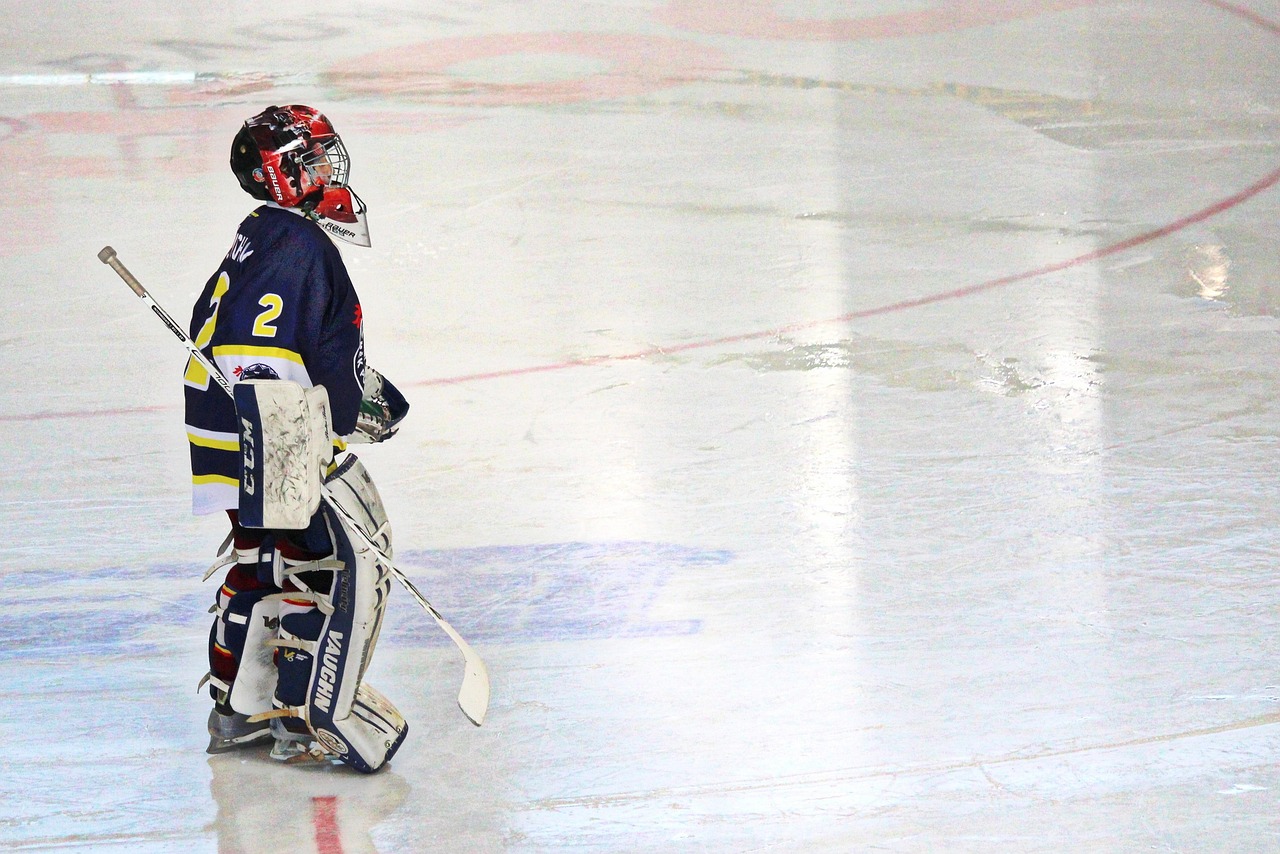
Georges Vezina and the Original Goalie Myth begins with a trophy, but the story is larger than an award. Vezina was the Montreal Canadiens’ defining early goaltender, the man whose name became attached to hockey’s highest honor for the position. His legend formed around endurance, restraint, illness, and tragedy. He played through an era when goalies had little protection, little tactical freedom, and an unusual symbolic burden: they were alone, visible, and blamed in ways other players were not. When Vezina collapsed during a game in 1925 and died of tuberculosis a few months later, his career became part of hockey’s deeper mythology — the goalie as guardian, sufferer, and last witness to everything that goes wrong.
The Crease Before Goaltending Became a Science
Early hockey goaltending was not yet the specialized technical world that modern fans know. There were no butterfly schools, no goalie coaches, no enormous pads, no mask culture, and no carefully managed workload. The position was already psychologically distinct, but it had not yet become a laboratory of angles, recovery movements, and equipment design. A goalie was expected to stand in the most exposed part of the rink and absorb the consequences of every missed assignment in front of him.
That is the world Georges Vezina entered with the Montreal Canadiens. He joined the club in 1910, when professional hockey was still organized through the National Hockey Association before the NHL era began. Across his career, he became almost inseparable from the Canadiens’ goal. He played for Montreal through the NHA and NHL years, helping the club win the Stanley Cup in 1916 and 1924. His durability became part of his identity: he played 327 consecutive regular-season games, plus postseason games, before illness finally forced him out of the lineup.
That matters because early goalie culture was built around presence. A goaltender was not rotated, protected, or discussed as part of a load-management plan. He was expected to be there. Vezina’s reputation came from that kind of permanence. He was not merely a player with good statistics. He was the fixed point behind a young franchise’s rise, the person Montreal expected to find in the same place every night.
This is where the original goalie myth begins. The goalie is both central and isolated. He does not control the whole game, but the scoreboard often makes it look as if he does. He is part of the team, but he occupies a different emotional geography. Vezina’s career helped turn that loneliness into hockey tradition.
Georges Vezina and the Original Goalie Myth of Endurance
The reason Vezina’s name still carries weight is not only that he was excellent. It is that his final game gave his career a tragic shape.
On November 28, 1925, Vezina played for the Canadiens against the Pittsburgh Pirates. He was seriously ill, and accounts of the game describe a man whose body was already failing. The NHL and Hockey Hall of Fame both identify that night as the moment he collapsed during a game; he was later diagnosed with tuberculosis and died a few months afterward.
The details have become part of hockey memory because they fit the position so closely. Vezina reportedly tried to continue despite his condition. He completed the first period without allowing a goal, then could not go on. The image is stark: a goalie holding the line until his own body stops him.
That is why the story became more than biography. Hockey already valued toughness, but goaltending gave toughness a different form. For skaters, toughness could be public and physical: hits, fights, blocked shots, hard shifts, visible collisions. For goalies, toughness often looked quieter. It was the ability to return to the crease after a mistake, to stand still while danger came forward, to remain calm while everyone else moved.
Vezina’s final game intensified that idea. His illness was not a sports injury in the ordinary sense. It was not a dramatic collision or a heroic return from a broken bone. It was something deeper and more human: a fatal disease revealed inside the ritual of competition. That gave his legend a solemn quality. The story does not make him larger by reducing him to toughness. It makes him larger because it shows the human cost beneath the old hockey ideal of endurance.
The Canadiens’ owners donated the Vezina Trophy to the NHL for the 1926–27 season in his memory. That act fixed his name permanently to the position. For decades, the award went to the goaltender or goaltenders on the team that allowed the fewest goals during the regular season. Beginning with the 1981–82 season, it became the award for the league’s top goaltender as voted by NHL general managers.
That evolution matters. At first, the trophy reflected the old statistical logic of team defense: fewest goals allowed. Later, it became a judgment of individual excellence. But in both versions, Vezina’s name remained the symbolic foundation. The award did not merely honor good goaltending. It connected every generation of elite goalies back to the earliest emotional meaning of the position.
Why Hockey’s Most Haunted Position Still Carries His Name
Goaltending has changed almost beyond recognition since Vezina’s era. Modern goalies are bigger, better protected, more technically trained, and more closely analyzed. The position has become a discipline of precision: depth, tracking, edges, screens, rebounds, lateral pushes, save selection, puck handling, and mental recovery. The modern goalie is not just brave. He is engineered.
Yet Vezina’s story still belongs at the root of the position because the emotional structure has not changed. The goalie remains hockey’s most exposed player. He is the last defender, the one whose errors are recorded instantly in light, sound, and scoreboard. He can play brilliantly and lose. He can be abandoned by the structure in front of him and still carry the visible result.
That is why goalie culture often feels haunted. The position is full of rituals, masks, routines, silences, superstitions, and private methods of control. A goalie has to live with repetition and sudden judgment. Every shot asks the same question in a different way. Every goal against becomes a small public event. Vezina did not create all of that by himself, but his career gave the position one of its first enduring human symbols.
The trophy bearing his name is therefore unusually fitting. Many sports awards honor greatness. The Vezina Trophy honors greatness through memory. It reminds hockey that the position was shaped not only by technique and statistics, but by endurance, isolation, and vulnerability.
Vezina’s story also explains why hockey treats its great goalies differently from other stars. They are measured by wins and save percentages, but remembered through images: a stance, a mask, a save, a playoff run, a collapse, a final skate, a crease guarded almost beyond reason. Vezina became the original version of that figure. He was not just an early star. He was the beginning of the goalie as hockey’s most solitary myth.
Georges Vezina’s name survives because it carries more than achievement. It carries the early shape of the position itself: the still figure in front of the net, the burden of being last, and the quiet tragedy built into hockey’s idea of the goaltender. The trophy bears his name because the myth of the goalie still begins with him.