The Florida Panthers’ Rat Trick began with one of the strangest origin stories in NHL history: a rat in the locker room, Scott Mellanby reacting with his stick, and two goals later that same night. What could have remained a one-night joke became something larger because the 1995–96 Panthers were not an ordinary expansion team. They were a young franchise trying to build a South Florida hockey identity, and their unexpected run to the 1996 Stanley Cup Final gave fans a symbol they could claim as their own. The plastic rats became more than debris on the ice. They became proof that a new hockey market had found its first real tradition.
The Locker-Room Moment Before the Legend
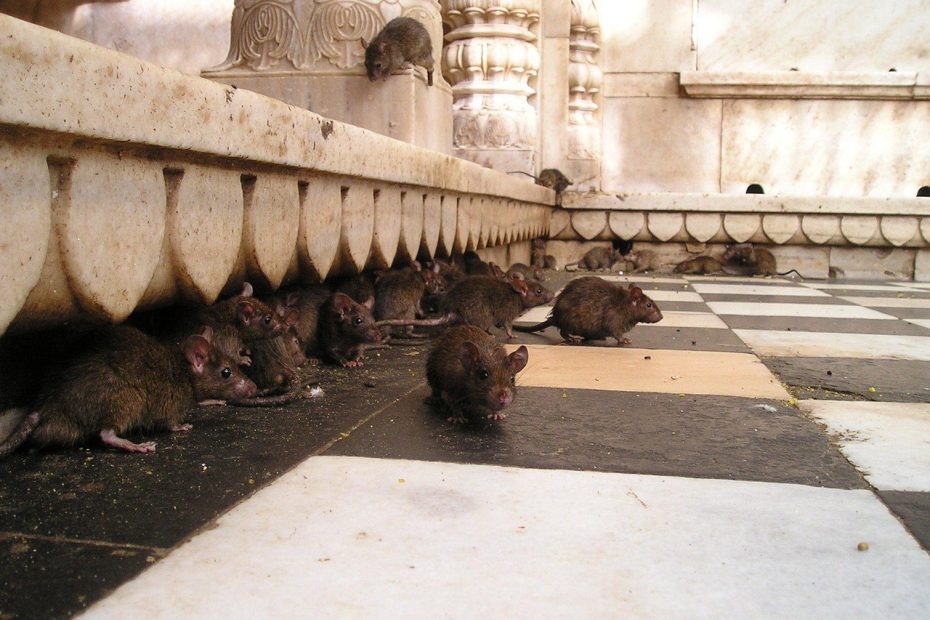
The story started on October 8, 1995, before the Panthers’ home opener against the Calgary Flames at Miami Arena. Florida was only in its third NHL season, still building a fanbase in a region better known for football, basketball, baseball, beaches, and winter weather that did not naturally suggest ice hockey. Then a rat appeared in the Panthers’ dressing room.
Scott Mellanby, a veteran winger, killed the rat with his stick before the game. That part of the story became memorable because of what happened next. Mellanby went onto the ice and scored twice in Florida’s 4–3 win over Calgary. Panthers goaltender John Vanbiesbrouck gave the night its name when he called it a “rat trick,” a play on the hockey term “hat trick.”
That phrase mattered because it gave fans something simple, strange, and instantly repeatable. Hockey traditions often grow from rituals that are easy to copy. Fans already knew about throwing hats for a hat trick. Florida now had its own variation, tied to a specific player, a specific game, and a specific team trying to become part of the NHL’s emotional map.
The Playoff Run That Sent Rats Onto the Ice
The Rat Trick became a full arena tradition because the Panthers kept winning. During the 1995–96 season, fans began throwing plastic rats onto the ice after Florida goals. At first it was a novelty. As the team’s season gained momentum, it became part of the atmosphere around the franchise.
The timing made the tradition grow faster. Florida reached the playoffs for the first time in 1996, then beat the Boston Bruins, Philadelphia Flyers, and Pittsburgh Penguins to win the Eastern Conference and reach the Stanley Cup Final. The deeper the Panthers went, the more visible the rats became. By the playoffs, thousands of plastic rats could hit the ice after goals, turning each scoring moment into a South Florida hockey scene that looked unlike anything else in the league.
The Panthers did not win the Cup that year. They were swept by the Colorado Avalanche in the Final. But the run still mattered because it gave the franchise a foundation story. Expansion teams need more than uniforms and schedules. They need memories that fans can share. The 1996 Panthers had John Vanbiesbrouck in goal, a hard-working roster, a surprise playoff charge, and a tradition that made the building feel like it had invented its own language.
The rats also forced the NHL to respond. The league later addressed the problem of fans throwing objects onto the ice, allowing officials to warn the crowd and then penalize the home team for delay of game if objects kept coming. That rule change showed the difference between a fun tradition and a game-management issue. The Panthers’ Rat Trick had become famous enough that the league had to account for it.
Why the Florida Panthers’ Rat Trick Still Matters
The Florida Panthers’ Rat Trick endures because it solved a problem every young sports franchise faces: how to feel old before it has decades of history. The Panthers were not an Original Six club. They did not have generations of inherited hockey memory. The rats gave them something local, unusual, and instantly recognizable.
The tradition also became more meaningful over time because it survived beyond the original moment. Fans revived it during later playoff appearances, and the team’s own historical materials still treat the rat as a symbol of Panthers identity. The modern version is usually tied more to wins than to goals, but the meaning remains connected to the 1995–96 “Year of the Rat” and the franchise’s first major arrival on the NHL stage.
That is why the tradition works as hockey folklore. It is not just odd for the sake of being odd. It marks the moment when South Florida hockey stopped feeling theoretical. The Panthers had a team, a playoff run, a fan ritual, and a story that nobody else could borrow without losing the point.
The Florida Panthers’ Rat Trick remains one of hockey’s clearest examples of how fast a tradition can form when a strange moment meets a winning team. A locker-room rat became a phrase. The phrase became a fan ritual. The ritual became part of the franchise’s identity. For a young hockey market, that was not a small thing.