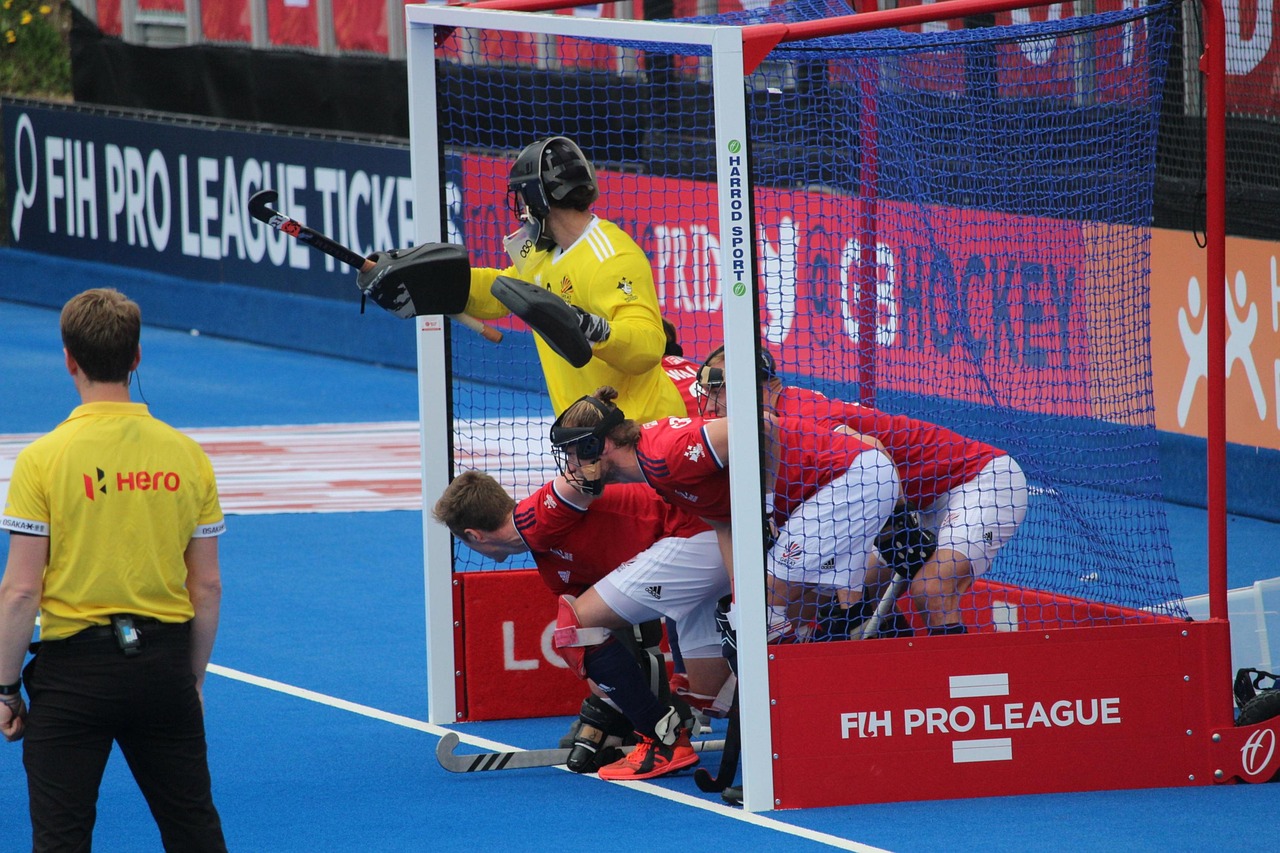
The Hockey World Cup matters because field hockey’s global story cannot be understood through the Olympics alone. The Olympic tournament gives the sport its broadest public spotlight, but the Hockey World Cup gives it a deeper championship identity: a standalone event, played across a full tournament structure, where national teams build eras, rivalries, and reputations. The men’s tournament began in 1971, while the women’s tournament followed in 1974, giving both sides of the sport a world championship stage outside the Olympic cycle. The result is a competition that shows field hockey as its own international ecosystem, not just as a sport people remember every four years during the Summer Games.
Why Field Hockey Needed Its Own World Championship
The Olympics are essential to field hockey, but they do not tell the whole story. Olympic hockey is tied to the larger rhythm of the Games, where the sport competes for attention with dozens of other events. The Hockey World Cup gives the sport a different kind of platform: one where the tournament itself is the center of the calendar, the teams are the main attraction, and the sport’s own history can breathe.
That matters because field hockey has always had a wider geography than many casual fans realize. South Asia, Western Europe, Oceania, South America, and parts of Africa have all shaped the international game. A standalone World Cup made room for those traditions to meet outside the Olympic frame. It also gave the sport a clearer way to measure long-term national strength.
The first men’s Hockey World Cup was held in Barcelona in 1971 at Real Club de Polo, with Pakistan winning the inaugural title. The tournament included ten nations: Pakistan, Spain, India, Kenya, France, Holland, West Germany, Australia, Japan, and Argentina. That field already showed the sport’s global shape, stretching from Europe to Asia, Africa, Oceania, and South America.
The women’s World Cup followed in 1974, with the Netherlands winning the first title. That early start also matters. Women’s field hockey had a major international championship decades before many other women’s team sports had comparable global tournament structures.
The Hockey World Cup Became the Sport’s Championship Memory
The Hockey World Cup is where field hockey’s power centers have been tested across generations. Pakistan became the defining men’s World Cup power of the early era, winning four titles between 1971 and 1994. That record still gives Pakistan a special place in the tournament’s history, even as the modern game has shifted toward deeper European, Australian, Belgian, Indian, Dutch, German, and Argentine competition.
That is one of the reasons the World Cup is so valuable as a field hockey story. Olympic results can become compressed into national medal tables. The World Cup keeps the sport’s internal history in focus. It remembers teams as hockey teams first: their tactical style, penalty-corner strength, defensive systems, midfield control, and tournament temperament.
For casual readers, this is the important distinction. The Olympics may be the event they recognize, but the Hockey World Cup is where field hockey names its world champion on its own terms. It is not a supporting event inside a larger festival. It is the sport’s own global summit.
The tournament also gives field hockey more room for rivalry. India and Pakistan, Australia and the Netherlands, Germany and the Netherlands, Argentina and the European powers, Belgium’s modern rise, and the Netherlands’ long strength in the women’s game all make more sense when viewed through World Cup history. The competition gives those stories continuity. It connects generations of players who may never share an Olympic cycle but still belong to the same championship tradition.
The current structure also reinforces the World Cup’s status. The FIH describes the World Cup as one of hockey’s biggest prizes alongside the Olympics, held every four years and built around the world’s leading teams. The 2026 edition is scheduled for Belgium and the Netherlands, with men’s and women’s tournaments both set for August 15–30, 2026.
Why the Hockey World Cup Still Matters
The Hockey World Cup still matters because it protects field hockey from being understood only through Olympic visibility. That is especially important for a sport with deep roots in countries where hockey is not always covered by global media at the same level as soccer, basketball, cricket, or tennis.
For players, the World Cup is a career-defining tournament. For federations, it is a measure of program strength. For fans, it is a concentrated version of the sport’s international identity. It shows which countries are building sustainable systems, which teams can handle knockout pressure, and which styles of play are shaping the next era.
It also gives the women’s game a major historical throughline. The women’s World Cup began only three years after the men’s event, and the Netherlands’ early and continued prominence has helped make the tournament one of the central measures of elite women’s field hockey. That history gives the sport a stronger gender balance than many global team-sport narratives, where women’s championships were introduced much later.
The World Cup’s future also matters because it sits between tradition and modernization. Field hockey has changed through artificial turf, faster passing, specialized goalkeeping, video referrals, penalty-corner innovation, and greater athletic speed. The World Cup is where those changes become visible at the highest level. It is not just a record of who won. It is a record of how the sport itself evolved.
The Hockey World Cup deserves primer status because it explains field hockey beyond the Olympic snapshot. The Olympics remain vital, but the World Cup gives the sport its own championship memory, its own rhythm, and its own measure of greatness. For readers trying to understand field hockey, this tournament is not extra context. It is one of the main doors into the sport.