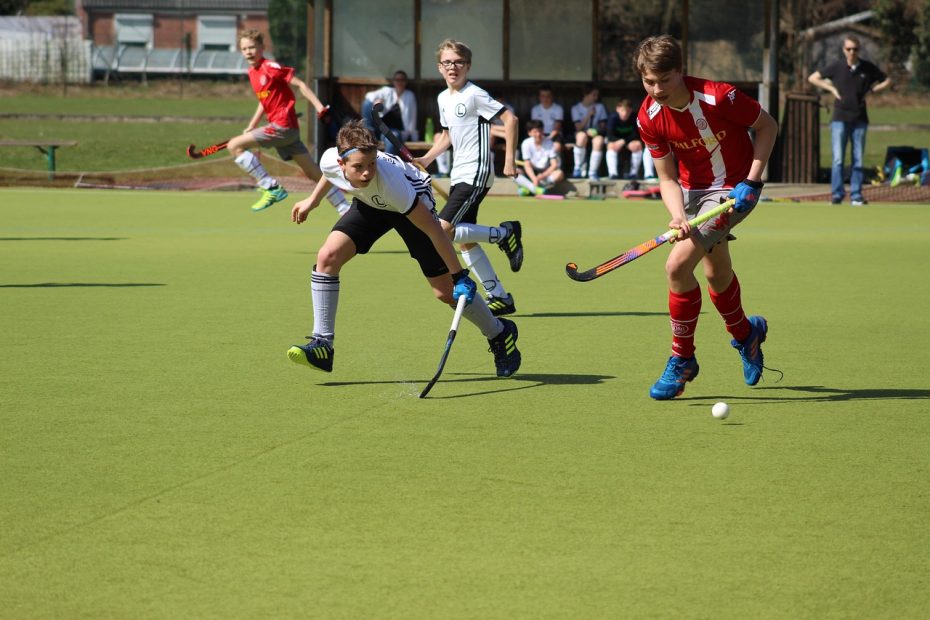
Rolling substitutions and pace are closely connected in modern field hockey because the sport does not treat player changes as rare interruptions. Instead, substitutions are part of the game’s rhythm. Teams can rotate players quickly, protect tired legs, and use short bursts of speed to press, counterattack, or overload one side of the field. That flow helps explain why field hockey can feel so fast even when the match is built around structure and control. The substitution system does more than keep players fresh. It shapes tactics, tempo, and the way coaches manage energy across the entire game.
Why Field Hockey Needed a Faster Rotation System
Field hockey is played on a large field, but the modern game often compresses space quickly. Players sprint into pressing positions, recover into defensive shape, and then accelerate again when possession changes. That repeated movement creates a physical demand that is different from a sport built around steady jogging or fixed positional pacing.
Rolling substitutions help answer that demand. Instead of waiting for long stoppages or treating substitutes as emergency replacements, field hockey allows teams to use the bench as an active tactical resource. A forward can press at full speed for a short spell, come off, recover, and then return later with the same intensity. Midfielders can be rotated to maintain pressure through the center of the field. Defenders can be protected when a team expects a late surge from the opposition.
This gives the sport a different feel from games where substitutions are limited or heavily formalized. The bench is not separate from the match. It is part of the match’s operating system. Coaches can plan rotations in advance, respond to momentum, or use changes to support a specific phase of play.
The result is a sport where pace is not only created by individual speed. It is created by repeated freshness. Teams can keep asking players to make demanding runs because those players are not always expected to stay on the field for long, uninterrupted periods.
The Substitution Flow That Creates Tactical Bursts
The most important effect of rolling substitutions is that they allow field hockey teams to play in waves. A team can send fresh attackers onto the field and immediately raise the pressure on the ball. It can rotate midfielders to keep the passing tempo sharp. It can bring on players suited to a penalty corner, a defensive stand, or a late attacking push.
That creates tactical bursts. Instead of a match moving at one constant speed, it often changes rhythm. A team might sit in a compact shape, absorb pressure, and then suddenly inject fresh legs into wide channels. Another team might use substitutions to keep its press alive, forcing defenders to make decisions under pressure again and again. The substitution pattern becomes a way of managing when the game speeds up and when it settles.
This is especially important because field hockey rewards quick transitions. A turnover can become an attack in seconds. A loose ball near the midfield line can open space behind the defense. A fresh forward entering the game at the right moment can stretch the back line before defenders have adjusted.
Rolling substitutions also allow coaches to specialize without fully reshaping the team. A player with strong pressing instincts might be used for a high-energy shift. A technically calm midfielder might enter when the team needs possession. A fast wide player might be saved for moments when defenders are tiring. These changes do not need to feel dramatic. They can happen as part of the match’s natural current.
That is why field hockey pace can be difficult to understand only by watching the ball. The speed of the game is also being managed at the sideline. Substitutions are not pauses in the story. They are one of the ways the story accelerates.
How Rolling Substitutions Shape the Modern Game
Rolling substitutions have helped make field hockey a sport of intensity management. Teams are not simply trying to survive the physical demands of the match. They are trying to time their energy better than the opponent.
This changes how players are evaluated. Endurance still matters, but repeat sprint ability, recovery speed, tactical awareness, and the ability to enter a match cold are also crucial. A substitute cannot spend several minutes slowly adjusting. The game may require an immediate press, an immediate defensive recovery, or an immediate attacking run.
It also changes coaching. Managing the bench becomes part of managing territory, pressure, and momentum. A well-timed rotation can protect a team from fatigue. A poorly timed one can leave gaps, break rhythm, or weaken communication. The best teams use substitutions without losing structure, which is harder than it sounds. Players must understand not only their position, but also the timing and purpose of their entry.
The legacy of rolling substitutions is that field hockey feels more continuous, not less. Even with frequent changes, the game keeps moving. The constant rotation helps sustain a level of pace that would be harder to maintain with a more rigid substitution model. It turns the sideline into a tactical extension of the field.
Rolling substitutions and pace are linked because field hockey uses fresh legs as a strategic tool. The rule supports a game built on pressure, recovery, and acceleration. It helps teams play faster for longer, while giving coaches another way to shape momentum without stopping the match.