Field hockey in the Netherlands is not a side note to Dutch sport. It is one of the country’s signature team sports and one of the strongest national field hockey cultures in the world. The Netherlands is a global power in both men’s and women’s field hockey, with elite national teams, a deep club system, strong youth participation, and a domestic structure that produces world-class players year after year.
The Dutch version of the sport is built around organization, technical skill, tactical intelligence, and club culture. It is played by boys and girls, men and women, recreational players, elite prospects, and international stars. The Royal Dutch Hockey Association, the Koninklijke Nederlandse Hockey Bond, governs the sport in the Netherlands and is recognized by the International Hockey Federation as the Dutch national association.
The Place of Field Hockey in the Netherlands
Field hockey has an unusually strong place in Dutch sporting life. In many countries, the sport is either a school activity, an elite Olympic sport, or a niche club game. In the Netherlands, it is all three at once. It has a broad participation base, a serious domestic league system, a powerful national-team structure, and a cultural identity that makes hockey feel visible even in a country where football remains the dominant sport.
Dutch field hockey is especially strong because the sport is embedded in clubs. Hockey clubs in the Netherlands are not just training centers for elite players. They are community institutions, social spaces, youth-development systems, and competitive environments. Players often grow up inside club structures, learning the sport through regular training, weekend matches, and clear competitive pathways.
The Netherlands also benefits from density. The country’s geography makes it easier for clubs, players, coaches, and competitions to remain connected. A strong hockey club in one city is rarely isolated from the rest of the national system. This helps produce a high standard of competition across age groups and gives talented players frequent exposure to other strong players.
The sport’s popularity also reflects Dutch strengths in organized amateur sport. Field hockey rewards technique, spacing, passing, movement, and collective understanding. Those qualities fit well with a national sporting culture that values structure, coaching, and tactical development. Dutch hockey is not built only on elite talent; it is built on repetition, systems, and a large base of players who learn the game early.
Men’s Field Hockey in the Netherlands
Men’s field hockey in the Netherlands is one of the great traditions in the sport. The Dutch men’s national team has long been a major force in Olympic, World Cup, European, and Pro League competition. The team is known internationally as Oranje, and Dutch men’s hockey has produced some of the sport’s most recognizable players and teams.
The Dutch men’s game is often associated with technical quality and tactical control. Dutch teams are usually comfortable in possession, disciplined in structure, and dangerous in transition. The Netherlands has also been a major force in the evolution of modern hockey tactics, especially as the sport shifted into a faster, more technical, and more physically demanding game on artificial turf.
The domestic league system is central to the men’s program. The Hoofdklasse is one of the strongest club competitions in the world, and it gives Dutch players a high-level environment before they reach the national team. The league also attracts international players, which keeps the standard high and exposes Dutch players to different styles of hockey. Clubs such as Bloemendaal, Amsterdam, Kampong, Rotterdam, Oranje-Rood, Den Bosch, Pinoké, and others have helped make Dutch club hockey one of the pillars of the global game.
Dutch men’s hockey is also important because it has sustained excellence across eras. Some countries have had one great generation or one historic tournament run. The Netherlands has remained relevant through repeated cycles of player development. That consistency is one of the clearest signs of a true hockey power. The Dutch men are not just a strong team; they are part of a national system that expects to compete for medals.
In recent international competition, the Dutch men have remained near the top of the world game. FIH’s 2026 ranking update placed the Netherlands at the top of the men’s standings, ahead of Belgium, Australia, England, Argentina, Germany, Spain, and India. That ranking position reflects both current quality and the deeper strength of the Dutch hockey structure.
Women’s Field Hockey in the Netherlands
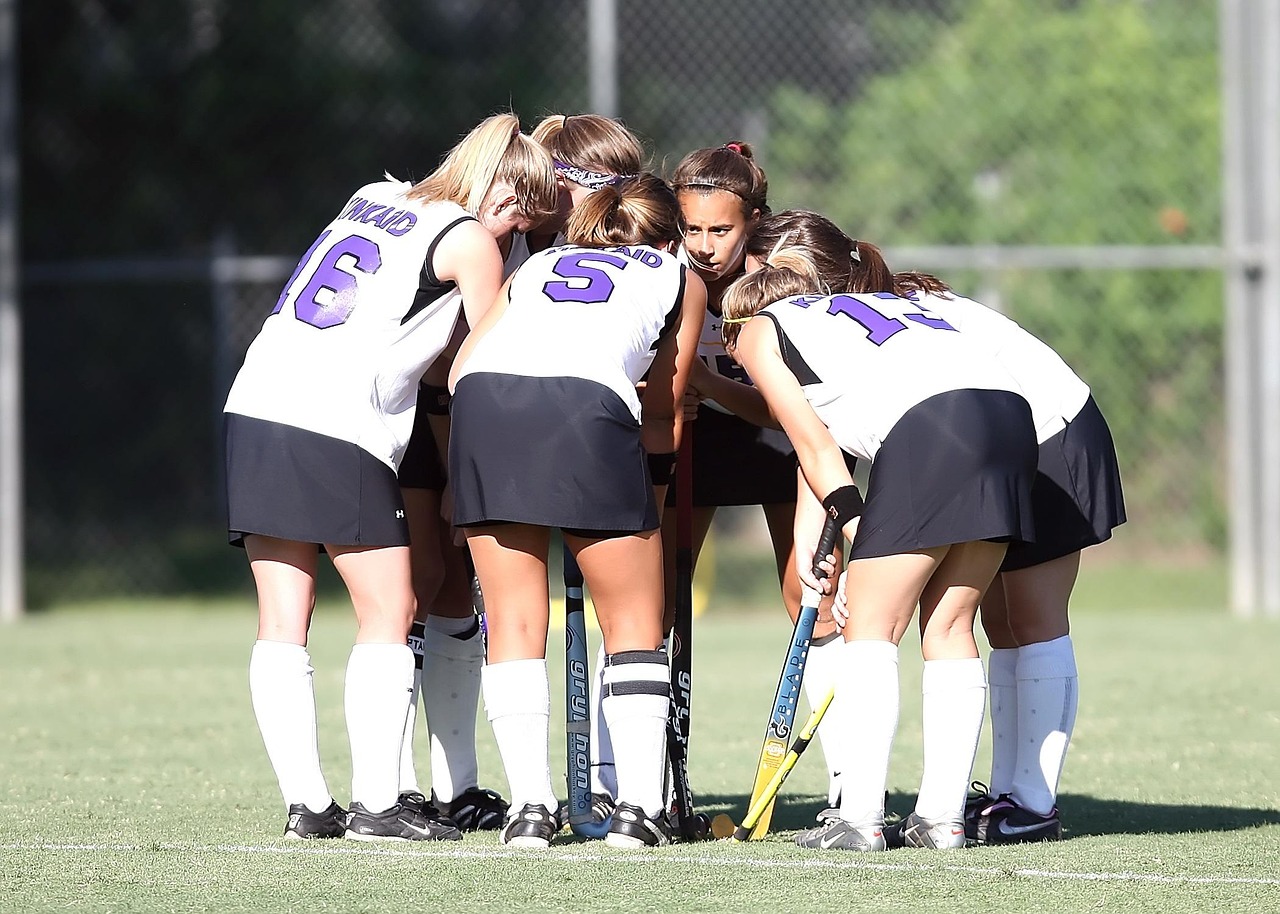
Women’s field hockey in the Netherlands is one of the most dominant programs in international team sport. The Dutch women’s national team is not simply good; it is the standard against which much of the rest of the world measures itself. The Netherlands has produced repeated Olympic, World Cup, European, and Pro League success, and Dutch women’s hockey has become one of the clearest examples of sustained excellence in global hockey.
The Dutch women’s program is built on the same foundation as the men’s side: clubs, coaching, competition, youth development, and technical discipline. But the women’s team has turned that foundation into an extraordinary international record. Dutch women’s hockey is known for possession, speed, penalty-corner quality, defensive pressure, and the ability to control matches against elite opponents.
The Netherlands’ women have also become central to the country’s broader hockey identity. In some countries, the men’s game defines field hockey history and the women’s program follows behind. In the Netherlands, the women’s team is one of the headline institutions of the sport. Its success is not secondary. It is one of the main reasons Dutch field hockey has such a powerful global reputation.
At the Paris 2024 Olympics, the Dutch women retained their Olympic title by defeating China in a shootout after a 1-1 draw, completing a Dutch hockey double after the men’s team had also won gold. Reuters described it as the Netherlands’ fifth Olympic women’s hockey title. The Dutch women also reached their sixth straight Olympic final in Paris, underlining the program’s unusual consistency across generations.
The current international picture still reflects that dominance. FIH’s 2026 rankings update listed the Netherlands first in the women’s standings, ahead of Argentina, Belgium, China, and Spain. For a Dutch field hockey article, the women’s side should receive major weight because it is not just a participation story. It is one of the defining success stories of modern field hockey.
Clubs, Schools, and Development Pathways
The strength of Dutch field hockey starts with the club system. The Netherlands has a dense network of clubs that introduce children to the sport, support recreational participation, and develop elite players. This club structure gives the country a large playing base and a high level of internal competition. Young players can move through age-group teams, regional selection, club competition, and eventually national-team pathways.
The KNHB organizes Dutch hockey across outdoor and indoor competition. The highest outdoor level is the Hoofdklasse, with additional tiers below it that allow clubs to compete across a broad national structure. This creates a pyramid where elite clubs sit at the top, but the sport remains connected to a much wider amateur and youth base.
Schools can play a role in introducing children to the sport, but Dutch hockey is more club-centered than school-centered. That matters because clubs create continuity. A player can begin young, stay in the same environment, move through age groups, and develop both technically and socially within the sport. Clubs also support coaching education, parent involvement, volunteer structures, and local identity.
The Dutch development model works because high-level hockey is never too far from the grassroots game. Young players can see elite players, follow major clubs, attend international matches, and understand the pathway from local competition to national-team hockey. That visibility makes the sport feel reachable, even when the elite level is extremely demanding.
The Netherlands also benefits from strong women’s and girls’ pathways. Because women’s field hockey is so visible and successful, girls entering the sport have clear role models and a national-team culture that treats women’s hockey as a premier product. This gives the Dutch system a balanced strength that many countries still lack.
Field Hockey’s Future in the Netherlands
The future of field hockey in the Netherlands is not about proving the sport belongs. It already does. The challenge is maintaining dominance in a global game that keeps getting faster, deeper, and more competitive. Belgium, Germany, Spain, England, Argentina, Australia, India, China, and other countries continue to invest in elite hockey, which means the Dutch system has to keep evolving.
The Netherlands is also central to the next major stage of international hockey because the 2026 FIH Hockey World Cup is being hosted by Belgium and the Netherlands. FIH has already framed the 2026 event as a major global showcase, with the World Cup beginning in Belgium and the Netherlands in 2026.
Dutch field hockey enters that future from a position of rare strength. The country has elite men’s and women’s teams, a world-class club structure, broad participation, and a clear hockey identity. Its next task is not building a hockey culture from scratch. It is sustaining one of the most complete field hockey systems in the world.















Interested in Sports in Netherlands?
American Football in Netherlands | Baseball in Netherlands | Basketball in Netherlands | Cricket in Netherlands | Football (Soccer) in Netherlands | Rugby in Netherlands