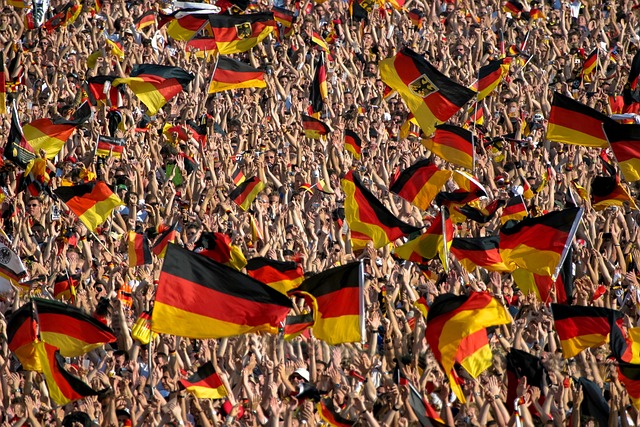
Field hockey in Germany is one of the country’s most successful Olympic team sports. It has a deep club structure, a strong national federation, elite men’s and women’s programs, and a reputation for tactical intelligence, discipline, and tournament performance. German hockey is not just a school or recreational sport. It is a serious international system with a long record of Olympic, World Cup, and European success.
Germany’s field hockey identity is built around clubs, national-team excellence, and a development culture that values structure. The men’s national team, often known as the Honamas, has been one of the most successful teams in world hockey. The women’s national team, often known as Die Danas, has also won major global titles and remains an important part of the country’s field hockey story.
In Germany, field hockey is not a mass spectator sport on the scale of football, but it has a stable and respected place within the country’s broader sports system. It is a sport of clubs, schools, families, regional associations, and international ambition.
The Place of Field Hockey in Germany
Field hockey in Germany fits into a club-based sports culture. German sport is often organized through local clubs, and field hockey has benefited from that structure. Players usually develop through clubs that offer youth training, competition, coaching, and a connection to regional and national pathways.
The sport has strong roots in major cities and university-oriented communities, but it is not limited to one region. Hamburg, Cologne, Berlin, Mannheim, Munich, Düsseldorf, Frankfurt, and other German cities have all played roles in the country’s hockey culture. Many of Germany’s strongest clubs are multi-sport institutions with long histories and strong local identities.
Germany’s place in world field hockey is defined by consistency. The country has not only produced occasional great teams; it has remained relevant across many decades. German teams are known for being difficult to beat, well organized, and capable of performing under tournament pressure. That reputation applies to both the men’s and women’s sides.
Field hockey also gives Germany a strong Olympic identity outside its larger professional sports. The country’s medals and titles have made hockey one of Germany’s most reliable international team-sport platforms.
Men’s Field Hockey in Germany
Men’s field hockey in Germany is one of the strongest traditions in the global game. The German men’s national team has won Olympic gold multiple times and has also won the Hockey World Cup several times. The team’s Olympic record includes gold medals in 1972, 1992, 2008, and 2012, while its World Cup titles include 2002, 2006, and 2023.
The German men’s game is often associated with control, structure, and high-level tactical execution. Germany has produced teams that can defend compactly, manage possession, punish mistakes, and stay composed in close matches. That does not mean German hockey lacks creativity. Many German teams have combined technical skill with tactical patience, making them especially dangerous in tournament play.
The 2002 and 2006 World Cup titles helped define a modern era of German men’s hockey. The 2006 title was especially significant because Germany won it on home soil in Mönchengladbach, defeating Australia in the final. The later Olympic gold medals in 2008 and 2012 reinforced Germany’s place near the top of the sport.
The 2023 World Cup title showed that German men’s hockey remained capable of reaching the highest level in the modern game. In a period when Belgium, the Netherlands, Australia, India, England, and Argentina have all been major forces, Germany’s continued success reflects the depth of its system.
Women’s Field Hockey in Germany
Women’s field hockey in Germany has its own major international history. The German women’s national team has won Olympic gold and multiple World Cup titles, making it one of the most important women’s programs in European hockey. The team won Olympic gold at the 2004 Athens Games and has also won the Women’s Hockey World Cup twice, in 1976 and 1981.
The German women’s game is built on many of the same strengths as the men’s game: organization, technical training, club development, and tactical intelligence. German women’s teams are often difficult to break down, and they have a long tradition of competing well in European and global tournaments.
Germany’s women’s hockey identity is also connected to the strength of club hockey. Players develop in competitive environments before moving into national-team structures. This club base gives the women’s program continuity, even as international competition becomes stronger.
The modern women’s field hockey landscape is demanding. The Netherlands has been the dominant power for long stretches, while Argentina, Belgium, China, Spain, Australia, England, and India have all added depth to the global field. Germany remains important because it has the infrastructure and history to challenge at major tournaments. The women’s program is not an afterthought to the men’s side; it is one of the major pillars of German hockey.
Clubs, Schools, and Development Pathways
Germany’s field hockey strength begins with clubs. Local clubs provide the environment where young players learn the game, train regularly, and enter competitive structures. This club model is one of the reasons Germany can remain successful without field hockey becoming a massive commercial sport.
Youth development is usually organized through club teams, regional competitions, age-group championships, and national selection systems. Players who show high-level potential can move into stronger competitive environments while still being tied to club structures. This gives German hockey a broad base and a clear route upward.
The Bundesliga is also important to the country’s hockey identity. Germany’s top domestic field hockey competitions give players regular high-level matches and allow clubs to maintain strong sporting cultures. Club rivalries, indoor hockey, outdoor hockey, and youth competitions all contribute to the full German hockey ecosystem.
Indoor hockey is another important part of the German scene. Germany has a strong indoor hockey tradition, and the indoor version of the sport helps players develop technical skills, quick decision-making, and close control. This indoor-outdoor connection adds another layer to German player development.
The overall pathway is coherent: club entry, youth development, regional competition, national age-group recognition, Bundesliga-level hockey, and senior national-team opportunity. That structure is the reason Germany keeps producing competitive teams across generations.
Field Hockey’s Future in Germany
The future of field hockey in Germany is strong because the sport has deep roots, serious clubs, and national teams with proven international standards. Germany does not need to invent a field hockey culture from scratch. It needs to maintain and modernize a system that already works.
The main challenge is visibility. Like many European hockey countries, Germany has to compete for attention with football and other major sports. Field hockey’s advantage is its Olympic credibility, club stability, and history of winning major tournaments. If Germany continues investing in youth development, women’s hockey, indoor-outdoor pathways, and elite coaching, it should remain one of the central countries in world field hockey.



















Interested in Sports in Germany?
American Football in Germany | Baseball in Germany | Basketball in Germany | Cricket in Germany | Football (Soccer) in Germany | Rugby in Germany