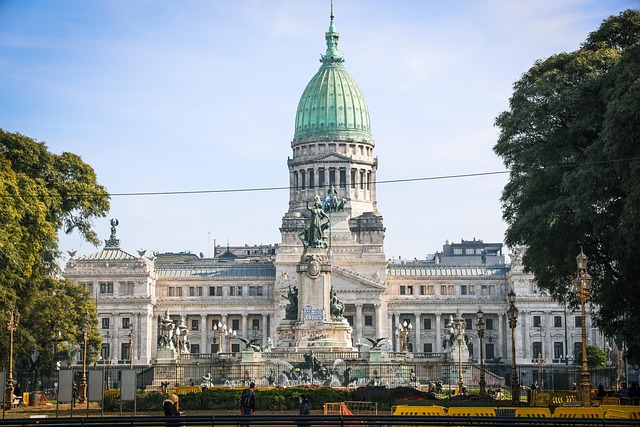
Field hockey in Argentina is one of the country’s most important Olympic team sports. It does not rival football as a national obsession, but it has a status that few non-football team sports can match. Argentina’s field hockey identity is built around international success, club development, school participation, and above all the extraordinary cultural power of the women’s national team, Las Leonas.
Argentina is one of the rare countries where women’s field hockey is not a secondary branch of the sport. It is the headline. Las Leonas became one of the most recognizable national teams in Argentine sport after their breakthrough at the 2000 Sydney Olympics, and they have remained central to the country’s field hockey profile ever since. The women’s team has won multiple Olympic medals, two World Cups, major continental titles, and a long list of elite international tournaments.
The men’s national team, Los Leones, also has a major place in the story. Their 2016 Olympic gold medal in Rio de Janeiro was one of the greatest achievements in Argentine field hockey history and gave the men’s program a defining global moment. Argentina’s field hockey identity is therefore women-led, but not women-only. The sport has meaningful men’s and women’s traditions, with Las Leonas carrying the most sustained national visibility.
Men’s Field Hockey in Argentina
Men’s field hockey in Argentina is defined by the rise of Los Leones and the historic breakthrough at the 2016 Rio Olympics. Before that tournament, Argentina was respected in international hockey but was not usually placed in the same historical category as India, Pakistan, Australia, Germany, the Netherlands, or Great Britain. The Olympic gold medal changed that perception.
Argentina defeated Belgium 4–2 in the 2016 Olympic final, winning the country’s first Olympic gold medal in men’s field hockey. That victory mattered because it moved Argentine men’s hockey from competitive outsider to Olympic champion. It also created a men’s counterpart to the enormous success of Las Leonas.
The men’s program has often been associated with intensity, tactical discipline, penalty-corner quality, and the ability to compete physically and emotionally with the world’s strongest sides. Argentina’s hockey style reflects the country’s broader sporting culture: competitive, expressive, and difficult to play against when confidence and structure are aligned.
Los Leones also benefit from Argentina’s deep club environment. Buenos Aires and other hockey centers provide the sport with a steady competitive base. The men’s game has had to fight harder for public attention than the women’s side, but Olympic gold gave it a permanent place in the national hockey story.
The 2016 title remains the defining reference point. For Argentina’s men, the challenge is turning that golden peak into sustained elite status. The country has the culture, players, and competitive instincts to remain relevant, but the global men’s field hockey field is crowded. The Netherlands, Belgium, Australia, Germany, India, Spain, and England all make consistency difficult. That makes Argentina’s men’s program both accomplished and still ambitious.
Women’s Field Hockey in Argentina
Women’s field hockey is the soul of Argentine hockey. Las Leonas are not only a successful national team; they are one of the most important women’s teams in world sport. Their rise transformed field hockey’s place in Argentina and gave the country a team that could command national attention outside the football mainstream.
The symbolic breakthrough came at the 2000 Sydney Olympics. Argentina won silver, and the identity of Las Leonas took hold. From there, the team became a national sporting institution. The nickname, the lioness image, the emotional style of play, and the team’s competitive resilience all helped create a brand that Argentines could recognize and support. The team went on to win World Cups in 2002 and 2010 and Olympic medals in 2000, 2004, 2008, 2012, 2020, and 2024.
Las Leonas also produced one of field hockey’s greatest players: Luciana Aymar. Her skill, creativity, and profile helped lift the sport’s visibility. She became the kind of athlete who could make field hockey visible to people who did not follow the sport week to week. Other stars, including Noel Barrionuevo, Delfina Merino, María José Granatto, and generations of elite Argentine players, helped extend that legacy.
Argentina’s women’s team is currently still among the global elite. The FIH’s 2026 ranking update listed Argentina second in the women’s world rankings, behind only the Netherlands. That ranking reflects the long-term consistency of the program. Las Leonas are not a one-generation phenomenon. They are a sustained national system.
For Argentine girls entering field hockey, Las Leonas create a direct aspirational pathway. The national team is visible, admired, and historically successful. That matters because it gives the sport a cultural force that many countries struggle to build.
Clubs, Schools, and Development Pathways
Argentina’s field hockey strength comes from its club culture. The sport is especially important in Buenos Aires and surrounding areas, where clubs serve as the core institutions for training, competition, and identity. Field hockey in Argentina is not only a national-team story. It is a club-based sport with deep local routines, rivalries, coaching structures, and youth development.
Schools and clubs both play important roles. Many players are introduced to hockey through school environments or family-linked clubs, then develop through structured competition. The club pathway is especially important for girls, because women’s field hockey has a strong social and sporting presence in Argentina. That creates a broad base from which elite players can emerge.
The success of Las Leonas has strengthened that development culture. When a national team wins Olympic medals and World Cups, it changes how young players see the sport. It makes field hockey feel like a serious national pathway, not just a school or recreational activity. For boys, the 2016 Olympic gold medal by Los Leones served a similar purpose, proving that the men’s game could also reach the sport’s highest level.
Argentina’s development model is not based on the same financial scale as some European or Australian systems. Its strength comes from club commitment, technical quality, competitive mentality, and the national-team examples that keep the sport visible. The result is a field hockey culture that consistently produces elite players despite the country’s intense football-centered sports environment.
Field Hockey’s Future in Argentina
The future of field hockey in Argentina depends on maintaining the legacy without becoming trapped by it. Las Leonas have set an extremely high standard. Every new generation is measured against Olympic medals, World Cups, and the memory of Luciana Aymar’s era. That pressure is part of the program’s identity, but it also shows how far the sport has come.
For the women, the goal is to remain one of the few countries capable of challenging the Netherlands at the top of world hockey. For the men, the goal is to build on the 2016 Olympic gold and remain a consistent medal threat. For the sport as a whole, Argentina’s advantage is cultural: field hockey already means something. The next challenge is keeping the club system strong, the national teams competitive, and the sport visible for the next generation.












Interested in Sports in Argentina?
American Football in Argentina | Baseball in Argentina | Basketball in Argentina | Cricket in Argentina | Football (Soccer) in Argentina | Rugby in Argentina