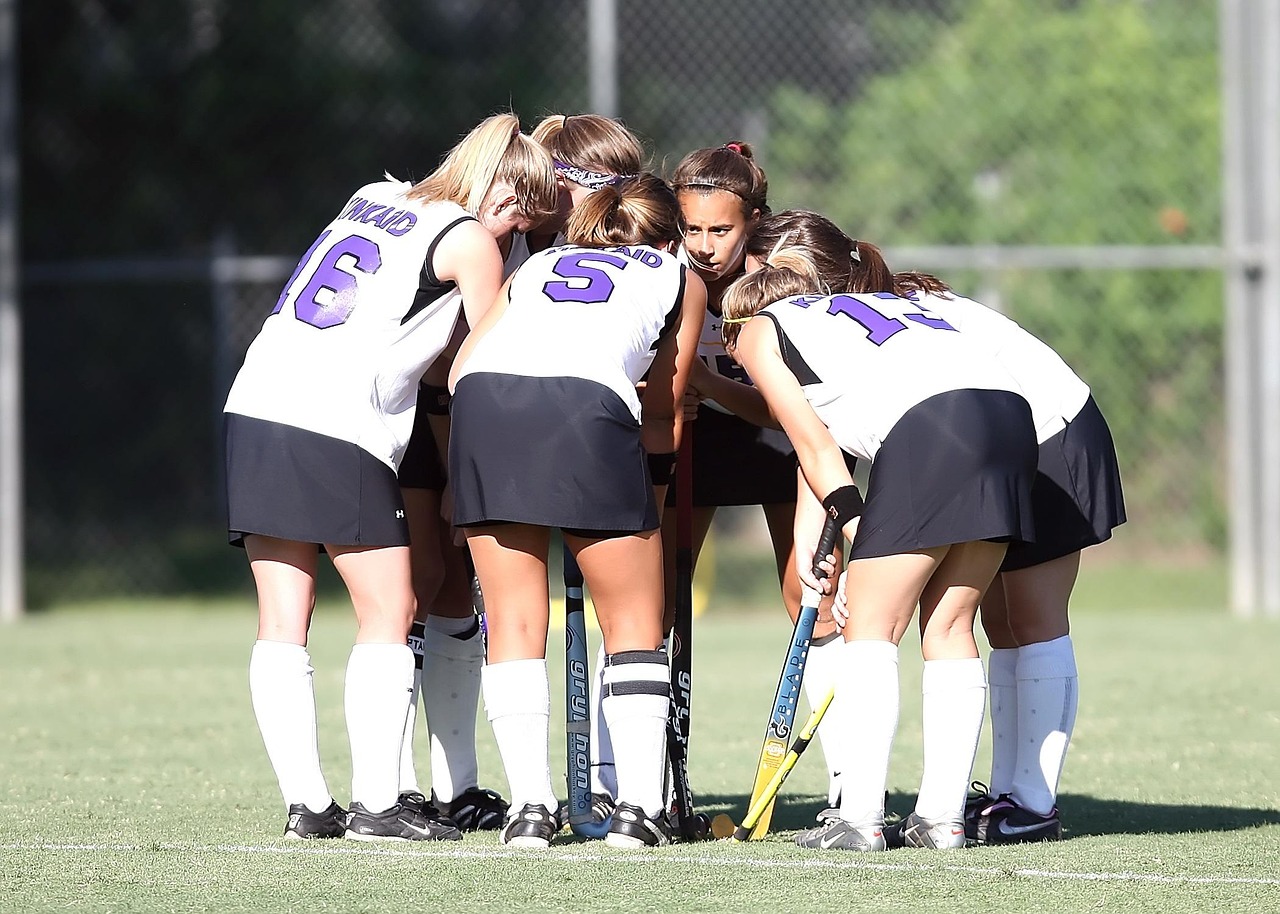
Green, yellow, and red cards give field hockey one of the clearest discipline systems in team sport. They do more than punish fouls. They change the numbers on the field, alter pressing patterns, force quick substitutions, and make every careless challenge or delay tactic part of the match’s tactical story. A green card creates a short suspension at international level, a yellow card brings a longer temporary suspension, and a red card removes a player permanently from the match. That structure means field hockey discipline is not just about control. It is about momentum, space, and whether a team can survive two, five, or more minutes while playing short.
Why Field Hockey Needed More Than a Whistle
Field hockey is fast, crowded, and built around short bursts of pressure. The ball moves quickly through narrow lanes, defenders have to tackle with precision, and attackers often win free hits or penalty corners by forcing mistakes in tight spaces. A simple foul call can restart play, but it does not always solve the larger problem of repeated obstruction, reckless tackling, dissent, intentional delay, or dangerous play.
That is where the card system matters. It gives umpires a way to escalate discipline without treating every offense the same. A warning can manage a match before it turns chaotic. A short suspension can punish repeated or tactical fouling. A longer suspension can change the balance of the game. A permanent suspension can remove conduct that crosses the line from manageable to unacceptable.
The system also fits field hockey’s rhythm. Unlike sports where cards are mostly symbolic until a sending-off, field hockey cards can immediately reshape the match. A team that loses a player has to defend more ground with fewer bodies. Midfielders may drop deeper. Forwards may stop pressing. A side protecting a lead may suddenly spend several minutes clearing danger instead of building attacks.
That makes discipline part of the sport’s tactical language.
The Temporary Suspension That Changes the Match
The green card is the first major tactical wrinkle. At international level, it means a two-minute suspension, which sounds brief until the game is happening at full speed. Two minutes can include a penalty corner sequence, a defensive scramble, a turnover, and a restart before the suspended player returns. For a team that depends on coordinated pressing, even a short absence can create a visible gap.
The yellow card raises the stakes. Under FIH rules, a yellow card is a temporary suspension, with the length depending on the offense and umpire management; many rule comparisons describe yellow-card suspensions as five minutes or longer. Five minutes in field hockey is enough time for the opposing team to change its entire attacking posture. It can stretch the field, overload one side, push fullbacks higher, or draw the short-handed team into desperate clearances.
That is why cards are not just disciplinary events. They are coaching events.
When a player is suspended, the short-handed team has to decide what it is willing to concede. Does it keep a forward high to threaten a counterattack? Does it collapse into a compact defensive block? Does it protect the center and allow wider possession? Does it take a midfielder out of the attacking structure to preserve defensive shape?
The team with the advantage faces its own test. A player advantage can make a side impatient. Instead of building pressure, teams sometimes force passes into traffic or rush penalty-circle entries. The best teams treat a card advantage as a structured opportunity, not a license to attack wildly.
The red card is different because it removes the idea of survival through the clock. A permanent suspension means the team has to reorganize for the rest of the match. That can change substitutions, fatigue, penalty-corner defense, and the way a team manages risk. In close matches, a red card can turn every remaining possession into a calculation about damage control.
Why Green, Yellow, and Red Cards Still Matter Strategically
Green, yellow, and red cards remain important because field hockey is a sport of small margins. A single penalty corner can decide a match. A single missed rotation can open the circle. A single short-handed stretch can turn a controlled game into a defensive emergency.
The card system also helps explain the sport to newer viewers. It creates visible consequences. When a player leaves the field, the audience can immediately see the tactical impact: open passing lanes, deeper defending, fewer outlets, and more pressure around the circle. Discipline becomes legible.
At higher levels, cards also reflect the balance between aggression and control. Field hockey rewards brave tackling, quick recovery runs, and hard defensive pressure, but it punishes players who arrive late, use the body carelessly, or break the rhythm of the game illegally. The best teams do not simply avoid cards because they want to appear disciplined. They avoid cards because playing short changes the geometry of the field.
That is the real power of the system. The cards are simple, but their effects are layered. Green warns and briefly removes. Yellow forces a longer tactical adjustment. Red changes the entire match state. Together, they turn discipline into one of field hockey’s most important strategic variables.
Green, yellow, and red cards make field hockey easier to understand and harder to master. They give umpires a clear ladder of control, but they also give teams a tactical problem that cannot be ignored. In a sport built on speed, spacing, and pressure, losing one player can change everything.