Emergency backup goalies are one of hockey’s most unusual traditions because they turn a professional sport into something suddenly local, human, and unpredictable. The emergency backup goalie, often shortened to EBUG, exists for the rare moment when both dressed goalies on a team become unavailable. Most nights, that person sits quietly in the arena, known only to team staff and league officials. But when the impossible happens, a local goalie can sign paperwork, pull on borrowed gear, and enter the highest level of hockey. The result is a story that feels almost impossible in modern professional sports: a game can still make room for someone who was never supposed to become the story.
The Rule That Keeps One Seat Open
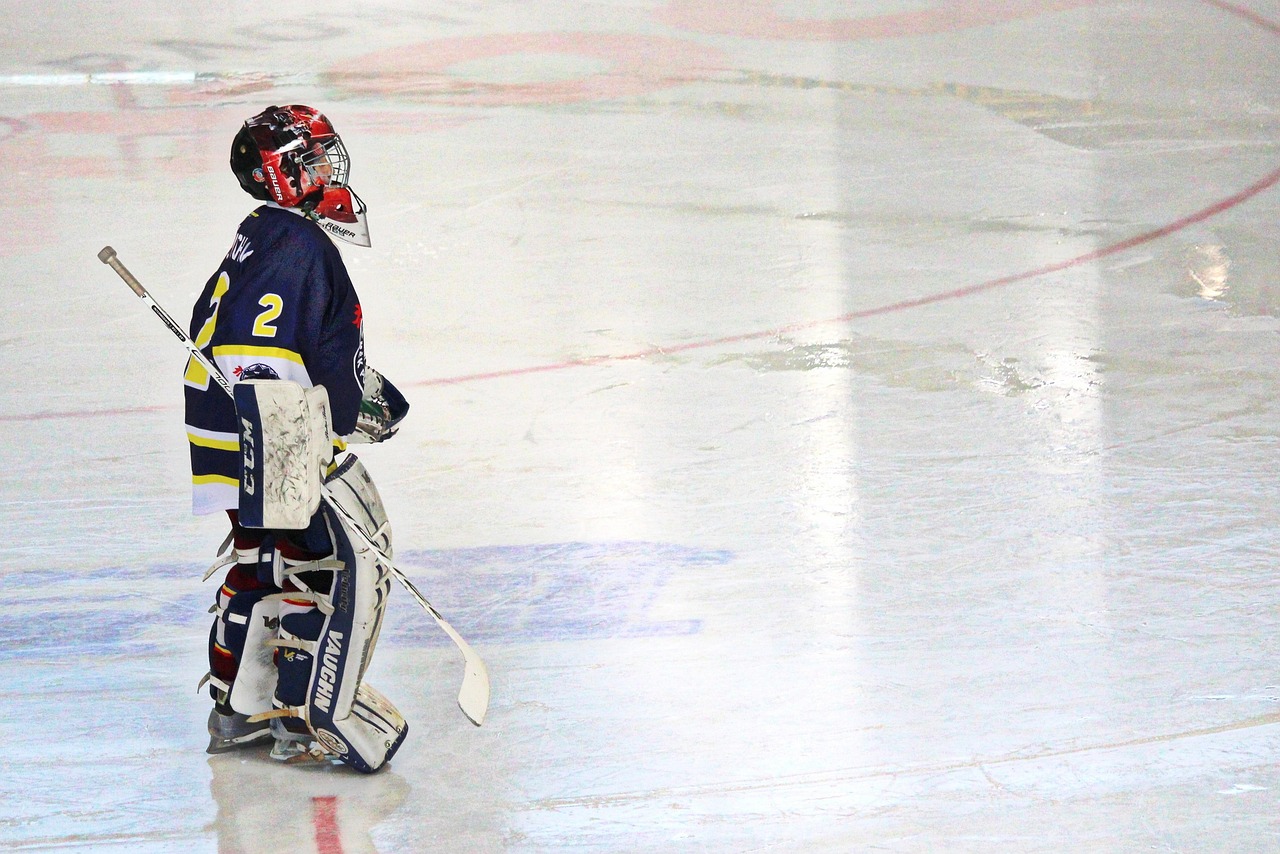
The emergency backup goalie exists because hockey has a position that cannot be casually replaced. A team can survive a forward injury by shortening the bench. It can survive a defenseman injury by double-shifting players. But if both goalies are injured, ill, or otherwise unavailable, the game needs someone who can stand in the crease and face NHL shots.
That is where the EBUG system came in. Under the procedure used during the modern EBUG era, each arena had an emergency goaltender available for either team. That detail mattered. The emergency goalie was not “home-team property.” If the road team lost both goalies, the same local backup could end up playing against the team whose arena he knew best.
The NHL’s 2019-20 rule language stated that if both listed goalkeepers were incapacitated, the team was entitled to dress and play any available eligible goalkeeper. After David Ayres’ famous appearance in 2020, NHL general managers discussed the procedure, but league officials noted how rare the situation had been under the current system. At that point, it had happened only twice in more than 6,200 games.
That rarity is why the stories feel so powerful. The EBUG is not a gimmick added for entertainment. He is a contingency plan that almost never leaves the shadows. Most emergency goalies are former college, junior, minor-league, or high-level recreational goalies who live near the arena and can be approved in advance. They are good enough to be credible, but far enough from the NHL roster system that their appearance feels like a breach in the wall between the league and the outside world.
For most of modern sports, the distance between ordinary people and professional competition is absolute. Emergency backup goalies create one of the few exceptions. The door is almost always closed. But it is not locked.
The Nights When the Backup Plan Became the Main Story
Scott Foster helped turn the EBUG from a rulebook oddity into a hockey phenomenon. On March 29, 2018, the Chicago Blackhawks were playing the Winnipeg Jets when their goaltending situation collapsed. Anton Forsberg was unavailable before the game, Collin Delia started, and then Delia was injured in the third period. Foster, a 36-year-old accountant and former college goalie, entered the game for Chicago.
He stopped all seven shots he faced. The Blackhawks won 6-2. Foster was not credited with the win, but he became the story of the night because he had done something that sounded almost fictional: he came out of emergency duty and played perfect NHL minutes.
Foster’s story worked because it was not just about novelty. He had to make actual saves against actual NHL players. The game did not pause to honor the charm of the situation. The Jets still needed goals. The Blackhawks still needed stops. Foster’s performance mattered inside the game before it became famous outside it.
David Ayres made the EBUG story even larger two years later. On February 22, 2020, the Carolina Hurricanes lost both James Reimer and Petr Mrazek during a game against the Toronto Maple Leafs. Ayres, then 42, was the emergency backup in Toronto. He had worked as a Zamboni driver and building operations manager connected to the Toronto hockey scene, and he entered the game for the visiting Hurricanes against the Maple Leafs.
At first, the moment looked overwhelming. Ayres allowed goals on the first two shots he faced. Then he settled in. He stopped the next eight shots and helped Carolina beat Toronto 6-3. He became the first emergency backup goalie to be credited with an NHL win.
The Ayres game had layers that made it instantly memorable. He was playing in Toronto, but not for Toronto. He was wearing Hurricanes colors while carrying deep ties to the local hockey building. He was not simply protecting a blowout with a few seconds left. He played 28 minutes and 41 seconds, long enough for the game to become a real competitive test. NHL.com later described the win as still surreal one year later, noting that Ayres had made eight saves after both Carolina goalies left with injuries.
Other EBUG stories deepen the mythology even when the goalie barely plays. Jorge Alves, an equipment manager for the Carolina Hurricanes, appeared for the final seconds of a 2016 game after Eddie Lack became ill. Tom Hodges later appeared for the Anaheim Ducks in 2022. These moments are smaller than Foster or Ayres, but they belong to the same tradition: hockey’s emergency structure can suddenly place someone from the margins directly into the official record.
The appeal is not that these goalies are unprepared. The appeal is that they are prepared in a different way. They are not stars. They are not prospects. They are not part of the normal transaction wire. They are people who kept playing, kept skating, kept staying close enough to the game that when a strange night arrived, they were eligible to answer.
Why Emergency Backup Goalies Became Hockey Folk Heroes
Emergency backup goalie stories last because they reveal something specific about hockey culture. The sport has always had a strong relationship with local rinks, adult leagues, equipment rooms, practice goalies, and people who stay near the game long after their formal playing careers are over. The EBUG tradition turns that hidden world into the center of attention.
That is why Foster and Ayres became more than trivia answers. Foster represented the adult-league dream in its purest form: keep playing, stay ready, and one night the NHL might need exactly what you still know how to do. Ayres represented a different version of the same idea: a person deeply embedded in the daily operations of hockey could be called from behind the scenes into the middle of the game.
The stories also work because goaltending is uniquely psychological. A cold goalie entering a game faces an immediate test of rhythm, nerves, eyesight, angles, and trust. Skaters can sometimes ease into a shift. Goalies cannot. The puck either goes in or it does not. The scoreboard does not care whether the person in net expected to play.
That is what gives these stories their emotional force. They are not ceremonial appearances. They are real risk. Foster had to protect a lead. Ayres had to survive a hostile and confused arena environment while Carolina’s skaters adjusted to the fact that their season had briefly entered hockey folklore. The teammates in front of an EBUG often simplify the game, protect the slot, clear rebounds, and turn the final minutes into a collective act of survival.
The tradition has also changed. Under newer NHL collective bargaining changes reported by official team coverage in 2025, emergency backup goaltenders are no longer quite the same anonymous local folk-hero figures. The updated approach calls for EBUGs to be team employees approved by the league and available for home and road games, while still excluding goalies with NHL experience or extensive recent professional experience.
That shift makes sense from a competitive standpoint. Teams want predictability. The league wants cleaner procedures. But it also marks a change in the emotional texture of the EBUG story. The old version had a special kind of randomness: an accountant, a building operator, a practice goalie, or a local rink figure could become the answer to a question no one expected the game to ask.
Emergency backup goalies matter because they preserve one of hockey’s rarest possibilities. In a sport defined by elite speed, specialized training, and professional systems, the EBUG story says that preparation can live outside the spotlight. Most emergency goalies will never play. A few will sit at the end of the bench. An even smaller number will enter the crease. But when it happens, hockey briefly becomes larger than its roster sheet.