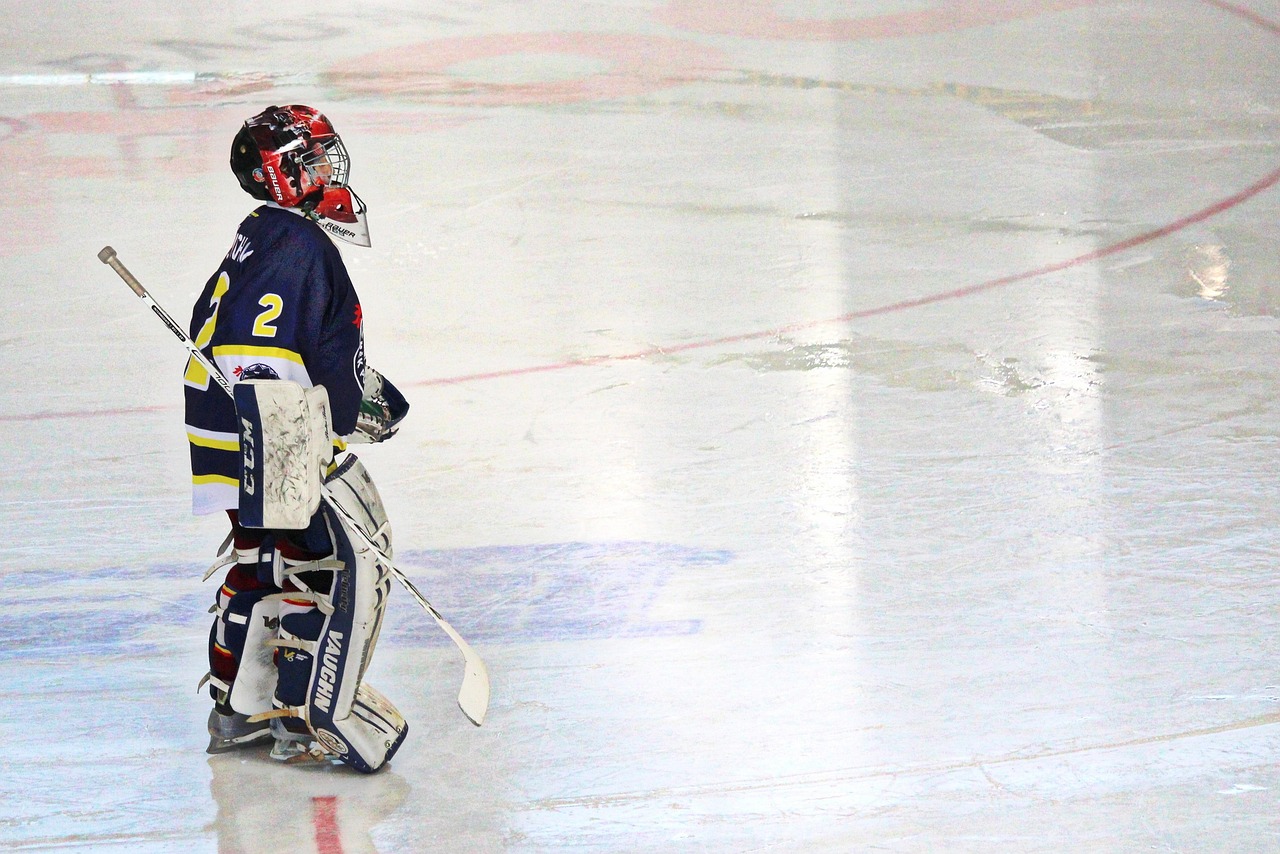
The Goalie Who Carried a Nation to Olympic Gold is the story of Dominik Hašek, the Czech Republic, and the 1998 Winter Olympics in Nagano. It was the first Olympic men’s hockey tournament with NHL players, which made the field deeper, brighter, and more politically loaded than any Olympic hockey event before it. For the Czech Republic, the tournament arrived only five years after the peaceful split of Czechoslovakia. For Hašek, it became the perfect stage for one of the greatest goaltending performances in international hockey history. The Czechs did not win gold by overwhelming the tournament with offense. They won because Hašek made every opponent feel as if one goal might already be too much to ask. The Czech Republic defeated Russia 1–0 in the gold medal game on February 22, 1998.
Nagano Made Olympic Hockey Bigger Than It Had Ever Been
Before Nagano, Olympic men’s hockey had already produced famous moments, but 1998 changed the scale of the tournament. This was the first Winter Olympics in which the NHL paused its season so its players could compete. That meant Canada, the United States, Russia, Sweden, Finland, the Czech Republic, and other hockey powers could send teams filled with the best professionals in the world.
That change mattered because it shifted the tournament from a limited Olympic competition into something close to a true best-on-best world championship. The stakes were no longer just national pride in a traditional Olympic setting. Nagano created a rare meeting point between Olympic symbolism and NHL star power.
For the Czech Republic, this stage carried unusual weight. The country had existed as an independent state only since 1993, after the dissolution of Czechoslovakia. Czech hockey had deep roots, but Czech Olympic hockey as a separate national identity was still new. Nagano gave the country a chance to define itself in front of the sport’s strongest nations.
That is part of what makes the 1998 gold so powerful. The Czech Republic was not an old Olympic hockey empire adding another title to a long list. It was a newly independent country stepping into a tournament designed to showcase the greatest hockey nations in the world — and winning it immediately.
The team had elite talent. Jaromír Jágr was already one of the world’s great forwards. The roster included major NHL players and experienced Czech professionals. But the tournament’s emotional center was Hašek, then with the Buffalo Sabres, whose style was unlike almost anyone else’s. He did not look mechanical. He looked reactive, flexible, desperate, brilliant, and completely in control even when he seemed to be improvising.
That style made him the perfect figure for Nagano. The Czech Republic did not need to play like Canada, Russia, or the United States. It needed to survive pressure, shrink the game, and turn tight margins into belief. Hašek made that possible.
Dominik Hašek Turned Every Game Into a Test of Nerve
Hašek’s tournament became legendary because of when he made his saves. The Czech Republic’s path to gold went through the United States, Canada, and Russia. That is not a soft route. That is a championship path through three of hockey’s central powers.
In the quarterfinal against the United States, Hašek made 38 saves as the Czechs won 4–1. That game announced that the Czech Republic was not just a skilled team with an elite goalie. It was a team capable of absorbing pressure from a major opponent and turning that pressure into frustration.
The semifinal against Canada became the defining test. Canada had Wayne Gretzky, Patrick Roy, Eric Lindros, Joe Sakic, Brendan Shanahan, and other stars. On paper, Canada looked like the kind of team built to win the first NHL-era Olympic tournament. But the game ended 1–1 after overtime, sending the semifinal to a shootout.
That shootout became one of the most famous sequences in Olympic hockey. Hašek stopped all five Canadian attempts. Robert Reichel scored for the Czech Republic. Canada, the country most closely associated with hockey’s identity and history, was out. The Czech Republic was going to the gold medal game.
The final against Russia was not a wide-open showcase. It was a tense, low-scoring struggle, exactly the kind of game where one mistake could decide the Olympic title. Petr Svoboda scored the only goal, and Hašek shut out Russia. The Czech Republic won 1–0.
That scoreline is central to the story. A 1–0 gold medal game makes the goalie impossible to separate from the meaning of the victory. Hašek did not merely contribute to a championship. He became the figure through whom the championship was understood.
The Czech Republic’s gold was not only about stopping shots. It was about changing the emotional logic of each game. Opponents knew chances would be rare. They knew Hašek could erase a breakaway, a rebound, a screened shot, or a shootout attempt. As the tournament moved deeper, that knowledge became part of the pressure. The Czechs did not need to dominate every shift. They needed to stay close, trust their structure, and let Hašek turn tension into advantage.
That is why the phrase “carried a nation” fits without reducing the rest of the team. The Czech Republic had stars, scorers, defenders, and a tactical identity. But Hašek gave the team its margin for error. In a best-on-best tournament, against the most talented players in the world, that margin became gold.
The Gold Medal Became a Czech Identity Moment
The 1998 Olympic gold mattered because it arrived at a specific moment in Czech history. The Czech Republic was still young as an independent country. Its athletes were not simply representing a flag that had existed for generations. They were helping give that flag public memories, images, and emotional weight.
Hockey was already important in Czech culture, but Nagano turned the sport into a national celebration. Winning gold against Russia added another layer. The final was not a simple political replay, but it carried historical resonance. Czech and Russian hockey existed in the shadow of Cold War history, Soviet power, and the complicated memory of Central Europe’s 20th century. Beating Russia in an Olympic final, with the world’s best players involved, gave the victory a meaning beyond the scoreboard.
The tournament also changed how the rest of the hockey world saw Czech hockey. Before Nagano, Czech players were respected throughout the sport. After Nagano, Czech hockey had a best-on-best Olympic gold medal of its own. The victory placed the Czech Republic beside the sport’s great national powers not as an inherited identity from Czechoslovakia, but as a modern Czech achievement.
Hašek’s role in that achievement became permanent. He was already one of the NHL’s greatest goalies, but Nagano gave his career a national chapter that no league accomplishment could fully duplicate. NHL awards and records prove excellence. Olympic gold, especially in this tournament, gave that excellence a collective meaning.
The legacy also lives in the way Nagano is remembered outside normal Olympic cycles. Some Olympic wins fade into medal tables. This one became a story with a title, a setting, and a central character: Nagano, Hašek, the Czech Republic. It is one of the rare hockey tournaments that can be understood almost through a few images — Hašek in the crease, the shootout against Canada, Svoboda’s goal, the 1–0 final, and the celebrations that followed.
That is what separates Nagano from a normal upset. The Czech Republic did not simply win a tournament. It won the first NHL-player Olympics, beat elite opponents, and turned a goaltender’s performance into a national origin story for a new era of Czech sport.
The Goalie Who Carried a Nation to Olympic Gold remains one of hockey’s clearest examples of how a single player can become the emotional center of a team without making the team disappear. Hašek’s Nagano run was personal brilliance in service of national meaning. The Czech Republic’s 1998 gold was not just a medal. It was a moment when a young country saw itself reflected in the calm, strange, impossible confidence of its goalie.