College Hockey’s Frozen Four Culture is built on a strange but powerful contrast. It is a national championship stage, but its emotional center still feels local: Minnesota rinks, Michigan traditions, Boston schools, North Dakota devotion, Denver excellence, and campuses where hockey is not a side sport but a winter identity. The Frozen Four matters because college hockey offers a different route through the sport. It is not only a waiting room for the NHL. It is a world of school colors, alumni memory, regional pride, compact arenas, student sections, and players who can become campus legends before they become professionals. That gives the sport a culture unlike almost anything else in American college athletics.
How College Hockey’s Frozen Four Culture Grew From Regional Strongholds
College hockey has never spread evenly across the United States. Its deepest roots are clustered in places where winter, rinks, local clubs, and school tradition all reinforce one another. That is why the sport’s culture feels so specific. Minnesota is not just another hockey state; it is a place where high school hockey, youth rinks, college programs, and community identity overlap. Michigan has a layered hockey map that runs from youth programs to major college arenas to the NHL. Boston has a dense college hockey ecosystem where schools can be separated by only a few miles but carry completely different histories.
Then there is North Dakota, where college hockey has the feel of a flagship civic institution. The University of North Dakota’s hockey program has long carried the pride of a smaller state onto a national stage. Denver gives the story a different shape: a private university in the Rocky Mountain West that became one of the sport’s great championship powers. The NCAA’s own championship history shows why these names keep returning to the center of the sport. Denver, Michigan, North Dakota, Minnesota, Boston University, and Boston College are all among the programs most closely associated with the national championship record.
That geography helps explain why the Frozen Four feels different from other college championships. College football can feel enormous because of stadiums and television scale. College basketball can feel national because of March Madness. College hockey often feels intense because its world is smaller, colder, older, and more concentrated. The sport’s best atmospheres are not always about size. They are about familiarity. Fans know the chants. Alumni know the old tournament losses. Students know the rival school down the road. Local families may have watched players since they were teenagers.
The Frozen Four takes that regional intensity and puts it under a national spotlight. It does not erase the sport’s local roots. It amplifies them.
The Frozen Four Turns Alumni Loyalty Into a Hockey Pilgrimage
The Frozen Four works because it is both a tournament endpoint and a reunion. Alumni do not simply watch their school’s hockey team as entertainment. For many, the team represents a winter rhythm they remember from campus: walking to the rink, standing in a student section, learning the rivalries, and feeling that a school’s hockey identity was part of its character.
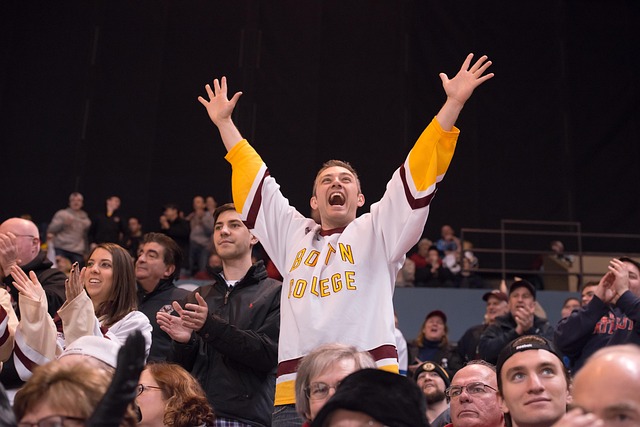
That is especially true because college hockey arenas often create a different emotional scale than giant football stadiums. Small and mid-sized rinks can make the sport feel immediate. The sound stays trapped close to the ice. A student section can shape the whole building. A rivalry weekend can feel like a civic event. The players are not distant figures moving through a massive machine. They are visible on campus, recognizable in the community, and connected to school traditions in a way that gives college hockey its intimacy.
This is why the Frozen Four can carry such force even when the broader sports public only notices it for a weekend. For the people inside the culture, the tournament is the peak of a long emotional season. It gathers the old powers, the rising programs, the loyal alumni, and the schools that see hockey as one of their clearest athletic identities.
The event has also become more than a northeastern or upper-midwestern gathering. Recent championship history shows the sport’s balance between traditional powers and newer or rising champions. Western Michigan won the 2025 national title, while Denver won the 2026 championship, its eleventh national championship, in Las Vegas. Those results fit the broader story: college hockey still runs through its old cultural centers, but the Frozen Four keeps creating room for new chapters.
The championship’s mobility also matters. When the Frozen Four is played in major arenas away from campus, it gives the sport a national-event feeling without fully losing the college-hockey atmosphere. Alumni travel. Student sections arrive. Fans from non-participating schools often show up because the Frozen Four is part of their hockey calendar, not just their school calendar. It becomes a meeting point for the sport’s internal community.
That is the unusual beauty of the event. It is a national championship that still behaves like a club gathering for people who know the songs, sweaters, rivalries, and old wounds.
Why College Hockey Offers a Different Path to the Pros
The Frozen Four is also compelling because it sits beside, not beneath, the professional game. In many sports, college competition is treated mainly as a development step. In hockey, the relationship is more complicated. Players can come through Canadian major junior, European systems, the USHL, college hockey, or other routes. The NCAA path is one of several serious roads toward the professional game, and that makes college hockey feel less like a universal pipeline and more like a distinct hockey culture.
That parallel path shapes the Frozen Four. Some players are NHL draft picks. Some are late bloomers. Some are older than the typical one-and-done college basketball star. Some stay long enough to become closely identified with a school. That gives college hockey a different emotional texture. Fans are not simply watching future professionals pass through as quickly as possible. They are watching teams develop over multiple seasons, with players who may become part of a program’s memory before their pro careers are even clear.
The result is a championship where development and belonging overlap. A player can improve his NHL future while also trying to win something that matters deeply on its own terms. That is why the Frozen Four does not feel like a scouting combine dressed as a tournament. It feels like a real endpoint. The NHL may be the next step for many players, but the college championship is not a minor prize.
This also helps explain why certain programs become cultural brands. Minnesota is tied to a state hockey identity. Michigan carries a long history of college and professional hockey overlap. Boston schools sit inside one of the densest hockey cities in the country. North Dakota turns a college program into a major regional institution. Denver has built a championship standard that gives western college hockey national weight. Each of these programs represents more than wins. Each represents a different answer to what college hockey can be.
The Frozen Four gathers those answers in one place. It shows that college hockey is not only about producing NHL talent. It is about preserving a version of the sport where school loyalty, regional culture, and player development all remain connected.
College Hockey’s Frozen Four Culture matters because it gives hockey a championship stage that still feels close to its roots. The arenas may change, the rosters may turn over, and the pro pathways may keep evolving, but the core appeal remains steady. It is school pride on ice, shaped by winter places, loyal alumni, and players chasing both a title and a future.