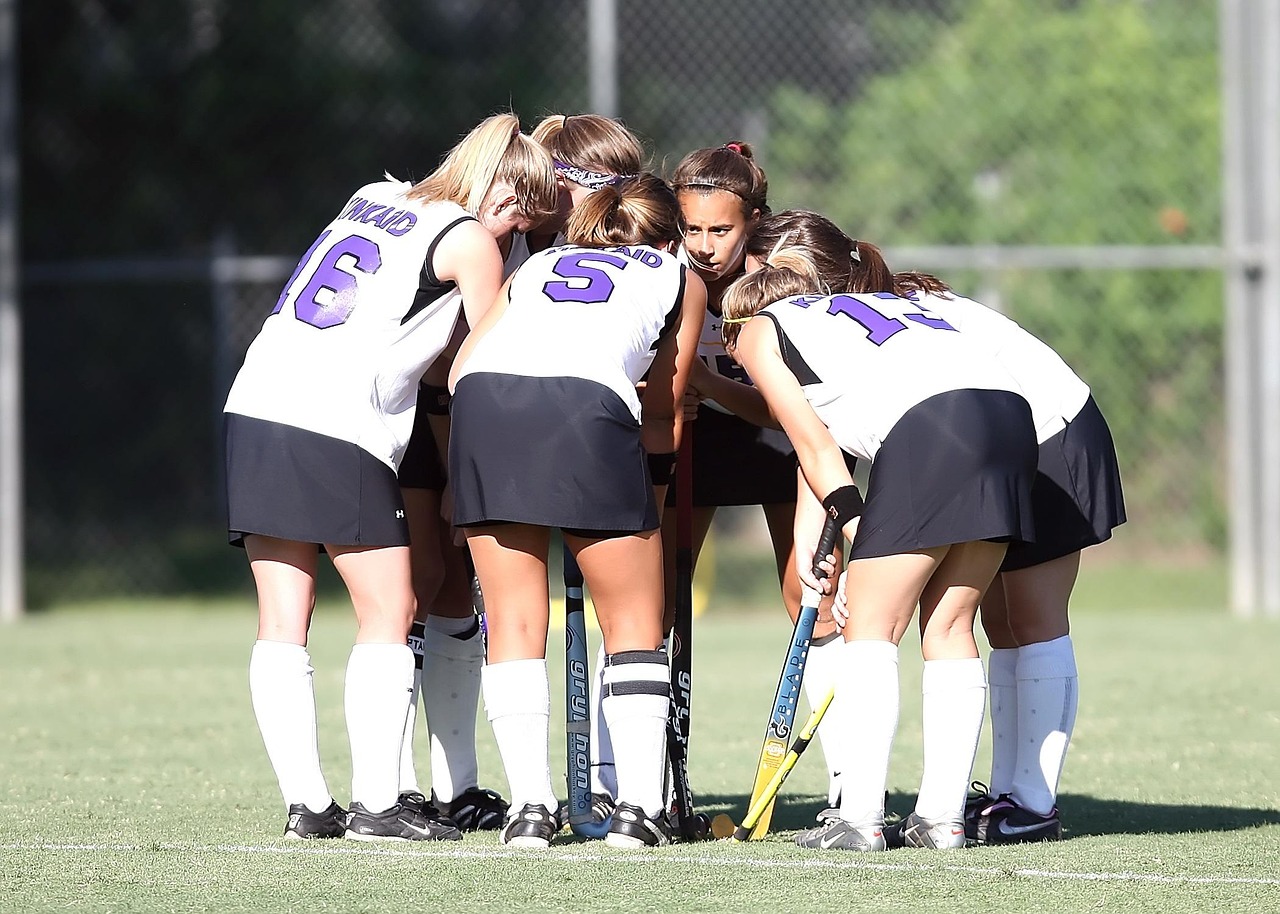
Club field hockey in the Netherlands matters because the clubs are not just places where people play; they are the machinery that keeps Dutch hockey strong. The Dutch system connects youth teams, weekend competitions, senior leagues, coaching, talent identification, and national-team development into one unusually dense sporting structure. That is why the Netherlands can produce elite players without treating field hockey as a school-only or national-team-only sport. The club is the foundation. It gives young players regular competition, gives adults a lifelong place in the game, and gives the Hoofdklasse a deep domestic base. Dutch international success makes more sense when the club system is treated as infrastructure, not background. The KNHB was founded in 1898, and Dutch hockey now runs through hundreds of clubs organized across regional districts.
How Dutch Hockey Built a Club-Based Pipeline
The strength of Dutch field hockey begins with access. Players do not enter the sport only through a school season or a short youth program. They enter through clubs that can carry them from early childhood into adult competition. Dutch club membership is organized by age categories, beginning with very young children and continuing through youth, senior, and veteran levels. That structure matters because it makes hockey feel like a long-term sporting home rather than a temporary activity.
The weekly rhythm also matters. Youth matches are commonly played on Saturdays, while senior and veteran matches are played on Sundays. That creates a culture where the club is active across the whole weekend, with younger players, older players, parents, coaches, and volunteers all tied to the same sporting space. The club becomes a development site, a social institution, and a competitive platform at the same time.
That is the deeper point behind the Dutch model. The Netherlands does not simply have talented hockey players. It has a system that repeatedly puts players into organized environments where technique, decision-making, competition, and club identity are reinforced year after year. The club system gives Dutch hockey continuity.
The Hoofdklasse Turns Local Clubs Into Elite Standards
At the top of the pyramid is the Hoofdklasse, the highest level of Dutch club field hockey. The league gives the Dutch system a clear elite endpoint: young players can grow inside clubs while still seeing a visible domestic standard above them. The top Dutch league includes 12 teams, with clubs playing a double round-robin schedule before playoffs decide the champion.
That structure is important because it keeps elite hockey close to the grassroots. Clubs such as Amsterdam, Bloemendaal, Den Bosch, Kampong, Pinoké, Rotterdam, HDM, and Oranje-Rood are not abstract names in a distant professional league. They are part of the same club ecosystem that supports youth teams, regional competition, and adult participation. The result is a unusually tight connection between local hockey life and top-level performance.
The promotion-and-relegation structure also keeps pressure moving through the pyramid. The Promotieklasse sits below the Hoofdklasse, and clubs can move between levels through promotion and relegation. That gives the Dutch system more than one elite stage. It creates a competitive ladder, where ambition is not limited to a single closed set of teams.
This is why the Dutch club system is more than a feeder network. It is a competitive culture. Players grow up inside clubs, clubs compete within districts and national leagues, and the best clubs test themselves at a European level. The Euro Hockey League was created to raise club hockey’s international visibility, and Dutch clubs have been central to that competition’s history.
Why the Club System Still Shapes Dutch Hockey Success
The Netherlands’ international record is easier to understand when the club system is placed at the center of the story. Dutch national teams are not built from isolated bursts of talent. They are built from a deep domestic environment where players are trained, challenged, and evaluated over many years. The KNHB oversees rules, tournaments, referee training, national-team selection, and broader sport development, giving the system a national framework around local clubs.
The results are visible at the highest level. At the 2024 Paris Olympics, the Netherlands won both the men’s and women’s hockey gold medals, with the women defeating China in a shootout one day after the men beat Germany. Reuters described it as the first time the Dutch men’s and women’s teams won Olympic hockey gold in the same year.
That double gold did not come from nowhere. It reflected a hockey culture where elite outcomes are connected to everyday structures. The club system gives the Netherlands scale, repetition, coaching density, and competitive continuity. It also keeps hockey visible across generations, because children, senior players, veterans, and national-team hopefuls all belong to the same broader ecosystem.
Club field hockey in the Netherlands is powerful because it turns participation into infrastructure. The clubs create the base, the leagues sharpen the standard, and the national teams benefit from a system that keeps producing players who already understand the demands of organized, competitive hockey. Dutch dominance is not only about talent. It is about the structure that keeps talent moving.