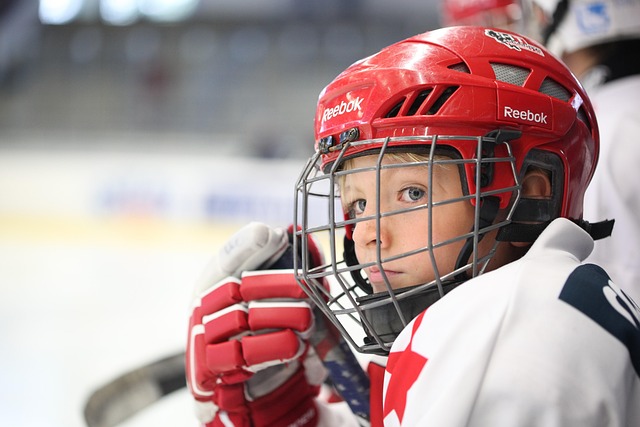
Becoming a pro hockey player does not mean only reaching the NHL. The NHL is the highest level of men’s ice hockey, but professional hockey exists across many levels, countries, and versions of the sport. A player can become a professional in the NHL, AHL, ECHL, European leagues, women’s professional ice hockey, or elite field hockey systems. Some players earn large contracts. Others play professionally or semi-professionally while also coaching, studying, or working in another part of the sport.
That wider definition matters because hockey has more than one professional pathway. A Canadian forward trying to reach the NHL does not follow the same route as a Dutch field hockey player, an American NCAA defenseman, a Finnish goalie, a Czech junior player, or a women’s ice hockey player aiming for the PWHL. The sport has different ladders, but the basic challenge is similar: a player has to move from participation to serious training, from local competition to elite competition, and from talent to professional reliability.
Professional hockey is not just about being good with a stick. It requires skating or running speed, game intelligence, positional discipline, fitness, decision-making, coachability, emotional control, and the ability to perform under pressure. At every level, more talented players disappear because they cannot adapt to the next stage. The players who keep moving up usually combine skill with habits that coaches and scouts trust.
Starting With the Right Foundation
Most professional hockey players start young, but starting young is not enough. The early years matter because they build coordination, comfort, and instinct. In ice hockey, young players need skating first. Stickhandling, shooting, checking, and tactics matter later, but skating is the base skill. A player who cannot accelerate, stop, turn, and change direction under pressure will struggle as the game becomes faster.
In field hockey, the foundation is different. Players need first touch, ball control, passing range, footwork, scanning, and the ability to play on turf at speed. Field hockey is extremely technical because the ball moves quickly, space closes fast, and players must make decisions while staying low and balanced. A player who looks strong in casual play may struggle in elite field hockey if their receiving skills, body shape, and passing angles are not sharp.
The first step toward professional hockey is usually not specialization in a league. It is learning the sport properly. That means good coaching, regular practice, and enough competition to reveal weaknesses. A young ice hockey player needs games where the pace is uncomfortable. A young field hockey player needs matches where their decisions are challenged. Development does not come only from winning. It comes from being forced to solve harder problems.
Youth Hockey and the Talent Funnel
Youth hockey is where the talent funnel begins to narrow. In North American ice hockey, strong players often move from local hockey to travel hockey, AAA programs, prep schools, junior leagues, or national development programs. In Canada, many elite players aim for major junior hockey in the Canadian Hockey League, which includes the Ontario Hockey League, Western Hockey League, and Quebec Maritimes Junior Hockey League. In the United States, players may move through high school hockey, the USHL, NAHL, prep schools, the National Team Development Program, or NCAA-track routes.
In Europe, the youth structure is often more club-based. A player may grow through the academy of a professional club, play in junior national leagues, then move into senior competition. Sweden, Finland, Czechia, Slovakia, Switzerland, Germany, and Russia have produced elite players through club systems where teenagers can train inside a professional environment before they are ready for the top team.
Field hockey often depends heavily on schools, clubs, and national development systems. In countries such as the Netherlands, Germany, Belgium, India, Australia, Argentina, Great Britain, and Pakistan, talented players may be identified through club competition, youth national teams, school programs, regional tournaments, and high-performance centers. In the United States, field hockey talent is strongly tied to girls’ school and college pathways, while in Canada it is more concentrated in certain provinces and club systems.
The funnel gets smaller because each level tests a different part of the player. At younger ages, raw speed or size can dominate. At higher levels, everyone is fast, strong, and skilled. The difference becomes vision, consistency, tactical intelligence, and the ability to handle pressure without making repeated mistakes.
The Ice Hockey Route: Junior, College, Minor Pro, and Europe
For men’s ice hockey players, there are several major routes to professional hockey. The Canadian major junior route is one of the most famous. Players in the CHL compete at a high level as teenagers, often in front of NHL scouts. Many NHL draft picks come from major junior hockey because it closely resembles the professional schedule, travel load, and pressure environment.
The NCAA route has become another major path. American college hockey allows players to develop while studying, and it has become especially important for players who need more time physically. NCAA hockey is now a serious NHL pipeline, not a backup plan. Many players spend two, three, or four years in college before turning professional.
The USHL is the top junior league in the United States and a key NCAA pipeline. The NAHL and other junior leagues can also help players move toward college hockey. In Canada, Junior A leagues can lead to NCAA opportunities or other senior pathways.
Not every professional player becomes an NHL player. The AHL is the NHL’s main development league, and it is full of players trying to reach or return to the NHL. The ECHL is another professional level where players can develop, prove themselves, and sometimes climb. European leagues also provide important professional options. Sweden’s SHL, Finland’s Liiga, Switzerland’s National League, Germany’s DEL, Czechia’s Extraliga, Slovakia’s Extraliga, and Austria-centered ICE Hockey League all offer serious professional hockey. Some players who do not fit the NHL path can build strong careers in Europe.
The professional ice hockey ladder is not perfectly straight. A player might go from junior to college, college to the ECHL, ECHL to the AHL, AHL to Europe, or Europe to the NHL. The main issue is not whether the route looks traditional. The issue is whether the player keeps improving against stronger competition.
The Women’s Ice Hockey Pathway
Women’s ice hockey has a different professional structure. For many years, elite women’s players relied heavily on college hockey, national teams, and short-lived professional leagues. The Professional Women’s Hockey League has created a stronger top-level professional destination, especially for players from Canada, the United States, and other elite women’s hockey nations.
For a young women’s ice hockey player, the development pathway often includes girls’ youth hockey, boys’ hockey in some early stages, prep school, club hockey, NCAA hockey, U Sports in Canada, national development camps, and international tournaments. The NCAA has been especially important because it gives elite women a strong competition environment and scouting platform.
The women’s game also has a major international layer. Canada and the United States have historically set the standard, but Finland, Sweden, Czechia, Switzerland, Japan, and other countries have developed stronger programs. A player trying to become a professional women’s ice hockey player must think about more than club success. National-team visibility, college performance, international tournaments, and professional league opportunities all matter.
The PWHL has made the pathway clearer, but competition for roster spots remains intense. A player must be able to skate at a high pace, defend responsibly, win puck battles, and contribute in a structured team system. In elite women’s ice hockey, the difference between a good player and a professional player is often the ability to make fast decisions while under pressure from players who are just as skilled.
The Field Hockey Route
Becoming a professional field hockey player is different from becoming a professional ice hockey player. Field hockey has elite leagues, international competitions, and professional opportunities, but the global structure is less centralized than the NHL-style model. In some countries, top field hockey players are paid professionals. In others, players may be semi-professional, supported by clubs, national programs, public institutions, sponsors, or Olympic funding.
The strongest field hockey pathways often run through clubs and national teams. The Netherlands, Belgium, Germany, Great Britain, Spain, India, Pakistan, Australia, Argentina, and New Zealand have important field hockey systems. The Dutch Hoofdklasse, Belgian league, German Bundesliga, English league system, Indian hockey structures, Australian high-performance programs, and Argentine club system all help produce elite players.
Field hockey players often need to become visible through club performance, youth national teams, junior international tournaments, university competition, continental championships, and senior national-team selection. The Olympic Games and FIH Hockey World Cup are major stages. For many field hockey players, the highest dream is not a single professional league. It is playing for a major club, representing the national team, competing in the Olympics, and sustaining a career through a mix of club pay, national support, coaching, and sponsorship.
The skill profile is also different. Elite field hockey players need speed, repeated sprint ability, low body position, stick control, passing precision, tackling discipline, and tactical awareness. Penalty corners, aerial passing, pressing systems, and transition play are all specialized parts of the game. A player who wants to become professional must master both open-play skills and role-specific tasks.
Skill Is Not Enough
At youth level, skill can make a player stand out. At professional level, skill is only the entry point. Coaches and scouts look for repeatable performance. Can the player make the right play under pressure? Can they defend? Can they handle mistakes? Can they play within a system? Can they help a team when they are not scoring?
In ice hockey, a forward who scores in youth hockey may struggle if they cannot play away from the puck. A defenseman with a great shot may not move up if they cannot retrieve pucks under forechecking pressure. A goalie with strong reflexes may stall if they cannot track traffic, control rebounds, and manage game rhythm.
In field hockey, a player with strong dribbling may struggle if they hold the ball too long. A fast player may not advance if they cannot receive under pressure or understand defensive shape. A striker may score at lower levels but fail at elite level if they cannot press, lead, screen, and combine with midfielders.
Professional hockey rewards complete players. A star can have special traits, but even stars must be trusted. Coaches need players who can execute assignments, adjust during games, and stay effective when opponents take away their favorite options.
Physical Development and Training
Professional hockey requires serious physical preparation. Ice hockey players need acceleration, balance, edge control, strength, power, mobility, and recovery habits. The sport is built around short, intense shifts, physical contact, and constant transitions. Players need explosive ability but also enough conditioning to repeat high-effort shifts over a full game and a long season.
Field hockey players need repeated sprint endurance, agility, core strength, hip mobility, and the ability to play in a low position for long stretches. Modern field hockey is fast and demanding. Players press, counterpress, recover, and attack in repeated waves. Fitness is not separate from skill. A tired player receives poorly, passes late, and makes slower decisions.
Strength training matters, but hockey players cannot train like bodybuilders. They need power, stability, flexibility, and durability. Skating, sprinting, shooting, passing, checking, tackling, and changing direction all depend on coordinated movement. Good training supports the sport. It does not replace the sport.
Recovery also becomes more important as players move up. Sleep, nutrition, mobility work, injury management, and mental reset routines can decide whether a player keeps improving. Professional hockey is not only about peak performance. It is about performing again and again.
Scouting and Visibility
A player cannot become a professional without being seen by the right people at the right time. Scouting is one reason development pathways matter. Elite leagues, national tournaments, showcases, college programs, junior teams, and international competitions put players in front of coaches, scouts, agents, and federation staff.
In ice hockey, visibility often comes through major junior, NCAA, USHL, high-level European junior leagues, international events, and professional development leagues. NHL teams scout widely, but they still rely on competition level. A player dominating a weak league may need to move to a stronger environment to prove the performance is real.
In field hockey, visibility often comes through club competition, national championships, junior national teams, college hockey, international tournaments, and national-team camps. A player may need to perform well in a domestic league before getting a chance in a stronger country or a national setup.
Video can help, but video is not magic. A good highlight package may attract attention, but serious evaluators want full-game habits. They want to see decisions, positioning, defensive effort, mistakes, recovery, and how a player performs when the game is not easy. Highlights show talent. Full games show trust.
The Role of Agents, Contracts, and Professional Decisions
As players get closer to the professional level, decisions become more complicated. Contracts, eligibility, education, visas, agents, draft status, league rules, and national-team opportunities can all matter. A player who signs too early may lose college eligibility. A player who waits too long may miss a professional opening. A player moving overseas may need to understand language, culture, housing, taxes, insurance, and contract protections.
In men’s ice hockey, agents often become important around draft age, professional contracts, or major transfers. In women’s ice hockey and field hockey, representation may also matter, but opportunities can be more varied. Some players need support with club negotiations, national-team funding, sponsorship, and dual career planning.
Professional hockey is a job. That means a player has to understand more than performance. They need to know what league they are entering, what their role will be, how they will be paid, what support is provided, and whether the opportunity helps their long-term career.
Mental Toughness and Adaptability
The jump to professional hockey is difficult because every player has been successful before. At lower levels, top athletes are used to being important. At professional level, many become role players. A junior star may become a fourth-line winger. A college scorer may become a defensive specialist. A field hockey attacker may be asked to press more than score. A young goalie may spend months waiting for starts.
Adaptability is one of the most important traits in professional development. Players who insist on being used the same way at every level often stall. Players who learn new roles stay valuable. A forward who can kill penalties, forecheck, win draws, and defend late in games has more chances. A field hockey midfielder who can play multiple roles, handle pressure, and fit different tactical systems becomes more useful.
Mental toughness does not mean ignoring pressure. It means functioning inside it. Professional players deal with injuries, travel, roster cuts, trades, benchings, slumps, coaching changes, and public evaluation. The ones who last usually develop routines that keep their performance stable.
Different Paths, Same Standard
There is no single correct path to becoming a professional hockey player. Some players are stars from childhood. Others develop late. Some are drafted. Others sign after college. Some move through minor leagues. Others go overseas. Some field hockey players rise through clubs and national programs. Others use college or international tournaments as their breakthrough.
The common standard is performance against serious competition. A player has to keep proving that they can handle the next level. Potential opens the door, but reliability keeps it open.
For ice hockey players, that may mean climbing from youth hockey to junior, college, minor pro, Europe, or the NHL. For women’s ice hockey players, it may mean building through college, national-team camps, and professional leagues. For field hockey players, it may mean moving from school or club hockey into elite domestic leagues, national teams, and international tournaments.
The path changes, but the question stays the same: can this player help a serious team win?
What It Takes to Become a Pro Hockey Player
Becoming a pro hockey player takes talent, but talent is only the beginning. It takes years of training, strong coaching, elite competition, physical development, tactical growth, and the ability to be seen by the right programs. It also takes money, family support, travel, health, timing, and resilience. Some of those factors are within a player’s control. Others are not.
The best players usually separate themselves by combining skill with consistency. They do not just look good in easy games. They solve problems in hard games. They do not just score. They defend, compete, learn, and adjust. They do not just dream about the professional level. They build habits that belong there.
Professional hockey is difficult to reach because the game filters players at every stage. Local standouts become regional players. Regional standouts become national prospects. National prospects become college, junior, club, or academy players. Only a smaller group becomes professional.
For the players who make it, the journey is rarely simple. It is built through daily work, better competition, honest evaluation, and the ability to keep improving when the game becomes faster, harder, and less forgiving. That is true on ice, on turf, in men’s hockey, in women’s hockey, in North America, in Europe, and across the wider hockey world.